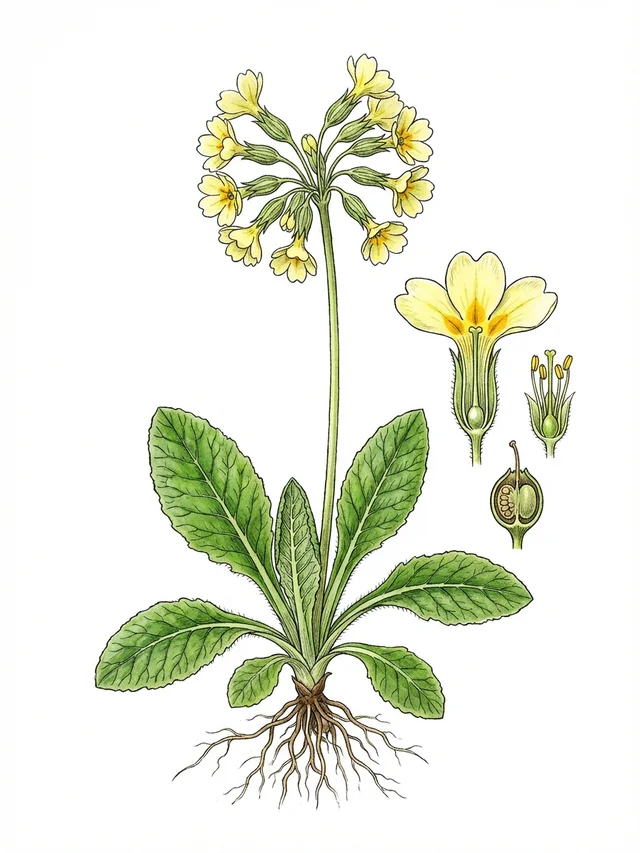
 Image to followAI-generated illustration
Molinia caerulea
Molinia caerulea
FamilyGenus: Molinianative in Germany
🌿
4
Species
interact
🔗
6
Interactions
documented
🐛
1
Host relationships
Species
About this species
A native grass of moist, nutrient-poor soils in partial shade, reaching around 0.9 m in height with broad, non-woody leaves and an association with arbuscular mycorrhizal fungi.
Ecological network
Click to highlight connections · Click again to open the species page
Loading network...
PollinationLarval host
Ecological significance
As a native component of damp, low-nutrient grasslands and moorlands, it contributes to the structural diversity of these habitats.
Standort & Merkmale
Light
Halbschatten
Moisture
Frisch (Mäßig feucht)
Soil
Schwachzehrer (Magerer Boden)
Flowering period
—
Soil reaction
Mäßig sauer bis neutral
Bioregion
Continental
Growth form
Gras
Woodiness
Nicht verholzt
Leaf type
Breitblättrig
Plant height
0.938 m
Morphological traits: TRY ID3 (CC BY 3.0) & TRY ID81 (CC BY)
Pflege & Anbau
Plant in partial shade in a moist but free-draining, nutrient-poor soil. This grass forms arbuscular mycorrhizal associations, so avoid high-phosphorus fertilisers to support the root symbiosis.
Scientific profile
Molinia caerulea is a perennial grass native in Great Britain, occurring in moist, nutrient-poor soils under partial shade. It forms tussocks of broad, non-woody leaves and attains a typical height of 0.94 m. The leaf area averages 675 mm² and the plant produces light diaspores weighing about 1.8 mg. It is a low-nutrient-demanding species, tolerating only oligotrophic conditions, and is not salt-tolerant. The grass shows a preference for moderately warm temperatures and low levels of disturbance. Mycorrhizal associations are of the arbuscular (AM) type, which likely support nutrient acquisition in impoverished soils. Ecologically, the species is placed in the unthreatened category on the current red list.
Pollinators & visitors
3 Arten interagieren mit dieser Pflanze
Host relationships
1 species use this plant as a host
Phragmatobia fuliginosa
Sources & data origin
•Interaktionsdaten via GloBI (CC-BY 4.0)
•FloraWeb / BfN
•EIVE 1.0 — Dengler et al. (2023), DOI: 10.3897/VCS.98324 (CC BY 4.0)
•GBIF Backbone Taxonomy — GBIF Secretariat (2024), DOI: 10.15468/39omei (CC BY 4.0)
•TRY Categorical Traits (ID3) — Kattge et al. (2012), DOI: 10.17871/TRY.3 (CC BY 3.0)
•TRY Global Spectrum (ID81) — Díaz et al. (2016/2021), DOI: 10.17871/TRY.81 (CC BY)
•Checklist Alien Plants Belgium — Verloove F (2023), Botanic Garden Meise (CC BY 4.0)
•Govaerts R et al. (2025) — World Checklist of Vascular Plants (WCVP) v14. Royal Botanic Gardens, Kew. DOI: 10.34885/xs7h-ze42 (CC BY 4.0)
All data is licensed under CC BY 4.0, CC0, or compatible terms. Attribution according to license conditions. Full source overview →