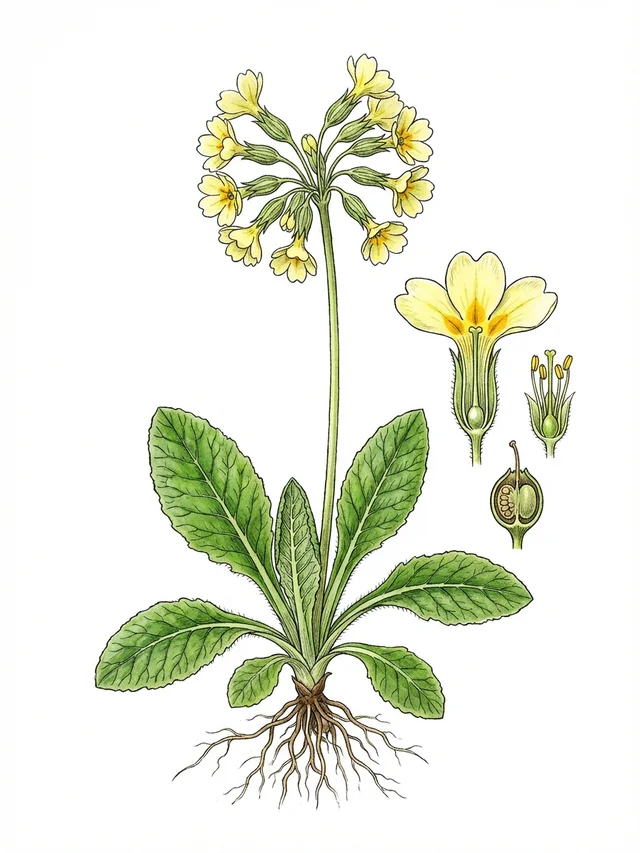
 Image to followAI-generated illustration
Muscari armeniacum
Muscari armeniacum
FamilyGenus: Muscarinative in Germany
🌿
9
Species
interact
🔗
13
Interactions
documented
About this species
An introduced bulbous perennial producing spikes of bell-shaped flowers in spring, favouring sunny, moderately moist conditions.
Ecological network
Click to highlight connections · Click again to open the species page
Loading network...
Pollination
Ecological significance
Muscari armeniacum is an introduced species that has become established in Great Britain. Currently, there is no evidence of it being invasive or causing significant ecological disruption.
Annual cycle
In early spring, broad leaves emerge from the ground, followed by flowering spikes from March to May. After blooming, the foliage gradually withers and the plant enters dormancy by summer, remaining dormant until the following spring.
Standort & Merkmale
Light
Sonne
Moisture
Frisch (Mäßig feucht)
Soil
Mittelzehrer (Normaler Boden)
Flowering period
Mär – Mai
Soil reaction
Mäßig sauer bis neutral
Bioregion
Continental
Growth form
Krautige Pflanze
Woodiness
Nicht verholzt
Leaf type
Breitblättrig
Plant height
0.15 m
Morphological traits: TRY ID3 (CC BY 3.0) & TRY ID81 (CC BY)
Pflege & Anbau
Grow in a sunny position with well-drained, moderately moist soil. This plant prefers nutrient-rich, calcareous ground. Once established, it requires little maintenance. Allow foliage to die back naturally after flowering.
Scientific profile
Muscari armeniacum is a herbaceous, non-woody perennial reaching about 15 cm in height. Its leaves are broad and emerge in early spring. Flowering occurs from March to May, bearing dense spikes of small, bell-shaped blooms. The plant is warmth-loving, requiring full sun and moderately moist, well-drained soil. It grows best in nutrient-rich, calcareous ground. In Great Britain it is an established neophyte, having been introduced and now persisting in the wild. Its original distribution includes parts of Europe and Western Asia. The seeds are small, with an average diaspore mass of 3.5 mg.
Pollinators & visitors
9 Arten interagieren mit dieser Pflanze
Bombus hypnorumBombus vestalisAnthophora plumipesOsmia cornutaBombus pratorumApis melliferaVanessa atalantaAndrena bicolorAndrena fulva
Sources & data origin
•Interaktionsdaten via GloBI (CC-BY 4.0)
•pollinator_interactions
•FloraWeb / BfN
•EIVE 1.0 — Dengler et al. (2023), DOI: 10.3897/VCS.98324 (CC BY 4.0)
•GBIF Backbone Taxonomy — GBIF Secretariat (2024), DOI: 10.15468/39omei (CC BY 4.0)
•TRY Categorical Traits (ID3) — Kattge et al. (2012), DOI: 10.17871/TRY.3 (CC BY 3.0)
•TRY Global Spectrum (ID81) — Díaz et al. (2016/2021), DOI: 10.17871/TRY.81 (CC BY)
•Checklist Alien Plants Belgium — Verloove F (2023), Botanic Garden Meise (CC BY 4.0)
•Govaerts R et al. (2025) — World Checklist of Vascular Plants (WCVP) v14. Royal Botanic Gardens, Kew. DOI: 10.34885/xs7h-ze42 (CC BY 4.0)
All data is licensed under CC BY 4.0, CC0, or compatible terms. Attribution according to license conditions. Full source overview →