Nepeta cataria
Nepeta cataria
FamilyGenus: Nepetanative in Germany
🌿
36
Species
interact
🔗
77
Interactions
documented
About this species
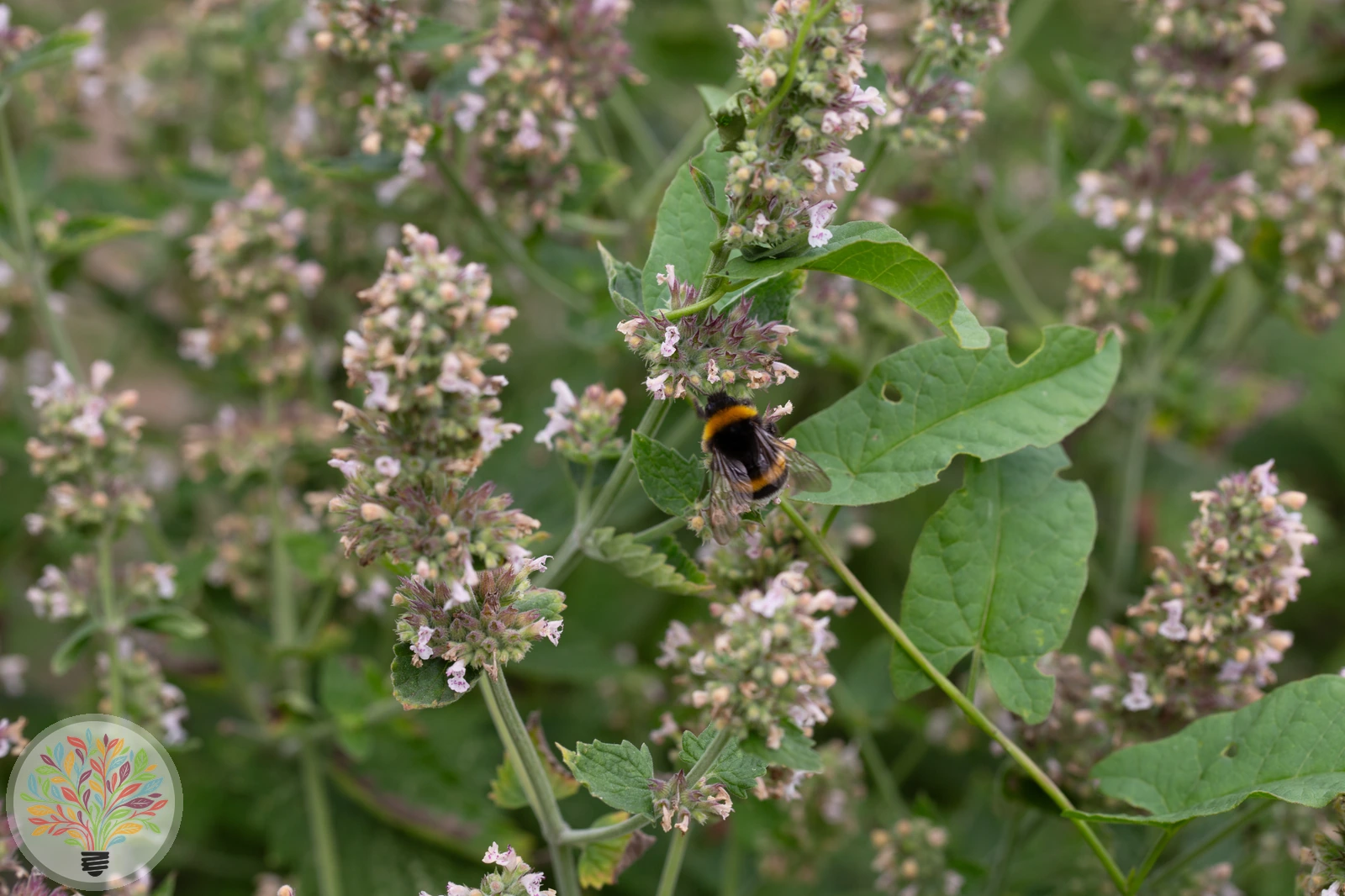
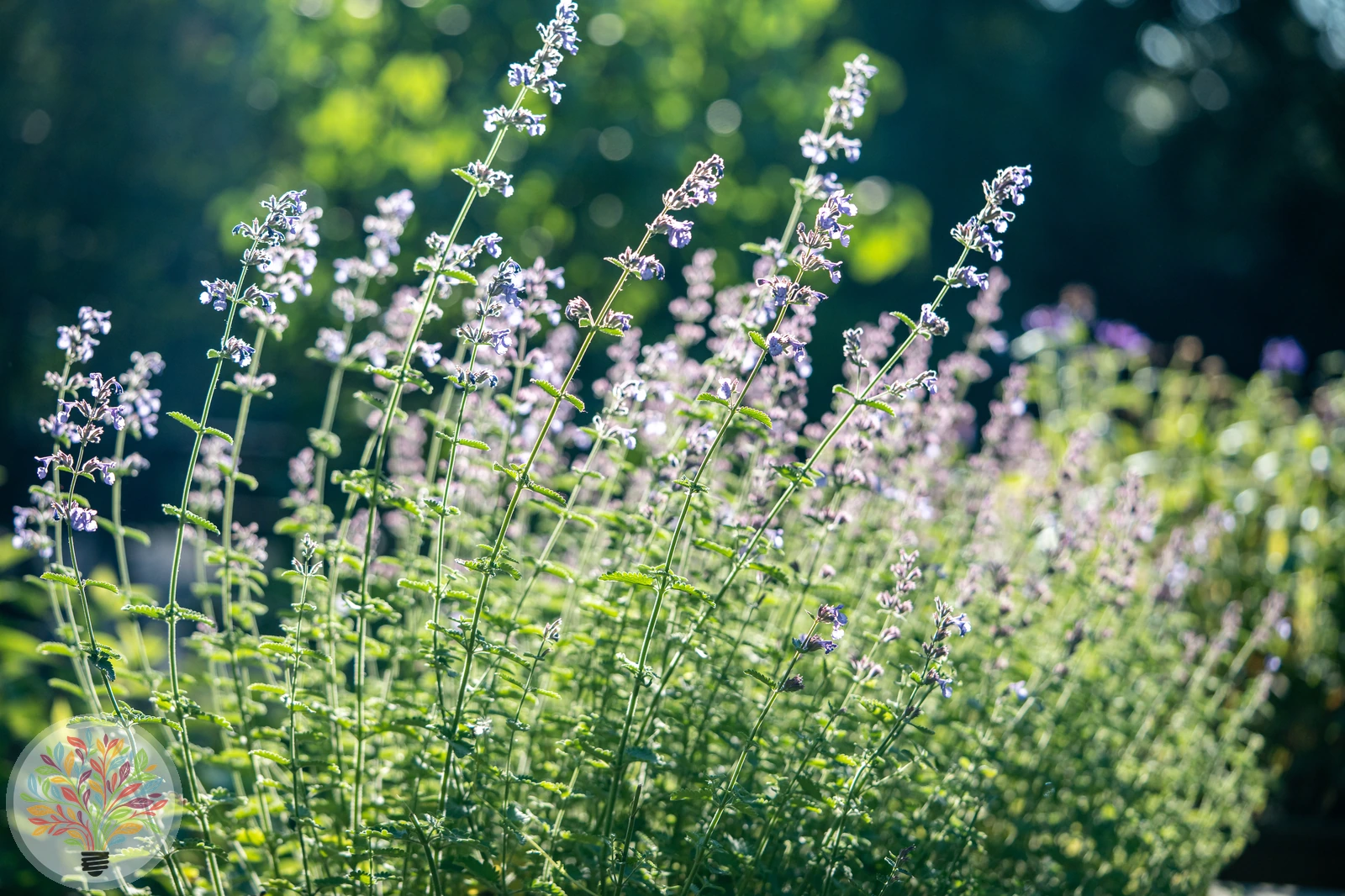
Nepeta cataria is an archaeophyte in Great Britain, long established and often found in sunny, nutrient-rich, calcareous habitats. It has broad leaves and produces nectar- and pollen-rich flowers from June to September. It is a herbaceous, non-woody plant reaching about 60 cm tall.
Ecological network
Click to highlight connections · Click again to open the species page
Loading network...
PollinationFlower visit
Ecological significance
As a long-established archaeophyte, it integrates well into British vegetation. It supplies nectar and pollen during the summer months and forms arbuscular mycorrhizal associations.
Annual cycle
This non-woody herbaceous plant emerges in spring, growing to its full height by early summer. Flowering occurs from June to September. After seed set, the above-ground parts die back in autumn, and the plant overwinters below ground, resuming growth the following spring.
Safety note
No specific safety risks to people or pets are recorded in the source data.
Standort & Merkmale
Light
Sonne
Moisture
Frisch (Mäßig feucht)
Soil
Starkzehrer (Nährstoffreicher/Fetter Boden)
Flowering period
Jun – Sep
Soil reaction
Basisch / Kalkhold
Bioregion
Continental
Nectar value
3
Pollen value
3
Growth form
Krautige Pflanze
Woodiness
Nicht verholzt
Leaf type
Breitblättrig
Plant height
0.622 m
Morphological traits: TRY ID3 (CC BY 3.0) & TRY ID81 (CC BY)
Pflege & Anbau
**Position**
Full sun in a warm, sheltered spot.
**Soil**
Fertile, well-drained but moisture-retentive soil with a neutral to alkaline pH. Avoid saline or heavily compacted ground.
**Watering**
Keep the soil moderately moist, especially during dry spells in the growing season.
**Maintenance**
It tolerates only low disturbance, so avoid frequent root disturbance. Cut back after flowering if a tidy appearance is desired. No serious pest or disease issues are indicated by the available evidence.
Scientific profile
Nepeta cataria is an established archaeophyte in the British flora, not native but present since at least the early sixteenth century. Its natural distribution extends across Europe, including the Caucasus, and into parts of Africa and temperate Asia. It is a herbaceous, non-woody broad-leaved plant, typically reaching around 62 cm in height. The leaves have an average area of 390.5 mm² and the diaspores are very small, with a mean mass of 0.55 mg. The plant shows a strong preference for sunny, warm situations and fresh, nutrient-rich soils that are calcareous or basic; it tolerates only light disturbance and does not withstand salinity. Ellenberg-type indicator values place it at light 8, temperature 7, moisture 4, reaction 7, nutrients 7 and salinity 0. Flowering extends from June through to September, with both nectar and pollen value rated as 3. It forms arbuscular mycorrhizal associations.
Pollinators & visitors
33 Arten interagieren mit dieser Pflanze
Bombus hypnorumBombus sylvestrisBombus lucorumOsmia bicornisAglais urticaeManiola jurtinaOsmia caerulescensAnthophora quadrimaculataAnthophora furcataAndrena nigroaeneaAndrena flavipesBombus hortorumAndrena minutulaBombus lapidariusBombus pratorumHalictus tumulorumBombus pascuorumBombus terrestrisApis melliferaBombus bohemicusBombus vestalisVanessa atalantaMegachile centuncularisBombus jonellusAnthidium oblongatumBombus soroeensisPieris rapaeHalictus confususAnthidium manicatumAndrena wilkellaPolistes dominulaEpisyrphus balteatusSyritta pipiens
Other flower visitors
3 other species visit the flowers
Sources & data origin
•Interaktionsdaten via GloBI (CC-BY 4.0)
•pollinator_interactions
•FloraWeb / BfN
•EIVE 1.0 — Dengler et al. (2023), DOI: 10.3897/VCS.98324 (CC BY 4.0)
•EuPPollNet — Kuppler et al. (2025), DOI: 10.1111/geb.70000 (CC BY 4.0)
•Database of Pollinator Interactions (DoPI) — Pocock et al. (2022), DOI: 10.1002/ecy.3801 (CC BY)
•GBIF Backbone Taxonomy — GBIF Secretariat (2024), DOI: 10.15468/39omei (CC BY 4.0)
•TRY Categorical Traits (ID3) — Kattge et al. (2012), DOI: 10.17871/TRY.3 (CC BY 3.0)
•TRY Global Spectrum (ID81) — Díaz et al. (2016/2021), DOI: 10.17871/TRY.81 (CC BY)
•Govaerts R et al. (2025) — World Checklist of Vascular Plants (WCVP) v14. Royal Botanic Gardens, Kew. DOI: 10.34885/xs7h-ze42 (CC BY 4.0)
•Foto: © Adobe Stock / AdobeStock_1927212242
All data is licensed under CC BY 4.0, CC0, or compatible terms. Attribution according to license conditions. Full source overview →