Oxyria digyna
Oxyria digyna
FamilyGenus: Oxyrianative in Germany
🌿
1
Species
interact
🔗
3
Interactions
documented
About this species
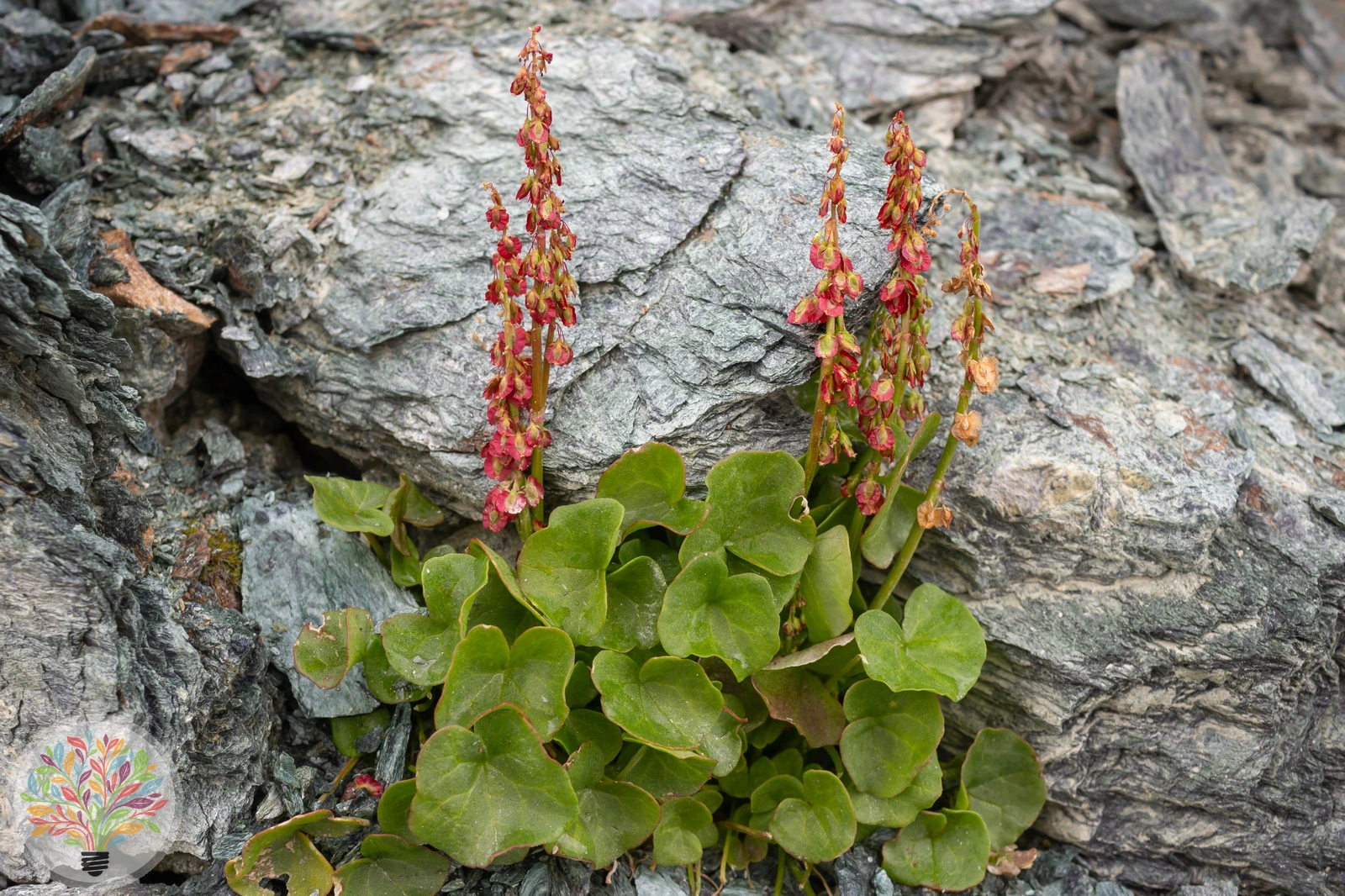
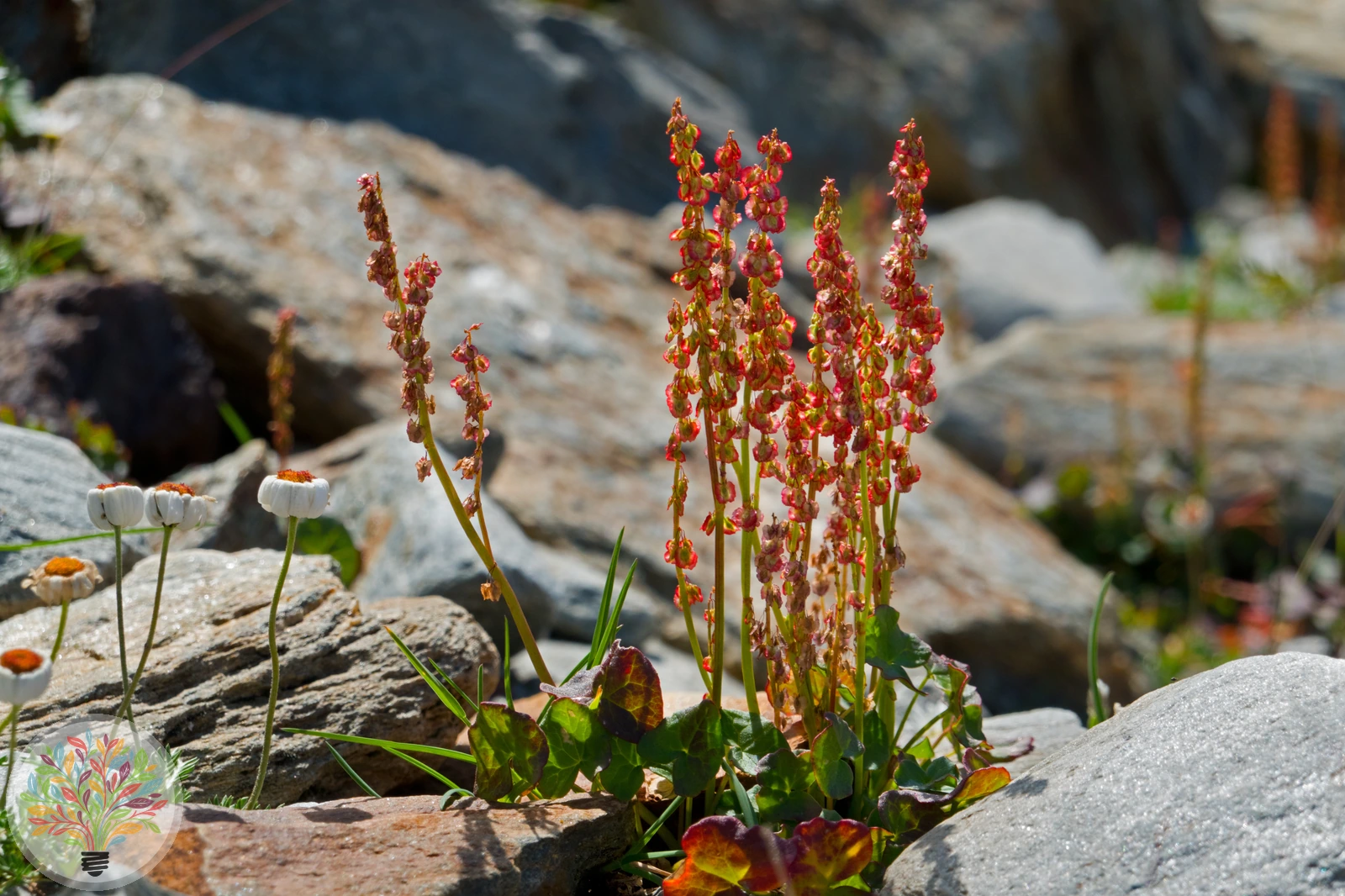
Oxyria digyna is a small native herbaceous plant of montane habitats in Britain. Reaching 10 cm in height, it bears broad leaves and flowers from June to August. The plant favours sunny, damp, infertile ground, often on screes and other open, stony sites where disturbance is low.
Ecological network
Click to highlight connections · Click again to open the species page
Loading network...
Pollination
Ecological significance
Native to Britain, Oxyria digyna is a natural component of montane plant communities and does not exhibit invasive tendencies. Its presence supports local biodiversity typical of alpine and scree habitats.
Annual cycle
The flowering period is from June to August.
Safety note
No specific safety data are recorded in the source material.
Standort & Merkmale
Light
Sonne
Moisture
Frisch (Mäßig feucht)
Soil
Schwachzehrer (Magerer Boden)
Flowering period
Jun – Aug
Soil reaction
Mäßig sauer bis neutral
Bioregion
Continental
Growth form
Krautige Pflanze
Woodiness
Nicht verholzt
Leaf type
Breitblättrig
Plant height
0.1 m
Morphological traits: TRY ID3 (CC BY 3.0) & TRY ID81 (CC BY)
Pflege & Anbau
Grow Oxyria digyna in full sun, in a very gritty, free-draining but moisture-retentive soil that is low in nutrients. A scree bed, crevice garden or alpine trough is ideal. Water regularly during dry spells to keep the root zone cool and just moist; avoid waterlogging. Do not apply fertiliser, as rich soil reduces its hardiness and natural form. No special pruning is required; simply remove spent flower stems if desired.
Scientific profile
Oxyria digyna is a member of the knotweed family (Polygonaceae) and is native in Great Britain. This non-woody herbaceous plant stands just 10 cm tall and bears broad, green leaves. The flowering period spans June to August. It grows in full sun and prefers fresh, moderately moist soils that are lean in nutrients. Ecologically it is a cold-climate species of alpine and northern regions, tolerating soils that are neutral to weakly acid. It occupies open, low-disturbance sites such as screes and mobile gravelly slopes, where its minute seeds — each weighing about 0.6 mg — aid colonisation of bare ground. In Britain its populations are red-listed as Least Concern.
Sources & data origin
•Interaktionsdaten via GloBI (CC-BY 4.0)
•FloraWeb / BfN
•EIVE 1.0 — Dengler et al. (2023), DOI: 10.3897/VCS.98324 (CC BY 4.0)
•GBIF Backbone Taxonomy — GBIF Secretariat (2024), DOI: 10.15468/39omei (CC BY 4.0)
•TRY Categorical Traits (ID3) — Kattge et al. (2012), DOI: 10.17871/TRY.3 (CC BY 3.0)
•TRY Global Spectrum (ID81) — Díaz et al. (2016/2021), DOI: 10.17871/TRY.81 (CC BY)
•Checklist Alien Plants Belgium — Verloove F (2023), Botanic Garden Meise (CC BY 4.0)
•Govaerts R et al. (2025) — World Checklist of Vascular Plants (WCVP) v14. Royal Botanic Gardens, Kew. DOI: 10.34885/xs7h-ze42 (CC BY 4.0)
•Foto: © Enrico Morando / Adobe Stock
All data is licensed under CC BY 4.0, CC0, or compatible terms. Attribution according to license conditions. Full source overview →