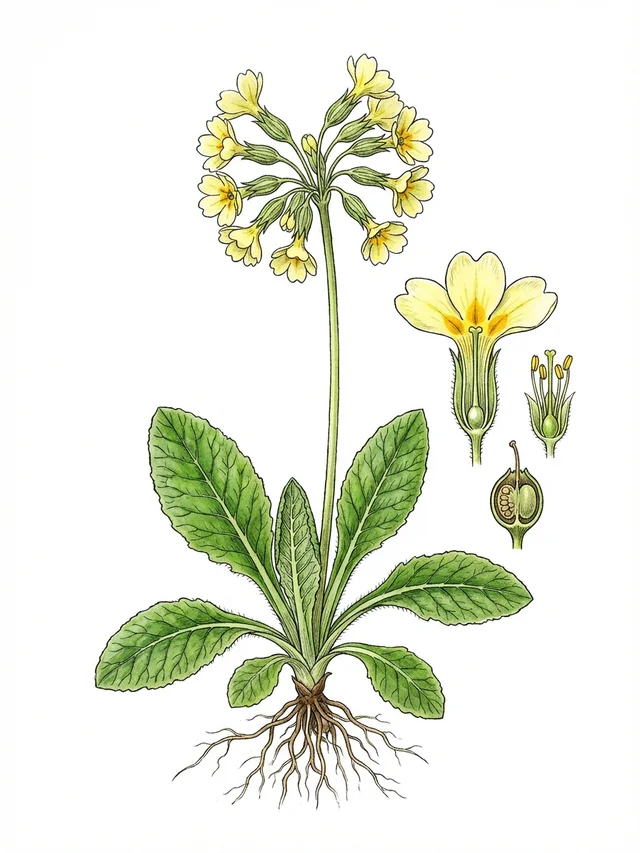
 Image to followAI-generated illustration
Persicaria maculosa
Persicaria maculosa
FamilyGenus: Persicarianative in Germany
🌿
72
Species
interact
🔗
198
Interactions
documented
🐛
7
Host relationships
Species
About this species
Persicaria maculosa is a native herbaceous broad-leaved plant reaching around 40 cm in height. It grows in full sun on moist, fertile soils and flowers from June to September. It is found in meadows, nutrient-rich ruderal areas, and woodland edges.
Ecological network
Click to highlight connections · Click again to open the species page
Loading network...
PollinationLarval hostFlower visit
Ecological significance
A native component of nutrient-rich grasslands, field margins and disturbed ground. The data do not record specific faunal relationships, but its accessible flowers are available during late summer and early autumn when many generalist insects forage.
Annual cycle
The flowering period extends from June to September. Information on germination, growth start, and senescence is not recorded in the dataset.
Safety note
The source data contain no records of toxicity or other safety concerns for this species.
Standort & Merkmale
Light
Sonne
Moisture
Frisch (Mäßig feucht)
Soil
Starkzehrer (Nährstoffreicher/Fetter Boden)
Flowering period
Jun – Sep
Soil reaction
Mäßig sauer bis neutral
Bioregion
Continental
Growth form
Krautige Pflanze
Woodiness
Nicht verholzt
Leaf type
Breitblättrig
Plant height
0.396 m
Morphological traits: TRY ID3 (CC BY 3.0) & TRY ID81 (CC BY)
Pollen
0.0508 mg/Blüte
Pflege & Anbau
•
Light: Full sun.
•
Moisture: Moist but well-drained, moderately fertile soil.
•
Soil: Rich, fertile loam; tolerates neutral to slightly acidic pH.
•
Feeding: Heavy feeder; benefits from nutrient-rich conditions.
•
Salinity: Avoid saline sites.
•
Propagation: No specific data provided.
Scientific profile
Persicaria maculosa is a non-woody, broad-leaved herbaceous plant native in Great Britain. It attains a height of about 0.4 metres and bears flowers from June to September. The species shows a strong preference for sunny, moderately moist locations with nutrient-rich, neutral to slightly acidic soils; it is not tolerant of salinity. Typical habitats include fertile meadows, nutrient-rich ruderal sites, and woodland fringes, where it experiences low disturbance levels. The diaspore mass is approximately 2 mg, leaf area around 1429 mm², and the plant is categorized as a heavy feeder (Ellenberg nutrient value 7). Its Red List status is * (not threatened).
Pollinators & visitors
50 Arten interagieren mit dieser Pflanze
Halictus tumulorumPieris rapaeThymelicus sylvestrisPieris napiManiola jurtinaAndrena dorsataBombus lapidariusBombus hypnorumPieris brassicaeColias croceusMelitaea athaliaLasioglossum parvulumApis melliferaPyronia tithonusBombus lucorumBombus sylvestrisChaetocnema concinnaParagus haemorrhousHalictus simplexHalictus scabiosaeHalictus subauratusLasioglossum malachurumHalictus simplex/langobardicus/compressusHelophilus trivittatusLasioglossum pauxillumLasioglossum lucidulumAndrena ovatulaHylaeus punctatusParagus tibialisLasioglossum villosulumSphaerophoria scriptaHalictus maculatusEristalinus sepulchralisHylaeus communisSphecodes gibbusEristalisEristalis tenaxPlatycheirus albimanusEristalis arbustorumEristalis pertinaxNeoascia podagricaSyrphus ribesiiSyrphus vitripennisPlatycheirus granditarsusSyritta pipiensEpisyrphus balteatusHelophilus pendulusEristalinus aeneusLasioglossum glabriusculumBombus terrestris
Host relationships
7 species use this plant as a host
Timandra comaeLacanobia w-latinumPyrrhia umbraAutographa gammaAcronicta rumicisTrachea atriplicisLacanobia oleracea
Other flower visitors
15 other species visit the flowers
Aythya ferinaChloris chlorisCygnus olorAnas creccaFringilla coelebsCarduelis carduelisGastrophysa polygoniPyrrhula pyrrhulaCygnus columbianusLinaria cannabinaTenthredo mesomelaFormica rufibarbisEupeodes bucculatus aggPhaonia incanaSiphona geniculata
Sources & data origin
•Interaktionsdaten via GloBI (CC-BY 4.0)
•Cook et al. (2025) UK Butterfly & Moth Traits (DOI: 10.5285/dbc7cc17-cbbd-49dd-bab4-8e8855768d66)
•pollinator_interactions
•Baden-Böhm F, App M, Thiele J (2022) — The FloRes Database: A floral resources trait database for pollinator habitat-assessment generated by a multistep workflow. Johann Heinrich von Thünen-Institut, Dryad, DOI: 10.5061/dryad.djh9w0w29 (CC0)
•FloraWeb / BfN
•EIVE 1.0 — Dengler et al. (2023), DOI: 10.3897/VCS.98324 (CC BY 4.0)
•GBIF Backbone Taxonomy — GBIF Secretariat (2024), DOI: 10.15468/39omei (CC BY 4.0)
•TRY Categorical Traits (ID3) — Kattge et al. (2012), DOI: 10.17871/TRY.3 (CC BY 3.0)
•TRY Global Spectrum (ID81) — Díaz et al. (2016/2021), DOI: 10.17871/TRY.81 (CC BY)
•Govaerts R et al. (2025) — World Checklist of Vascular Plants (WCVP) v14. Royal Botanic Gardens, Kew. DOI: 10.34885/xs7h-ze42 (CC BY 4.0)
All data is licensed under CC BY 4.0, CC0, or compatible terms. Attribution according to license conditions. Full source overview →