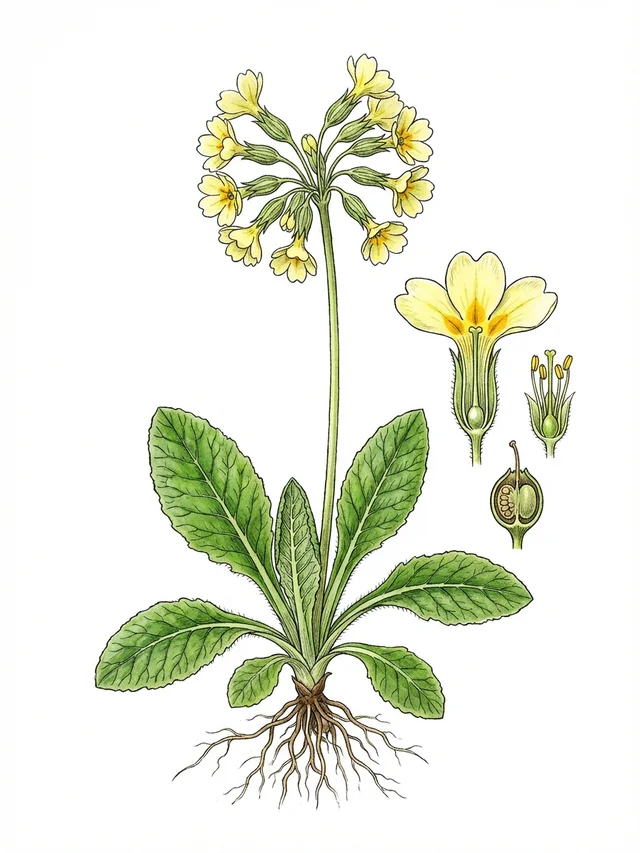
 Image to followAI-generated illustration
Phaseolus vulgaris
Phaseolus vulgaris
FamilyGenus: Phaseolusnative in Germany
🌿
24
Species
interact
🔗
105
Interactions
documented
🐛
5
Host relationships
Species
About this species
An introduced, established herbaceous plant in Great Britain, Phaseolus vulgaris is widely grown for its edible beans. Originating from the Americas and North Africa, it bears broad leaves and can reach about 0.8 m tall. From June to July it produces flowers that offer moderate nectar and pollen resources for insects.
Ecological network
Click to highlight connections · Click again to open the species page
Loading network...
PollinationLarval hostFlower visit
Ecological significance
The flowers supply a moderate amount of nectar and pollen, supporting pollinating insects. No further ecological interactions are recorded in the evidence.
Annual cycle
In cultivation, Phaseolus vulgaris is treated as an annual; it flowers in June and July, followed by pod formation and seed ripening. The plant senesces after seed set.
Safety note
No safety data are present in the evidence used for this profile.
Standort & Merkmale
Light
Sonne
Moisture
Frisch (Mäßig feucht)
Soil
—
Flowering period
Jun – Jul
Bioregion
Continental
Nectar value
4
Pollen value
4
Growth form
Krautige Pflanze
Woodiness
Nicht verholzt
Leaf type
Breitblättrig
Plant height
0.794 m
Morphological traits: TRY ID3 (CC BY 3.0) & TRY ID81 (CC BY)
Pflege & Anbau
•
Light : Full sun.
•
Water : Prefers fresh, moderately moist soil; water regularly but avoid waterlogging.
•
Soil : Thrives in calcareous (alkaline) soils.
•
Mycorrhiza : Benefits from arbuscular mycorrhizal fungi, which may be present in healthy garden soil.
•
Feeding : As a medium feeder, occasional balanced feeding can support growth.
Scientific profile
Phaseolus vulgaris is an introduced and established species in Great Britain, originating from Northern Africa, Northern America, Mexico, Southern America, and Central America. It is a broad-leaved, non-woody, terrestrial herbaceous plant that can reach a height of around 0.79 metres. Roots form arbuscular mycorrhizal (AM) associations. Flowering occurs from June to July, with flowers providing moderate nectar (value 4) and pollen (value 4). The seeds (diaspores) are large, averaging 303 mg. The species prefers sunny locations with fresh, moderately moist, calcareous (alkaline) soils; it is considered a medium feeder.
Pollinators & visitors
18 Arten interagieren mit dieser Pflanze
Apis melliferaAgrotis ipsilonBombus ruderatusElkalyce argiadesCantharis rufa (Linnaeus)Polistes dominulaAthalia rosaePieris rapaeBombus pascuorumAnthidium manicatumMegachile centuncularisPolyommatus fulgensPolyommatus humedasaeHesperia commaBombus.terrestrisBombus.ruderatusApis.melliferaBombus.sp
Host relationships
5 species use this plant as a host
Sources & data origin
•Interaktionsdaten via GloBI (CC-BY 4.0)
•Middleton-Welling_2020
•pollinator_interactions
•EIVE 1.0 — Dengler et al. (2023), DOI: 10.3897/VCS.98324 (CC BY 4.0)
•EuPPollNet — Kuppler et al. (2025), DOI: 10.1111/geb.70000 (CC BY 4.0)
•Database of Pollinator Interactions (DoPI) — Pocock et al. (2022), DOI: 10.1002/ecy.3801 (CC BY)
•GBIF Backbone Taxonomy — GBIF Secretariat (2024), DOI: 10.15468/39omei (CC BY 4.0)
•TRY Categorical Traits (ID3) — Kattge et al. (2012), DOI: 10.17871/TRY.3 (CC BY 3.0)
•TRY Global Spectrum (ID81) — Díaz et al. (2016/2021), DOI: 10.17871/TRY.81 (CC BY)
•Checklist Alien Plants Belgium — Verloove F (2023), Botanic Garden Meise (CC BY 4.0)
•Govaerts R et al. (2025) — World Checklist of Vascular Plants (WCVP) v14. Royal Botanic Gardens, Kew. DOI: 10.34885/xs7h-ze42 (CC BY 4.0)
All data is licensed under CC BY 4.0, CC0, or compatible terms. Attribution according to license conditions. Full source overview →