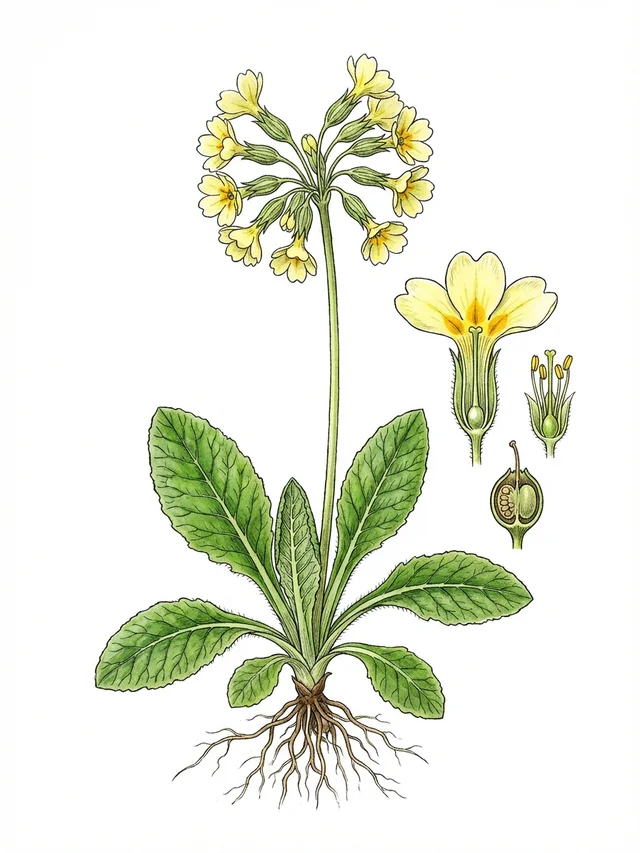
 Image to followAI-generated illustration
Pinus nigra
Pinus nigra
FamilyGenus: Pinusnative in Germany
🌿
5
Species
interact
🔗
5
Interactions
documented
🐛
5
Host relationships
Species
About this species
Pinus nigra is an introduced, established evergreen tree in Great Britain, reaching heights of up to 33 m. It favours sunny, dry, nutrient-poor sites and flowers in May and June.
Ecological network
Click to highlight connections · Click again to open the species page
Loading network...
Larval host
Ecological significance
As an introduced tree, Pinus nigra can establish in open, sunny sites on poor soils. It forms ectomycorrhizal associations that may influence soil communities, but specific ecological impacts in Great Britain are not documented.
Annual cycle
The tree is evergreen, retaining its foliage throughout the year. Flowering takes place from May to June.
Safety note
No specific safety information is available.
Standort & Merkmale
Light
Sonne
Moisture
Trocken
Soil
Schwachzehrer (Magerer Boden)
Flowering period
Mai – Jun
Soil reaction
Basisch / Kalkhold
Bioregion
Continental
Growth form
Baum
Woodiness
Verholzt
Leaf type
Nadelblättrig
Leaf phenology
Immergrün
Plant height
33.006 m
Morphological traits: TRY ID3 (CC BY 3.0) & TRY ID81 (CC BY)
Pflege & Anbau
•
Light: Full sun
•
Soil: Well-drained, dry to moderately moist, nutrient-poor soil
•
Mycorrhiza: Benefits from ectomycorrhizal fungi
•
Flowering period: May to June
Scientific profile
Pinus nigra is a tall, woody, evergreen conifer with needle-like leaves. It reaches a typical height of roughly 33 m and has small leaf areas of about 111 mm². The species is introduced and established in Great Britain. It grows best in full sun on dry to moderately moist, nutrient-poor soils. Derived habitat indications suggest it is often associated with extensive grassland or poor meadow communities, though with moderate confidence. The tree forms ectomycorrhizal associations and tolerates low levels of disturbance. Seeds are relatively small, with a mean diaspore mass of approximately 19 mg.
Host relationships
5 species use this plant as a host
Sources & data origin
•Cook et al. (2025) UK Butterfly & Moth Traits (DOI: 10.5285/dbc7cc17-cbbd-49dd-bab4-8e8855768d66)
•FloraWeb / BfN
•EIVE 1.0 — Dengler et al. (2023), DOI: 10.3897/VCS.98324 (CC BY 4.0)
•GBIF Backbone Taxonomy — GBIF Secretariat (2024), DOI: 10.15468/39omei (CC BY 4.0)
•TRY Categorical Traits (ID3) — Kattge et al. (2012), DOI: 10.17871/TRY.3 (CC BY 3.0)
•TRY Global Spectrum (ID81) — Díaz et al. (2016/2021), DOI: 10.17871/TRY.81 (CC BY)
•Checklist Alien Plants Belgium — Verloove F (2023), Botanic Garden Meise (CC BY 4.0)
•Govaerts R et al. (2025) — World Checklist of Vascular Plants (WCVP) v14. Royal Botanic Gardens, Kew. DOI: 10.34885/xs7h-ze42 (CC BY 4.0)
All data is licensed under CC BY 4.0, CC0, or compatible terms. Attribution according to license conditions. Full source overview →