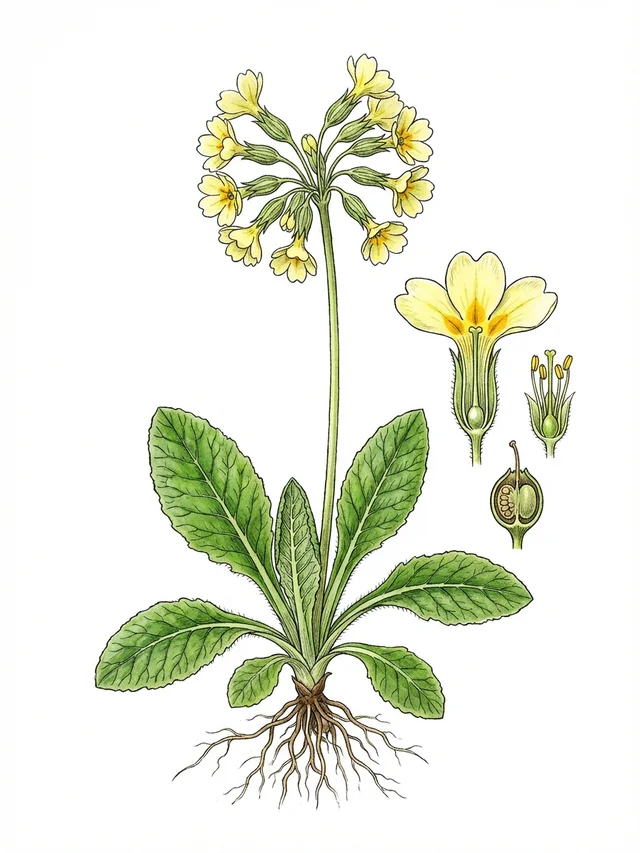
 Image to followAI-generated illustration
Pinus pinaster
Pinus pinaster
FamilyGenus: Pinusnon-native in Germany🌍 Neophyte
🌍
Alien species (Neophyte)
This plant is not native to Central Europe. It was introduced after 1492 and has become established in the wild. Documented interactions with native fauna are listed below — however, they do not replace the ecological value of native plants.
🌿
2
Species
interact
🔗
2
Interactions
documented
🐛
2
Host relationships
Species
About this species
Pinus pinaster is an introduced evergreen tree established in Great Britain. It reaches a height of around 21.8 m, has needle-like leaves, and blooms from May to June.
Ecological network
Click to highlight connections · Click again to open the species page
Loading network...
Larval host
Ecological significance
As an introduced tree, its ecological relationships in Great Britain are not elaborated in the source evidence.
Annual cycle
Evergreen foliage persists year-round. Flowering takes place from May to June.
Safety note
No specific safety hazards are documented in the source evidence.
Standort & Merkmale
Light
—
Moisture
—
Soil
—
Flowering period
Mai – Jun
Growth form
Baum
Woodiness
Verholzt
Leaf type
Nadelblättrig
Leaf phenology
Immergrün
Plant height
21.792 m
Morphological traits: TRY ID3 (CC BY 3.0) & TRY ID81 (CC BY)
Pflege & Anbau
Specific care instructions are not available from the current dataset.
Scientific profile
Pinus pinaster is an introduced evergreen conifer of the pine family (Pinaceae) that is established in Great Britain. It grows as a woody tree, typically attaining a height of about 21.8 m. The species bears needle-like leaves that are retained throughout the year; the average leaf area is 253.8 mm². Reproductive activity occurs from May to June, and seeds have a mean mass of 54.6 mg.
Sources & data origin
•Cook et al. (2025) UK Butterfly & Moth Traits (DOI: 10.5285/dbc7cc17-cbbd-49dd-bab4-8e8855768d66)
•GBIF Backbone Taxonomy — GBIF Secretariat (2024), DOI: 10.15468/39omei (CC BY 4.0)
•TRY Categorical Traits (ID3) — Kattge et al. (2012), DOI: 10.17871/TRY.3 (CC BY 3.0)
•TRY Global Spectrum (ID81) — Díaz et al. (2016/2021), DOI: 10.17871/TRY.81 (CC BY)
•Checklist Alien Plants Belgium — Verloove F (2023), Botanic Garden Meise (CC BY 4.0)
•Govaerts R et al. (2025) — World Checklist of Vascular Plants (WCVP) v14. Royal Botanic Gardens, Kew. DOI: 10.34885/xs7h-ze42 (CC BY 4.0)
All data is licensed under CC BY 4.0, CC0, or compatible terms. Attribution according to license conditions. Full source overview →