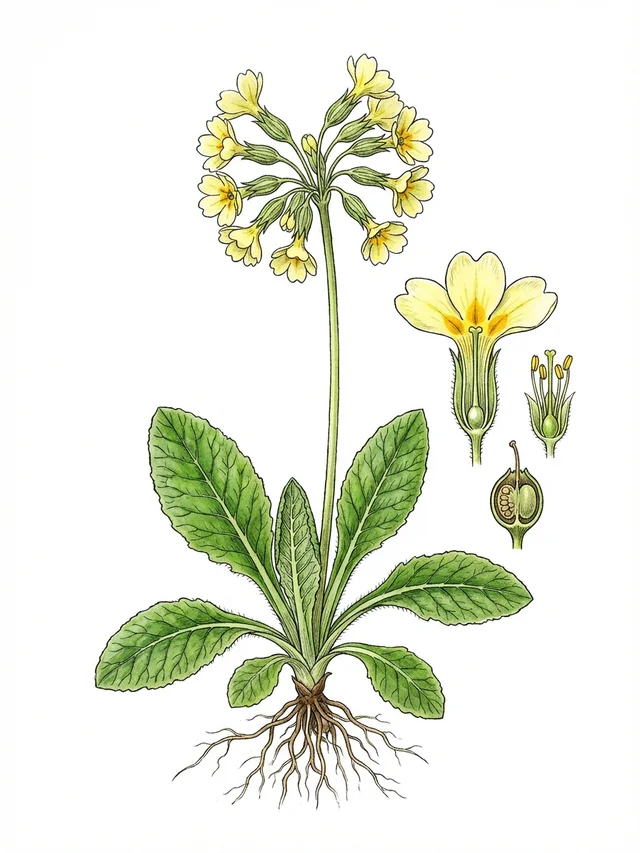
 Image to followAI-generated illustration
Poa nemoralis
Poa nemoralis
FamilyGenus: Poanative in Germany
🌿
6
Species
interact
🔗
8
Interactions
documented
🐛
3
Host relationships
Species
About this species
A native British grass of shady, moist places, forming loose tufts of broad leaves and producing its delicate flower heads from early to late summer.
Ecological network
Click to highlight connections · Click again to open the species page
Loading network...
PollinationLarval host
Ecological significance
As an indigenous grass of shaded environments, it contributes to local biodiversity by providing cover and forage for small wildlife in moist, low-light habitats.
Annual cycle
Flowering occurs from June to August.
Safety note
No toxic effects are known; it is safe around children.
Standort & Merkmale
Light
Schatten
Moisture
Frisch (Mäßig feucht)
Soil
Mittelzehrer (Normaler Boden)
Flowering period
Jun – Aug
Soil reaction
Mäßig sauer bis neutral
Bioregion
Continental
Growth form
Gras
Woodiness
Nicht verholzt
Leaf type
Breitblättrig
Plant height
0.461 m
Morphological traits: TRY ID3 (CC BY 3.0) & TRY ID81 (CC BY)
Pflege & Anbau
Grow in full or partial shade, in normal garden soil that stays moderately moist. No supplementary feeding is necessary. Once established, it needs little attention.
Scientific profile
Poa nemoralis is a native grass in Great Britain. It requires shade and favours fresh, moderately moist soils with a neutral to weakly acidic reaction and moderate nutrient levels. The plant reaches a height of about 46 cm, bearing broad, terrestrial leaves (mean leaf area 527 mm²). Its small seeds (diaspore mass 0.13 mg) are shed during the flowering period, which lasts from June to August. An indicator of low-disturbance habitats, it typically occurs where the cover is consistently shaded and the soil moisture is even.
Pollinators & visitors
3 Arten interagieren mit dieser Pflanze
Host relationships
3 species use this plant as a host
Apamea scolopacinaApamea furvaMythimna turca
Sources & data origin
•Cook et al. (2025) UK Butterfly & Moth Traits (DOI: 10.5285/dbc7cc17-cbbd-49dd-bab4-8e8855768d66)
•Interaktionsdaten via GloBI (CC-BY 4.0)
•FloraWeb / BfN
•EIVE 1.0 — Dengler et al. (2023), DOI: 10.3897/VCS.98324 (CC BY 4.0)
•GBIF Backbone Taxonomy — GBIF Secretariat (2024), DOI: 10.15468/39omei (CC BY 4.0)
•TRY Categorical Traits (ID3) — Kattge et al. (2012), DOI: 10.17871/TRY.3 (CC BY 3.0)
•TRY Global Spectrum (ID81) — Díaz et al. (2016/2021), DOI: 10.17871/TRY.81 (CC BY)
•Govaerts R et al. (2025) — World Checklist of Vascular Plants (WCVP) v14. Royal Botanic Gardens, Kew. DOI: 10.34885/xs7h-ze42 (CC BY 4.0)
All data is licensed under CC BY 4.0, CC0, or compatible terms. Attribution according to license conditions. Full source overview →