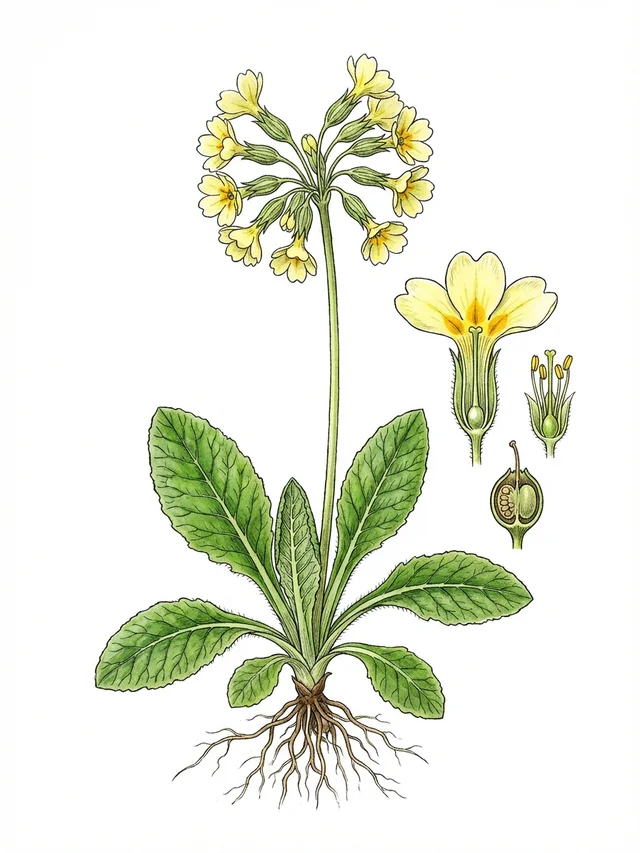
 Image to followAI-generated illustration
Populus nigra
Populus nigra subsp. nigra
FamilyGenus: Populusnative in Germany
🌿
21
Species
interact
🔗
25
Interactions
documented
🐛
10
Host relationships
Species
About this species
A native deciduous tree bearing broad leaves, typically reaching about 25 metres in height. It favours semi-shaded sites with fresh, nutrient-rich, calcareous soils and forms ectomycorrhizal associations.
Ecological network
Click to highlight connections · Click again to open the species page
Loading network...
PollinationLarval hostFlower visit
Ecological significance
As a native broad-leaved tree, it provides habitat and food for a range of wildlife. It participates in ectomycorrhizal networks, aiding nutrient cycling. Its tiny seeds are wind-dispersed.
Annual cycle
In autumn the broad leaves colour and are shed. The tree remains leafless through winter, and new foliage emerges in spring.
Safety note
The available evidence does not include safety or toxicity data.
Standort & Merkmale
Light
Halbschatten
Moisture
Frisch (Mäßig feucht)
Soil
Starkzehrer (Nährstoffreicher/Fetter Boden)
Flowering period
—
Soil reaction
Basisch / Kalkhold
Bioregion
Continental
Growth form
Baum
Woodiness
Verholzt
Leaf type
Breitblättrig
Leaf phenology
Laubabwerfend
Plant height
24.785 m
Morphological traits: TRY ID3 (CC BY 3.0) & TRY ID81 (CC BY)
Pflege & Anbau
Plant in semi-shade on deep, fresh, moderately moist, nutrient-rich, calcareous soil. Ectomycorrhizal partnerships are important for healthy growth; avoid disturbing the root zone once established.
Scientific profile
Populus nigra is a deciduous, broad-leaved tree that commonly attains a height around 24.8 metres. Its leaves are relatively large, with a recorded leaf area of approximately 2294 mm², and its wind-dispersed diaspores are extremely light, weighing only about 0.68 mg. The species grows best in semi-shade on fresh, moderately moist, nutrient-rich soils with a basic reaction, and it is ectomycorrhizal, associating with soil fungi. It is classified in Germany as vulnerable (Red List category 3).
Pollinators & visitors
5 Arten interagieren mit dieser Pflanze
Catocala nuptaNymphalis antiopaApatura ilia (Denis & Schiffermüller), 1775Scoliopteryx libatrixVespula germanica
Host relationships
10 species use this plant as a host
Laothoe populiPtilodon capucinaNotodonta ziczacAcronicta megacephala (Denis & Schiffermüller), 1775Lymantria disparSelenia tetralunariaLycia hirtariaOdontopera bidentataColotois pennariaClostera pigra
Other flower visitors
6 other species visit the flowers
Nyctalus noctulaEriophyes laevisCrepidodera aurataPhyllobius oblongusChilocorus renipustulatusHarmonia axyridis
Sources & data origin
•Interaktionsdaten via GloBI (CC-BY 4.0)
•FloraWeb / BfN
•EIVE 1.0 — Dengler et al. (2023), DOI: 10.3897/VCS.98324 (CC BY 4.0)
•GBIF Backbone Taxonomy — GBIF Secretariat (2024), DOI: 10.15468/39omei (CC BY 4.0)
•TRY Categorical Traits (ID3) — Kattge et al. (2012), DOI: 10.17871/TRY.3 (CC BY 3.0)
•TRY Global Spectrum (ID81) — Díaz et al. (2016/2021), DOI: 10.17871/TRY.81 (CC BY)
•Checklist Alien Plants Belgium — Verloove F (2023), Botanic Garden Meise (CC BY 4.0)
•Govaerts R et al. (2025) — World Checklist of Vascular Plants (WCVP) v14. Royal Botanic Gardens, Kew. DOI: 10.34885/xs7h-ze42 (CC BY 4.0)
All data is licensed under CC BY 4.0, CC0, or compatible terms. Attribution according to license conditions. Full source overview →