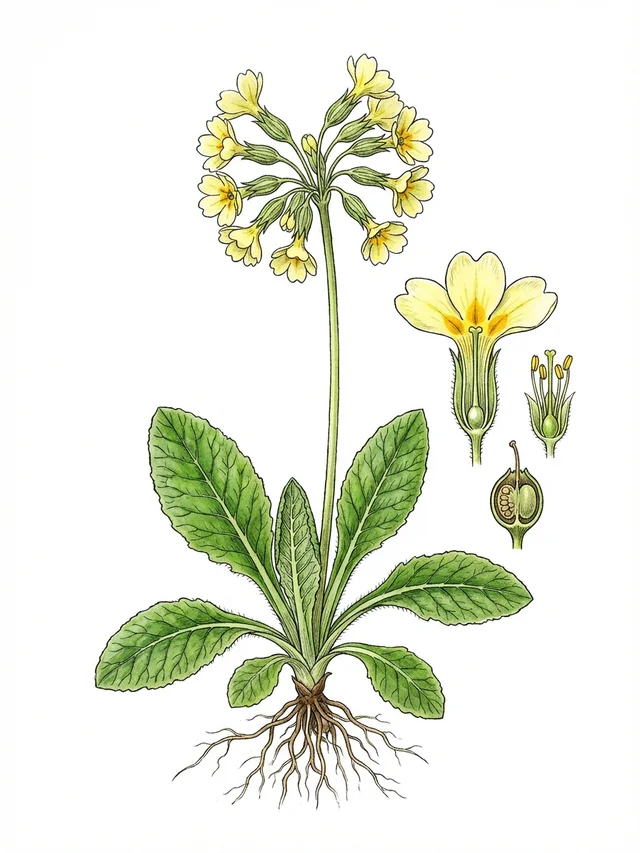
 Image to followAI-generated illustration
Prunus padus
Prunus padus
FamilyGenus: Prunusnative in Germany
🌿
25
Species
interact
🔗
26
Interactions
documented
🐛
5
Host relationships
Species
About this species
A native deciduous tree reaching about 10 m, with broad leaves and clusters of flowers appearing from April to June, followed by small fruits. It favours moist, alkaline to neutral soils and grows in partial shade.
Ecological network
Click to highlight connections · Click again to open the species page
Loading network...
PollinationLarval hostFlower visit
Ecological significance
As a component of damp woodlands and hedgerows, Prunus padus contributes to the organic matter and nutrient cycles through its annual leaf fall. It forms arbuscular mycorrhizal partnerships that improve soil structure and nutrient exchange, an important function in its preferred moist, alkaline habitats. The tree's low disturbance tolerance means it is characteristic of stable, long-established plant communities.
Annual cycle
New broad leaves unfold in spring, and flowering commences in April, lasting into June. After pollination, small fruits form and ripen towards late summer. Leaves are shed in autumn, leaving the tree bare through winter; buds remain dormant until the following spring.
Standort & Merkmale
Light
Halbschatten
Moisture
Frisch (Mäßig feucht)
Soil
Mittelzehrer (Normaler Boden)
Flowering period
Apr – Jun
Soil reaction
Basisch / Kalkhold
Bioregion
Continental
Growth form
Baum
Woodiness
Verholzt
Leaf type
Breitblättrig
Leaf phenology
Laubabwerfend
Plant height
10.048 m
Morphological traits: TRY ID3 (CC BY 3.0) & TRY ID81 (CC BY)
Pflege & Anbau
Plant in moist but well-drained soil of moderate fertility; a neutral to alkaline pH is ideal. Choose a position in partial shade, although full sun is tolerated if the ground stays reliably damp. Once in place, avoid moving the tree or disturbing its root system, as it is sensitive to disruption.
Scientific profile
Prunus padus is a native deciduous tree in Great Britain, typically reaching 10 m in height. It bears broad, deciduous leaves that are shed each autumn. The tree flowers from April through June, producing clusters of small blossoms that give way to small fruits. It shows a strong preference for moist, well-drained soils that are neutral to alkaline and only moderately fertile. It performs best in partial shade but will tolerate brighter sites if the soil remains moist. The species has low tolerance of disturbance, so it is usually found in stable woodland or hedgerow habitats. Like many members of the Rosaceae, it forms arbuscular mycorrhizal associations, which assist nutrient absorption in its preferred soil conditions.
Pollinators & visitors
19 Arten interagieren mit dieser Pflanze
Spialia sertoriusSpialia rosaeSpialia orbiferMuschampia cribrellumMuschampia tessellumBoloria polarisBoloria friggaBoloria freijaBoloria charicleaPolygonia c-albumNymphalis polychlorosMelitaea diaminaApis melliferaBombus pascuorumBombus lucorumPsithyrus barbutellusAndrena haemorrhoaPlatycheirus.albimanusBombus hypnorum
Host relationships
5 species use this plant as a host
Other flower visitors
1 other species visit the flowers
Parasyrphus punctulatus
Sources & data origin
•Cook et al. (2025) UK Butterfly & Moth Traits (DOI: 10.5285/dbc7cc17-cbbd-49dd-bab4-8e8855768d66)
•Middleton-Welling_2020
•pollinator_interactions
•FloraWeb / BfN
•EIVE 1.0 — Dengler et al. (2023), DOI: 10.3897/VCS.98324 (CC BY 4.0)
•GBIF Backbone Taxonomy — GBIF Secretariat (2024), DOI: 10.15468/39omei (CC BY 4.0)
•TRY Categorical Traits (ID3) — Kattge et al. (2012), DOI: 10.17871/TRY.3 (CC BY 3.0)
•TRY Global Spectrum (ID81) — Díaz et al. (2016/2021), DOI: 10.17871/TRY.81 (CC BY)
•Govaerts R et al. (2025) — World Checklist of Vascular Plants (WCVP) v14. Royal Botanic Gardens, Kew. DOI: 10.34885/xs7h-ze42 (CC BY 4.0)
All data is licensed under CC BY 4.0, CC0, or compatible terms. Attribution according to license conditions. Full source overview →