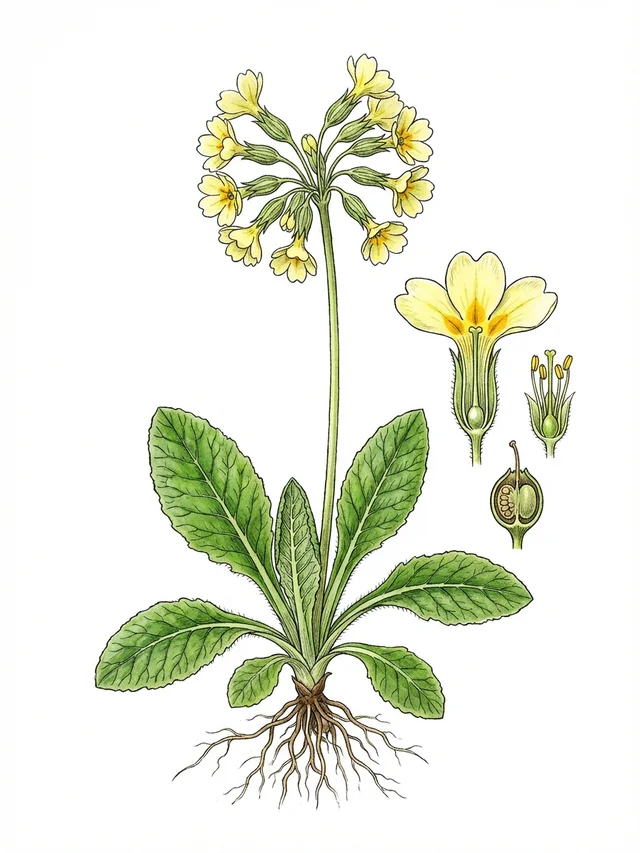
 Image to followAI-generated illustration
Pyracantha coccinea
Pyracantha coccinea
FamilyGenus: Pyracanthanon-native in Germany
🌿
6
Species
interact
🔗
15
Interactions
documented
🐛
4
Host relationships
Species
About this species
Pyracantha coccinea is a woody broad-leaved shrub growing to around 1.8 m tall. It is introduced and established in Great Britain, flowering in May and June and offering nectar and pollen to insects.
Ecological network
Click to highlight connections · Click again to open the species page
Loading network...
PollinationLarval host
Ecological significance
Introduced and established in Great Britain.
Annual cycle
Flowering occurs in May and June.
Standort & Merkmale
Light
—
Moisture
—
Soil
—
Flowering period
Mai – Jun
Nectar value
3
Pollen value
3
Growth form
Strauch
Woodiness
Verholzt
Leaf type
Breitblättrig
Plant height
1.843 m
Morphological traits: TRY ID3 (CC BY 3.0) & TRY ID81 (CC BY)
Scientific profile
Pyracantha coccinea is a woody, broad-leaved shrub in the rose family (Rosaceae). It reaches a typical height of about 1.8 metres, with a terrestrial growth form. The species is not native to Great Britain but has become introduced and established here. Its flowering period runs from May to June, and the blossoms provide a good source of both nectar and pollen, supporting a variety of insect visitors.
Host relationships
4 species use this plant as a host
Sources & data origin
•Cook et al. (2025) UK Butterfly & Moth Traits (DOI: 10.5285/dbc7cc17-cbbd-49dd-bab4-8e8855768d66)
•pollinator_interactions
•EuPPollNet — Kuppler et al. (2025), DOI: 10.1111/geb.70000 (CC BY 4.0)
•Database of Pollinator Interactions (DoPI) — Pocock et al. (2022), DOI: 10.1002/ecy.3801 (CC BY)
•GBIF Backbone Taxonomy — GBIF Secretariat (2024), DOI: 10.15468/39omei (CC BY 4.0)
•TRY Categorical Traits (ID3) — Kattge et al. (2012), DOI: 10.17871/TRY.3 (CC BY 3.0)
•TRY Global Spectrum (ID81) — Díaz et al. (2016/2021), DOI: 10.17871/TRY.81 (CC BY)
•Checklist Alien Plants Belgium — Verloove F (2023), Botanic Garden Meise (CC BY 4.0)
•Govaerts R et al. (2025) — World Checklist of Vascular Plants (WCVP) v14. Royal Botanic Gardens, Kew. DOI: 10.34885/xs7h-ze42 (CC BY 4.0)
All data is licensed under CC BY 4.0, CC0, or compatible terms. Attribution according to license conditions. Full source overview →