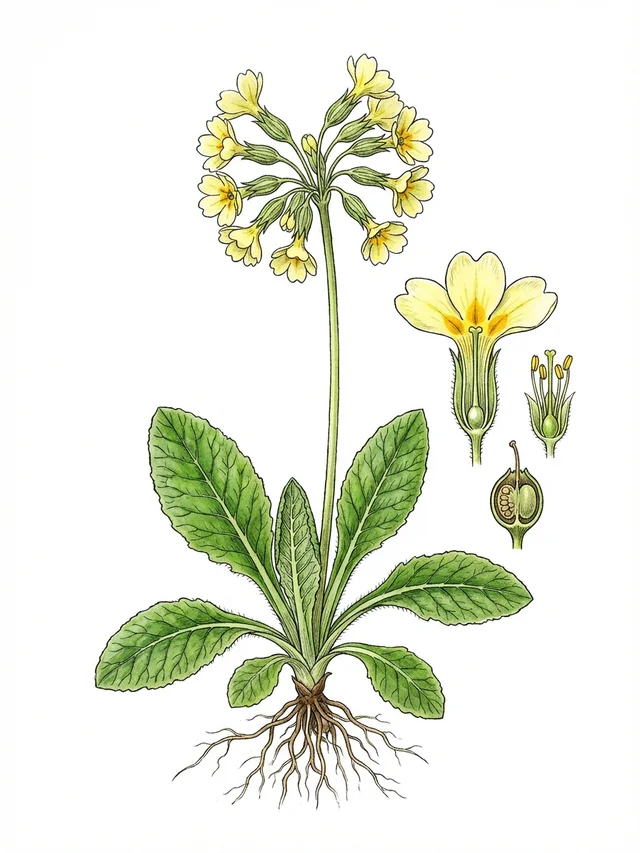
 Image to followAI-generated illustration
Cydonia oblonga
Cydonia oblonga
FamilyGenus: Cydonianative in Germany
🌿
36
Species
interact
🔗
105
Interactions
documented
🐛
6
Host relationships
Species
About this species
Cydonia oblonga is an introduced, established deciduous shrub or small tree in Great Britain. It reaches about 3.7 metres in height, flowers in April providing nectar and pollen for insects, and prefers sunny sites with moderately moist, calcareous to basic soil.
Ecological network
Click to highlight connections · Click again to open the species page
Loading network...
PollinationLarval hostFlower visit
Ecological significance
In Great Britain, Cydonia oblonga is an introduced, established broad-leaved woody plant. Its April flowers provide a nectar source (value 4) and a pollen source (value 4) for pollinating insects. No invasive behaviour has been recorded for this species in Britain within the provided data, though it is listed as introduced established.
Annual cycle
The plant is deciduous; leaves emerge in spring, followed by a flowering period in April. By late autumn the leaves are shed, and the shrub or small tree remains bare through the winter.
Safety note
The plant is considered safe for children; no specific toxicity risks are recorded in the provided data.
Standort & Merkmale
Light
Sonne
Moisture
Frisch (Mäßig feucht)
Soil
—
Flowering period
Apr – Apr
Bioregion
Continental
Nectar value
4
Pollen value
4
Growth form
Strauch/Baum
Woodiness
Verholzt
Leaf type
Breitblättrig
Leaf phenology
Laubabwerfend
Plant height
3.662 m
Morphological traits: TRY ID3 (CC BY 3.0) & TRY ID81 (CC BY)
Pflege & Anbau
Choose a sunny, sheltered location with well-drained but moderately moist soil. The plant does well on calcareous or basic soils of moderate fertility. Water during dry spells while the plant is establishing. This deciduous broad-leaved shrub or small tree reaches approximately 3.7 m in height and flowers in April, attracting bees and other insects with its nectar and pollen.
Scientific profile
Cydonia oblonga belongs to the Rosaceae family. It is a deciduous, broad-leaved woody plant that grows as a shrub or small tree, typically reaching a height of around 3.7 metres. The leaves are shed in autumn, leaving bare twigs over winter. Flowering takes place in April, and the blossoms offer both nectar and pollen to visiting insects, with a nectar value of 4 and a pollen value of 4. The plant thrives in sunny positions with moderately moist soil; it favours a calcareous to basic reaction and a moderate nutrient supply, and it performs best under moderately warm conditions. In Great Britain, Cydonia oblonga is an introduced, established species.
Pollinators & visitors
25 Arten interagieren mit dieser Pflanze
Bombus ruderatusCaliroa cerasiSpialia sertoriusSpialia rosaeSpialia orbiferMuschampia cribrellumMuschampia tessellumBoloria polarisBoloria friggaBoloria freijaBoloria charicleaPolygonia c-albumNymphalis polychlorosMelitaea diaminaMyathropa floreaAndrena pilipesBombus lucorum/terrestrisVespa velutinaXylocopa sp.1Anthophora plumipesMelecta albifronsOsmia cornutaEristalis pertinaxEristalis tenaxApis mellifera
Host relationships
6 species use this plant as a host
Other flower visitors
5 other species visit the flowers
Sources & data origin
•Interaktionsdaten via GloBI (CC-BY 4.0)
•Middleton-Welling_2020
•pollinator_interactions
•EIVE 1.0 — Dengler et al. (2023), DOI: 10.3897/VCS.98324 (CC BY 4.0)
•EuPPollNet — Kuppler et al. (2025), DOI: 10.1111/geb.70000 (CC BY 4.0)
•Database of Pollinator Interactions (DoPI) — Pocock et al. (2022), DOI: 10.1002/ecy.3801 (CC BY)
•GBIF Backbone Taxonomy — GBIF Secretariat (2024), DOI: 10.15468/39omei (CC BY 4.0)
•TRY Categorical Traits (ID3) — Kattge et al. (2012), DOI: 10.17871/TRY.3 (CC BY 3.0)
•TRY Global Spectrum (ID81) — Díaz et al. (2016/2021), DOI: 10.17871/TRY.81 (CC BY)
•Checklist Alien Plants Belgium — Verloove F (2023), Botanic Garden Meise (CC BY 4.0)
•Govaerts R et al. (2025) — World Checklist of Vascular Plants (WCVP) v14. Royal Botanic Gardens, Kew. DOI: 10.34885/xs7h-ze42 (CC BY 4.0)
All data is licensed under CC BY 4.0, CC0, or compatible terms. Attribution according to license conditions. Full source overview →