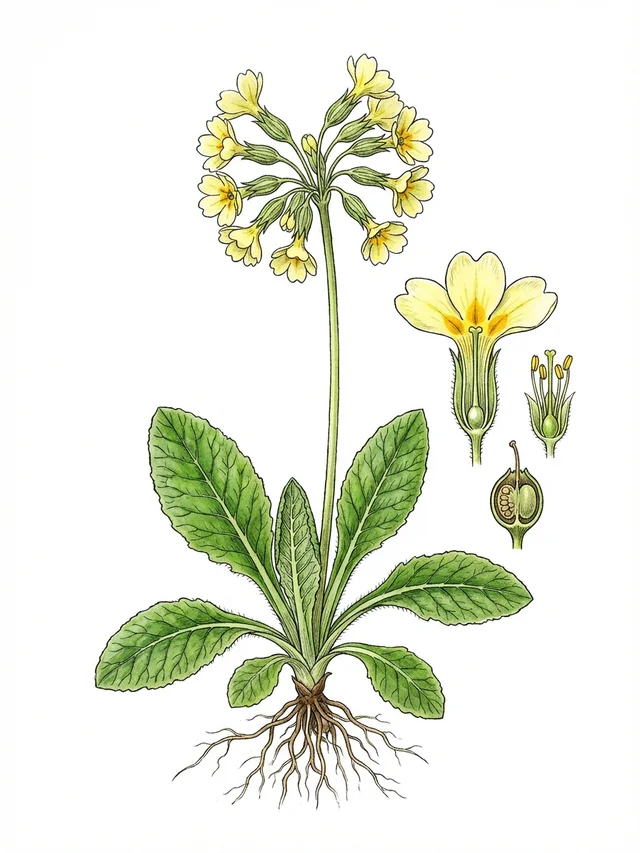
 Image to followAI-generated illustration
Reseda luteola
Reseda luteola
FamilyGenus: Resedanative in Germany
🌿
16
Species
interact
🔗
36
Interactions
documented
🐛
1
Host relationships
Species
About this species
A tall herbaceous plant with spikes of yellow-green flowers, historically valued as a dye plant and long naturalised in dry, sunny places.
Ecological network
Click to highlight connections · Click again to open the species page
Loading network...
PollinationLarval hostFlower visit
Ecological significance
Reseda luteola is an established archaeophyte with no known invasive tendencies. It contributes to the botanical diversity of dry, calcareous habitats.
Annual cycle
This herbaceous plant emerges from overwintering rosettes in spring and sends up flowering stems. Blooms appear from June to September, after which seed capsules form and shed tiny seeds in late summer and autumn.
Safety note
No specific safety risks are reported.
Standort & Merkmale
Light
Sonne
Moisture
Trocken
Soil
Mittelzehrer (Normaler Boden)
Flowering period
Jun – Sep
Soil reaction
Basisch / Kalkhold
Bioregion
Continental
Growth form
Krautige Pflanze
Woodiness
Nicht verholzt
Leaf type
Breitblättrig
Plant height
0.732 m
Morphological traits: TRY ID3 (CC BY 3.0) & TRY ID81 (CC BY)
Pflege & Anbau
•
Light : Full sun.
•
Soil : Well-drained, moderately fertile, preferably calcareous.
•
Moisture : Dry to medium; avoid waterlogged conditions.
•
Maintenance : Sow directly in spring or autumn; self-seeds readily on open ground. Once established it requires little attention.
Scientific profile
Reseda luteola is a robust herbaceous plant reaching around 70 cm in height. Its broad, non-woody leaves form a basal rosette before the upright, branched stems develop. From June through to September it bears dense, slender spikes of small yellowish-green flowers. The plant favours full sun and well-drained, often calcareous soils of moderate fertility, and is typical of dry, low-disturbance habitats. In Great Britain it is an archaeophyte, introduced in ancient times and now firmly established in the wild.
Pollinators & visitors
14 Arten interagieren mit dieser Pflanze
Sources & data origin
•Cook et al. (2025) UK Butterfly & Moth Traits (DOI: 10.5285/dbc7cc17-cbbd-49dd-bab4-8e8855768d66)
•Interaktionsdaten via GloBI (CC-BY 4.0)
•pollinator_interactions
•FloraWeb / BfN
•EIVE 1.0 — Dengler et al. (2023), DOI: 10.3897/VCS.98324 (CC BY 4.0)
•GBIF Backbone Taxonomy — GBIF Secretariat (2024), DOI: 10.15468/39omei (CC BY 4.0)
•TRY Categorical Traits (ID3) — Kattge et al. (2012), DOI: 10.17871/TRY.3 (CC BY 3.0)
•TRY Global Spectrum (ID81) — Díaz et al. (2016/2021), DOI: 10.17871/TRY.81 (CC BY)
•Govaerts R et al. (2025) — World Checklist of Vascular Plants (WCVP) v14. Royal Botanic Gardens, Kew. DOI: 10.34885/xs7h-ze42 (CC BY 4.0)
All data is licensed under CC BY 4.0, CC0, or compatible terms. Attribution according to license conditions. Full source overview →