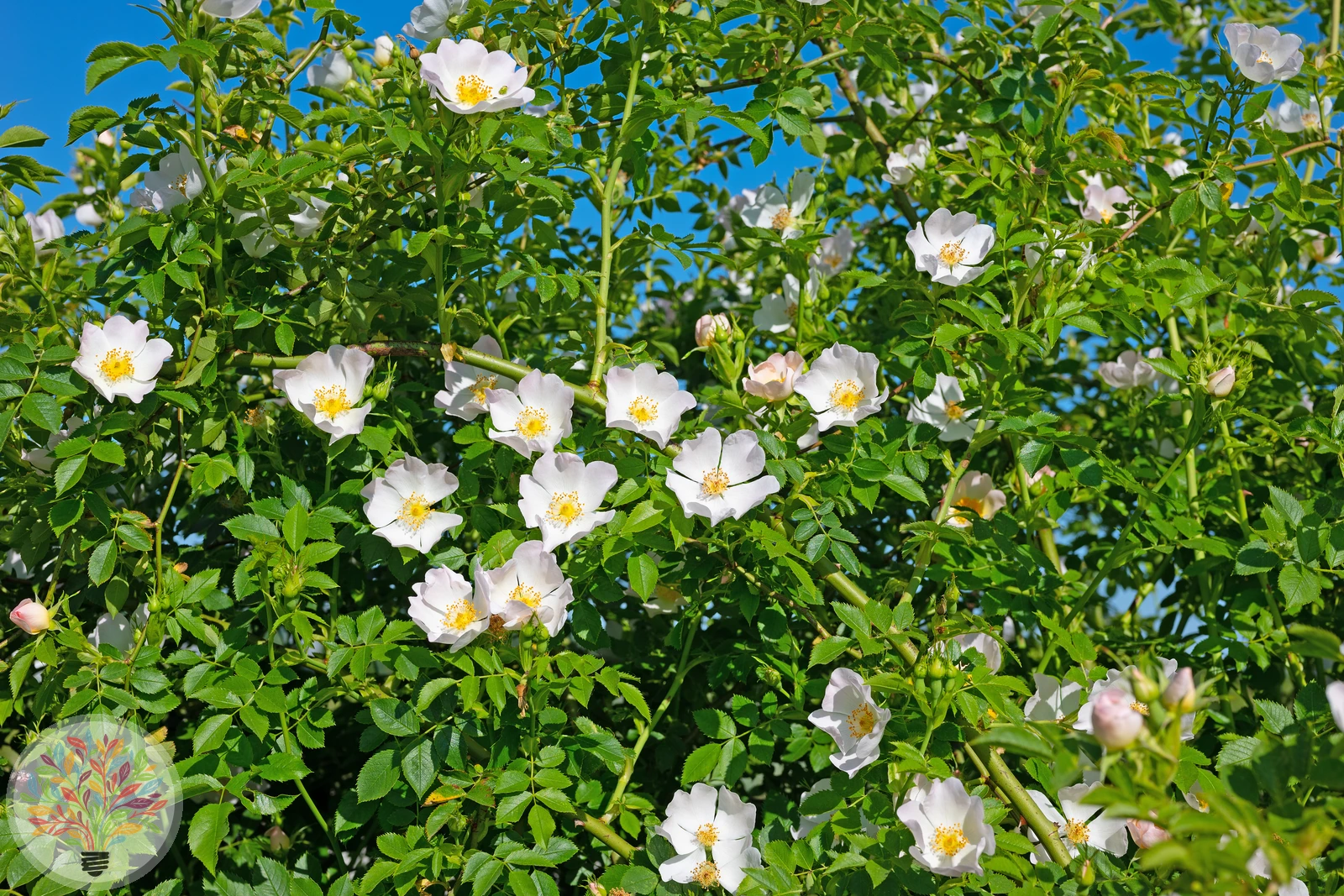
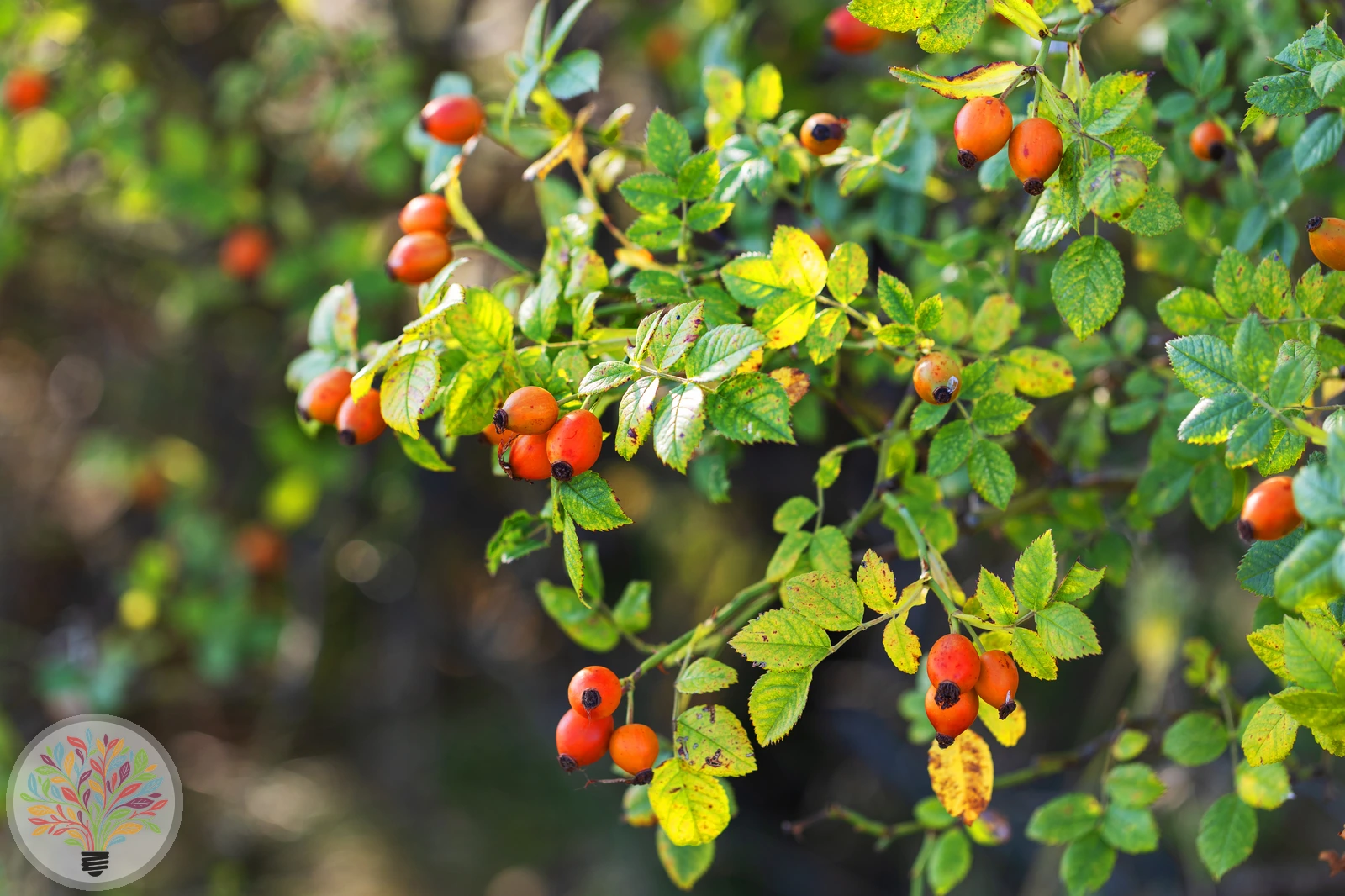
Rosa canina
Rosa canina
FamilyGenus: Rosanative in Germany
🌿
61
Species
interact
🔗
142
Interactions
documented
🐛
20
Host relationships
Species
About this species
A native woody climber up to 2 m tall, with broad leaves, blooming from April to July and providing abundant nectar and pollen for wildlife.
Ecological network
Click to highlight connections · Click again to open the species page
Loading network...
PollinationLarval hostFlower visit
Ecological significance
As a native shrub, it supports pollinating insects by supplying nectar and pollen during its flowering season.
Annual cycle
Flowers from April to July.
Standort & Merkmale
Light
Sonne
Moisture
Frisch (Mäßig feucht)
Soil
Mittelzehrer (Normaler Boden)
Flowering period
Apr – Jul
Soil reaction
Mäßig sauer bis neutral
Bioregion
Continental
Nectar value
5
Pollen value
5
Growth form
Kletterpflanze
Woodiness
Verholzt
Leaf type
Breitblättrig
Plant height
1.956 m
Morphological traits: TRY ID3 (CC BY 3.0) & TRY ID81 (CC BY)
0
Pflege & Anbau
Place in full sun. Keep the soil moderately moist but well-drained, with average nutrient content. No special feeding is required.
Scientific profile
Rosa canina is a native wild rose in Great Britain. It is a woody, broad-leaved climber, typically reaching a height of about 1.96 m. The flowers appear between April and July, producing copious nectar and pollen. The plant thrives in full sun and fresh, moderately moist conditions, and does well on ordinary garden soil of average fertility. Its mycorrhizal associations are variable.
Pollinators & visitors
34 Arten interagieren mit dieser Pflanze
Bombus hypnorumBombus pratorumBombus lucorumBombus terrestrisXanthorhoe fluctuataEupeodes bucculatusBombus hortorumVolucella pellucensBombus muscorumEpisyrphus balteatusEristalis pertinaxMelanostoma mellinumPlatycheirus albimanusPlatycheirus peltatusSericomyia lapponaEristalis tenaxXylocopa violaceaApis melliferaAndrena flavipesCoelioxys inermisAndrena haemorrhoaOsmia bicolorBombus lapidariusBombus pascuorumSyritta pipiensAndrena coitanaLasioglossum pauxillumAndrena cinerariaBombus ssBombus soroeensisOsmia bicornisEristalisHelophilusLasioglossum politum
Host relationships
20 species use this plant as a host
Pyrgus malvaeMalacosoma neustriaAnticlea derivataCidaria fulvataChloroclysta siterataCepphis advenariaSelenia lunularia (Hübner)Agriopis aurantiariaStauropus fagiAcronicta alniAllophyes oxyacanthaeCeramica pisiEpirrita dilutataColotois pennariaAgriopis marginaria (Fabricius)Hemithea aestivariaChloroclystis v-ataErannis defoliariaEriogaster lanestrisEuproctis chrysorrhoea
Other flower visitors
7 other species visit the flowers
Pachytodes cerambyciformisMusca autumnalisMeligethes flavimanusKorscheltellus lupulinaPhaonia angelicaeAnaspis frontalisAnthaxia hungarica
Sources & data origin
•Cook et al. (2025) UK Butterfly & Moth Traits (DOI: 10.5285/dbc7cc17-cbbd-49dd-bab4-8e8855768d66)
•pollinator_interactions
•Baden-Böhm F, App M, Thiele J (2022) — The FloRes Database: A floral resources trait database for pollinator habitat-assessment generated by a multistep workflow. Johann Heinrich von Thünen-Institut, Dryad, DOI: 10.5061/dryad.djh9w0w29 (CC0)
•FloraWeb / BfN
•EIVE 1.0 — Dengler et al. (2023), DOI: 10.3897/VCS.98324 (CC BY 4.0)
•EuPPollNet — Kuppler et al. (2025), DOI: 10.1111/geb.70000 (CC BY 4.0)
•Database of Pollinator Interactions (DoPI) — Pocock et al. (2022), DOI: 10.1002/ecy.3801 (CC BY)
•GBIF Backbone Taxonomy — GBIF Secretariat (2024), DOI: 10.15468/39omei (CC BY 4.0)
•TRY Categorical Traits (ID3) — Kattge et al. (2012), DOI: 10.17871/TRY.3 (CC BY 3.0)
•TRY Global Spectrum (ID81) — Díaz et al. (2016/2021), DOI: 10.17871/TRY.81 (CC BY)
•Govaerts R et al. (2025) — World Checklist of Vascular Plants (WCVP) v14. Royal Botanic Gardens, Kew. DOI: 10.34885/xs7h-ze42 (CC BY 4.0)
•Foto: © Adobe Stock / AdobeStock_609858814
All data is licensed under CC BY 4.0, CC0, or compatible terms. Attribution according to license conditions. Full source overview →