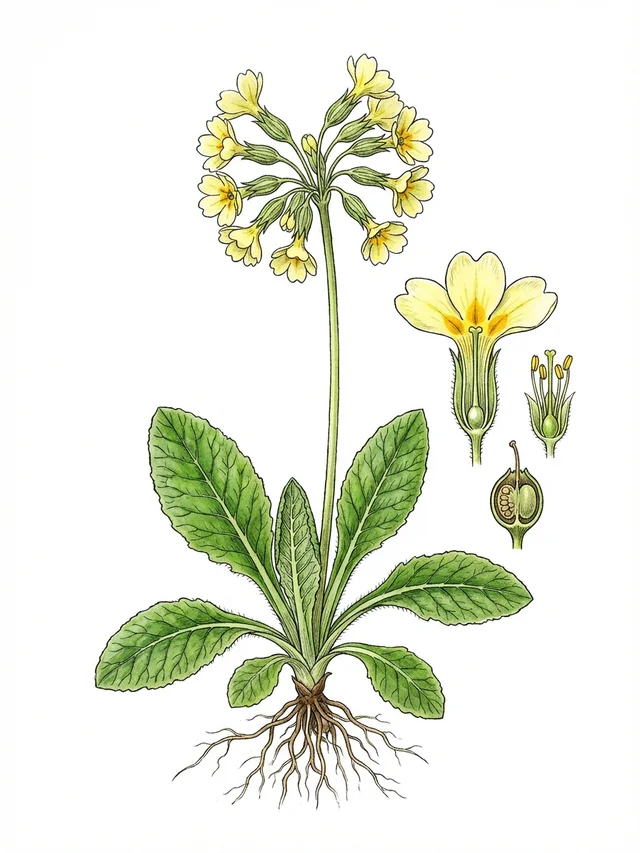
 Image to followAI-generated illustration
Rosa rubiginosa
Rosa rubiginosa
FamilyGenus: Rosanative in Germany
🌿
35
Species
interact
🔗
40
Interactions
documented
🐛
3
Host relationships
Species
About this species
A native deciduous shrub reaching about 2.4 metres, Rosa rubiginosa grows in sunny, dry, calcareous soils and bears broad leaves and flowers in early summer.
Ecological network
Click to highlight connections · Click again to open the species page
Loading network...
PollinationLarval hostFlower visit
Ecological significance
A component of native hedgerows and scrub, Rosa rubiginosa contributes to habitat structure in its natural range.
Annual cycle
This deciduous shrub comes into leaf during spring. Its flowering period spans June and July. Leaves are shed in autumn, leaving a framework of woody stems through winter.
Standort & Merkmale
Light
Sonne
Moisture
Trocken
Soil
Mittelzehrer (Normaler Boden)
Flowering period
Jun – Jul
Soil reaction
Basisch / Kalkhold
Bioregion
Continental
Growth form
Strauch
Woodiness
Verholzt
Leaf type
Breitblättrig
Leaf phenology
Laubabwerfend
Plant height
2.358 m
Morphological traits: TRY ID3 (CC BY 3.0) & TRY ID81 (CC BY)
Pflege & Anbau
Provide a sunny position in free-draining, alkaline to neutral soil. Once established, the shrub tolerates dry conditions. Minimal pruning is required; shape lightly immediately after flowering if necessary.
Scientific profile
Rosa rubiginosa is a woody shrub of medium height, typically around 2.4 metres. It has broad, deciduous leaves with an average leaf area of approximately 917 mm². The plant is terrestrial and adapted to sunny, dry sites with calcareous or basic, moderately nutrient-rich soils. It tolerates moderately warm temperatures. Flowering occurs in June and July. The diaspore mass averages 14.6 mg. Classed as native in Great Britain, this rose is part of the natural scrub and hedgerow flora.
Pollinators & visitors
28 Arten interagieren mit dieser Pflanze
Apis melliferaVespula germanicaPieris brassicaePieris rapaeCelastrina argiolusLasioglossum calceatumLycaena phlaeasOsmia bicolorManiola jurtinaBombus pratorumBombus hortorumAndrena minutuloidesBombus lapidariusAndrena helvolaAglais urticaeAndrena subopacaFabriciana adippePyronia tithonusPolyommatus icarusCallophrys rubiLasioglossum albipesAndrena haemorrhoaBombus hypnorumBombus ruderatusErannis defoliariaLasioglossum pauxillumStenurella bifasciataDiplolepis mayri
Host relationships
3 species use this plant as a host
Other flower visitors
4 other species visit the flowers
Sources & data origin
•Interaktionsdaten via GloBI (CC-BY 4.0)
•FloraWeb / BfN
•EIVE 1.0 — Dengler et al. (2023), DOI: 10.3897/VCS.98324 (CC BY 4.0)
•GBIF Backbone Taxonomy — GBIF Secretariat (2024), DOI: 10.15468/39omei (CC BY 4.0)
•TRY Categorical Traits (ID3) — Kattge et al. (2012), DOI: 10.17871/TRY.3 (CC BY 3.0)
•TRY Global Spectrum (ID81) — Díaz et al. (2016/2021), DOI: 10.17871/TRY.81 (CC BY)
•Govaerts R et al. (2025) — World Checklist of Vascular Plants (WCVP) v14. Royal Botanic Gardens, Kew. DOI: 10.34885/xs7h-ze42 (CC BY 4.0)
All data is licensed under CC BY 4.0, CC0, or compatible terms. Attribution according to license conditions. Full source overview →