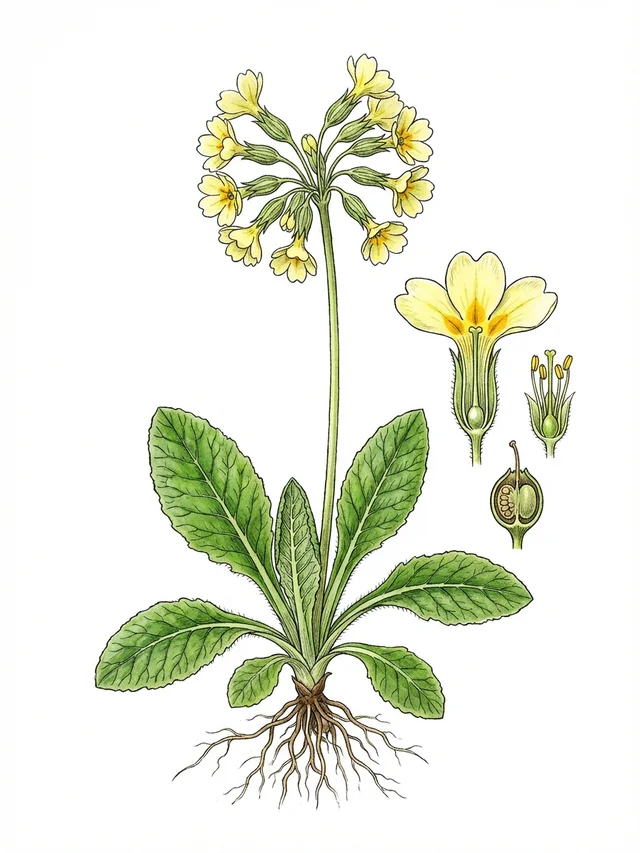
 Image to followAI-generated illustration
Rubus odoratus
Rubus odoratus
FamilyGenus: Rubusnative in Germany
🌿
3
Species
interact
🔗
4
Interactions
documented
🐛
1
Host relationships
Species
About this species
An introduced, deciduous shrub with broad leaves, woody stems, and attractive flowers from May to July. It reaches about 1.6 m in height and grows well in partial shade with moderately moist, normal soil.
Ecological network
Click to highlight connections · Click again to open the species page
Loading network...
PollinationLarval host
Ecological significance
As an introduced shrub that has become established outside cultivation, its ecological impact in Great Britain is not well documented. It is not considered native.
Annual cycle
Flowering occurs from May to July. Foliage emerges in spring; it is deciduous, shedding leaves in autumn.
Safety note
This plant is considered safe around children.
Standort & Merkmale
Light
Halbschatten
Moisture
Frisch (Mäßig feucht)
Soil
Mittelzehrer (Normaler Boden)
Flowering period
Mai – Jul
Soil reaction
Mäßig sauer bis neutral
Bioregion
Continental
Growth form
Strauch
Woodiness
Verholzt
Leaf type
Breitblättrig
Plant height
1.591 m
Morphological traits: TRY ID3 (CC BY 3.0) & TRY ID81 (CC BY)
Pflege & Anbau
Grow in partial shade, in fresh, moderately moist soil of neutral to slightly acid pH. It tolerates normal garden soil and benefits from a sheltered position. No special nutrient requirements are necessary.
Scientific profile
Rubus odoratus is a woody shrub of the Rosaceae family, growing to around 1.6 m tall. Its leaves are broad and its growth form is shrubby. In Great Britain it is an introduced, established species, first recorded in cultivation or naturalisation during the sixteenth century. It prefers moderately warm conditions, partial shade, and fresh, moderately moist soil of neutral to slightly acid reaction, typically on nutrient-normal ground. Flowering takes place from May through July. The diaspore mass is approximately 0.91 mg and leaf area averages 9685 mm². The plant has a variable mycorrhiza association.
Sources & data origin
•Interaktionsdaten via GloBI (CC-BY 4.0)
•FloraWeb / BfN
•EIVE 1.0 — Dengler et al. (2023), DOI: 10.3897/VCS.98324 (CC BY 4.0)
•GBIF Backbone Taxonomy — GBIF Secretariat (2024), DOI: 10.15468/39omei (CC BY 4.0)
•TRY Categorical Traits (ID3) — Kattge et al. (2012), DOI: 10.17871/TRY.3 (CC BY 3.0)
•TRY Global Spectrum (ID81) — Díaz et al. (2016/2021), DOI: 10.17871/TRY.81 (CC BY)
•Checklist Alien Plants Belgium — Verloove F (2023), Botanic Garden Meise (CC BY 4.0)
•Govaerts R et al. (2025) — World Checklist of Vascular Plants (WCVP) v14. Royal Botanic Gardens, Kew. DOI: 10.34885/xs7h-ze42 (CC BY 4.0)
All data is licensed under CC BY 4.0, CC0, or compatible terms. Attribution according to license conditions. Full source overview →