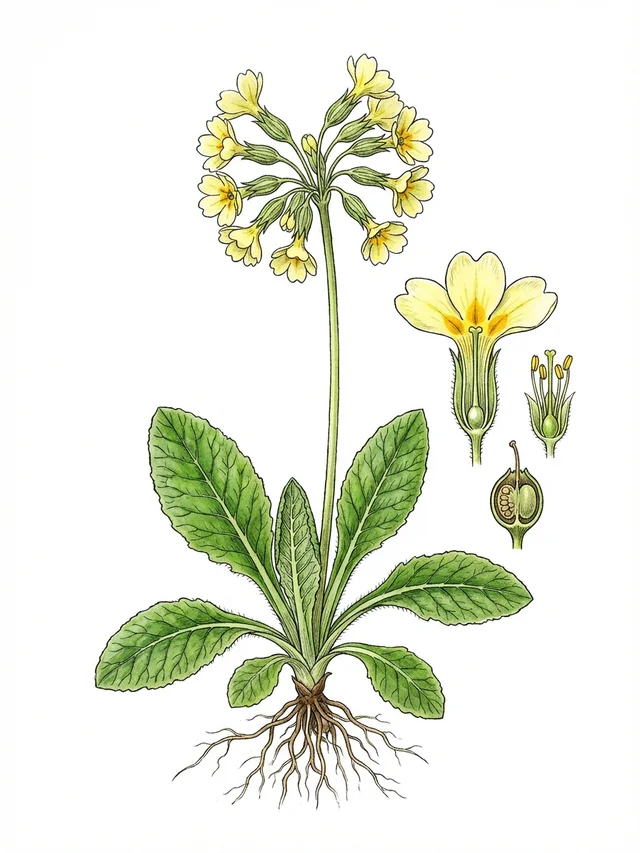
 Image to followAI-generated illustration
Rumex crispus
Rumex crispus × obtusifolius
FamilyGenus: Rumexnon-native in Germany🌍 Neophyte
🌍
Alien species (Neophyte)
This plant is not native to Central Europe. It was introduced after 1492 and has become established in the wild. Documented interactions with native fauna are listed below — however, they do not replace the ecological value of native plants.
🌿
25
Species
interact
🔗
29
Interactions
documented
🐛
14
Host relationships
Species
About this species
Native in Great Britain, Rumex crispus is a broad-leaved herbaceous plant reaching around 0.8 m in height. It bears flowers from June to August and grows in sunny locations on moderately moist, neutral to slightly acidic soils.
Ecological network
Click to highlight connections · Click again to open the species page
Loading network...
PollinationLarval hostFlower visit
Ecological significance
Rumex crispus is a native species in Great Britain and forms a natural part of the flora. No adverse ecological impacts are reported in the source data.
Annual cycle
Flowering occurs between June and August.
Standort & Merkmale
Light
Sonne
Moisture
Frisch (Mäßig feucht)
Soil
Mittelzehrer (Normaler Boden)
Flowering period
Jun – Aug
Soil reaction
Mäßig sauer bis neutral
Growth form
Krautige Pflanze
Woodiness
Nicht verholzt
Leaf type
Breitblättrig
Plant height
0.826 m
Morphological traits: TRY ID3 (CC BY 3.0) & TRY ID81 (CC BY)
Pflege & Anbau
Grow in full sun. The plant thrives in moderately moist, fresh soil of average fertility, and tolerates neutral to slightly acidic pH. Avoid waterlogged conditions. Once established, it requires little maintenance.
Scientific profile
Rumex crispus is a broad-leaved, non-woody herbaceous plant native in Great Britain. It typically attains a height of about 0.83 m and produces flowers from June to August. The species favours sunny conditions with fresh, moderately moist soils that are neutral to slightly acidic and of medium nutrient status. It is adapted to moderately warm temperatures and forms arbuscular mycorrhizal (AM) associations. The leaves are broad, with a mean leaf area of approximately 3543 mm², and the small diaspores have an average mass of about 1.65 mg.
Pollinators & visitors
4 Arten interagieren mit dieser Pflanze
Host relationships
14 species use this plant as a host
Gastrophysa viridulaAcronicta rumicisXestia xanthographaMythimna vitellinaOrthosia gothicaOchropleura plectaLacanobia oleraceaLymantria disparPhragmatobia fuliginosaLycia hirtariaDiaphora mendicaArctia cajaOstrinia nubilalisNoctua comes Hübner
Other flower visitors
7 other species visit the flowers
Cygnus olorCygnus columbianusApion frumentariumHarmonia axyridisCoccinella septempunctataHarpalus rufipesHarpalus affinis
Sources & data origin
•Interaktionsdaten via GloBI (CC-BY 4.0)
•EIVE 1.0 — Dengler et al. (2023), DOI: 10.3897/VCS.98324 (CC BY 4.0)
•GBIF Backbone Taxonomy — GBIF Secretariat (2024), DOI: 10.15468/39omei (CC BY 4.0)
•TRY Categorical Traits (ID3) — Kattge et al. (2012), DOI: 10.17871/TRY.3 (CC BY 3.0)
•TRY Global Spectrum (ID81) — Díaz et al. (2016/2021), DOI: 10.17871/TRY.81 (CC BY)
•Checklist Alien Plants Belgium — Verloove F (2023), Botanic Garden Meise (CC BY 4.0)
•Govaerts R et al. (2025) — World Checklist of Vascular Plants (WCVP) v14. Royal Botanic Gardens, Kew. DOI: 10.34885/xs7h-ze42 (CC BY 4.0)
All data is licensed under CC BY 4.0, CC0, or compatible terms. Attribution according to license conditions. Full source overview →