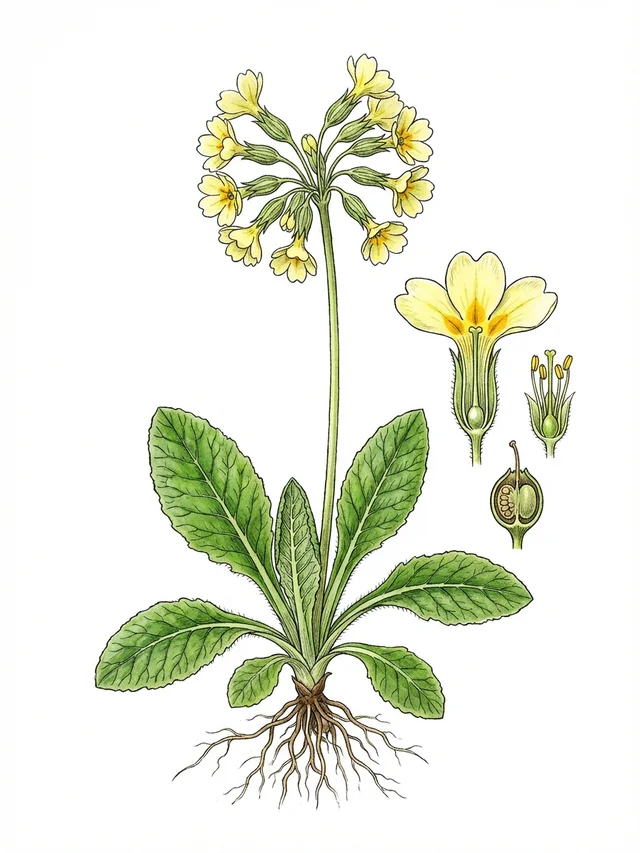
 Image to followAI-generated illustration
Rumex hydrolapathum
Rumex hydrolapathum
FamilyGenus: Rumexnative in Germany
🌿
5
Species
interact
🔗
5
Interactions
documented
🐛
4
Host relationships
Species
About this species
A robust, native herbaceous plant reaching about 1.4 m in height, with large broad leaves. It flowers in July and August and is typical of sunny, permanently wet, nutrient-rich places such as swamps, wet meadows and fertile pond margins.
Ecological network
Click to highlight connections · Click again to open the species page
Loading network...
Larval hostFlower visit
Ecological significance
As a native component of wetlands, it contributes to the natural diversity of swamp, wet-meadow and tall-herb communities on fertile ground.
Annual cycle
Flowering occurs in July and August. The plant is herbaceous, with fresh leafy growth emerging in spring and above-ground parts dying back over winter.
Standort & Merkmale
Light
Sonne
Moisture
Feucht
Soil
Starkzehrer (Nährstoffreicher/Fetter Boden)
Flowering period
Jul – Aug
Soil reaction
Basisch / Kalkhold
Bioregion
Continental
Growth form
Krautige Pflanze
Woodiness
Nicht verholzt
Leaf type
Breitblättrig
Plant height
1.378 m
Morphological traits: TRY ID3 (CC BY 3.0) & TRY ID81 (CC BY)
Pflege & Anbau
Grow in full sun in permanently moist to wet, nutrient-rich soil. Ideal for pond margins, bog gardens and consistently damp borders. Allow enough space for its eventual height of around 1.4 m and large foliage. No special maintenance is necessary beyond ensuring the soil does not dry out.
Scientific profile
Rumex hydrolapathum is a native, non-woody herbaceous species in Great Britain. It grows to around 1.4 m and bears broad leaves. Flowering occurs in July and August. The plant is found in full-sun habitats with perpetually wet, base-rich and nutrient-rich soils, including swamps, wet meadows, nutrient-laden ruderal sites and tall-herb communities. It is a heavy feeder and forms arbuscular mycorrhizal associations.
Host relationships
4 species use this plant as a host
Sources & data origin
•Cook et al. (2025) UK Butterfly & Moth Traits (DOI: 10.5285/dbc7cc17-cbbd-49dd-bab4-8e8855768d66)
•Interaktionsdaten via GloBI (CC-BY 4.0)
•FloraWeb / BfN
•EIVE 1.0 — Dengler et al. (2023), DOI: 10.3897/VCS.98324 (CC BY 4.0)
•GBIF Backbone Taxonomy — GBIF Secretariat (2024), DOI: 10.15468/39omei (CC BY 4.0)
•TRY Categorical Traits (ID3) — Kattge et al. (2012), DOI: 10.17871/TRY.3 (CC BY 3.0)
•TRY Global Spectrum (ID81) — Díaz et al. (2016/2021), DOI: 10.17871/TRY.81 (CC BY)
•Govaerts R et al. (2025) — World Checklist of Vascular Plants (WCVP) v14. Royal Botanic Gardens, Kew. DOI: 10.34885/xs7h-ze42 (CC BY 4.0)
All data is licensed under CC BY 4.0, CC0, or compatible terms. Attribution according to license conditions. Full source overview →