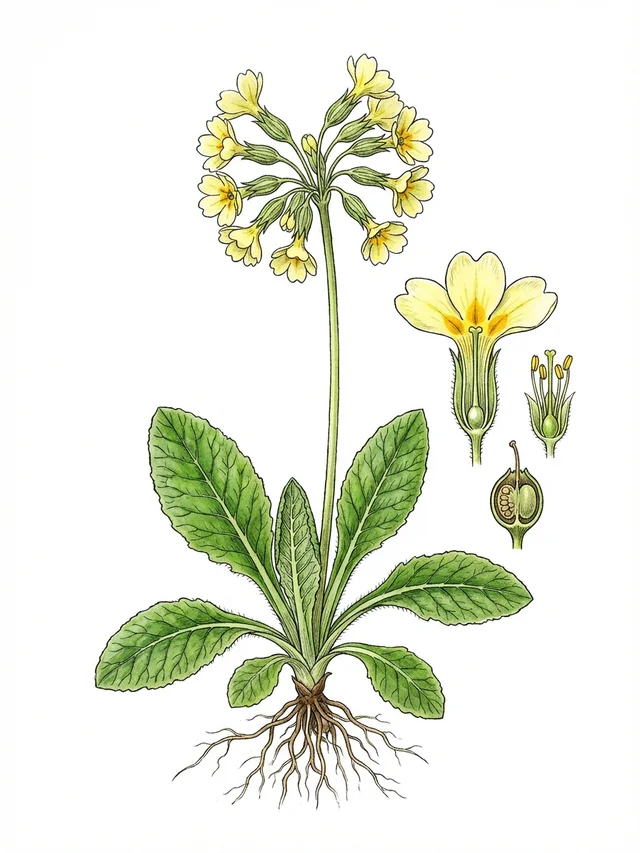
 Image to followAI-generated illustration
Rumex obtusifolius
Rumex obtusifolius
FamilyGenus: Rumexnative in Germany
🌿
28
Species
interact
🔗
28
Interactions
documented
🐛
12
Host relationships
Species
About this species
Rumex obtusifolius is a native herbaceous perennial found in sunny, nutrient-rich sites across Great Britain. Its broad leaves can reach a large size, and from May to September it produces tall spikes of small flowers that offer limited nectar and pollen. It typically grows in low-disturbance habitats and forms mycorrhizal associations.
Ecological network
Click to highlight connections · Click again to open the species page
Loading network...
PollinationLarval hostFlower visit
Ecological significance
The flowers provide a modest nectar and pollen source for insects from May to September. As a native perennial, it contributes to the structural diversity of grasslands and ruderal habitats. It forms arbuscular mycorrhizal networks, potentially aiding soil nutrient cycling, and thrives on fertile, low-disturbance soils.
Annual cycle
A herbaceous perennial with broad leaves emerging in spring. Flowering stems elongate from late spring, producing blooms from May to September. Seeds (diaspores averaging 1.4 mg) are set in late summer and autumn, after which the foliage dies back, with new growth appearing the following spring.
Safety note
No specific safety risks have been recorded in the source data.
Standort & Merkmale
Light
Sonne
Moisture
Frisch (Mäßig feucht)
Soil
Starkzehrer (Nährstoffreicher/Fetter Boden)
Flowering period
Mai – Sep
Soil reaction
Mäßig sauer bis neutral
Bioregion
Continental
Nectar value
1
Pollen value
1
Growth form
Krautige Pflanze
Woodiness
Nicht verholzt
Leaf type
Breitblättrig
Plant height
0.505 m
Morphological traits: TRY ID3 (CC BY 3.0) & TRY ID81 (CC BY)
Pflege & Anbau
Broad-leaved dock is not usually cultivated. If it is allowed to establish, it requires a sunny position in moisture-retentive, fertile soil. No further care is needed as it is a robust, self-sustaining native plant.
Scientific profile
This herbaceous, non-woody perennial belongs to the family Polygonaceae. It typically reaches around 0.5 m in height and bears broad leaves with an average area of approximately 25 000 mm². The plant thrives in full sun (Ellenberg light value 7.2) and prefers nutrient-rich soils (Ellenberg nutrient value 8) with a neutral to slightly acid reaction. It tolerates only minor disturbance (disturbance severity 0.59) and is not salt-tolerant. Flowering extends from May to September; the flowers provide low levels of nectar and pollen (both value 1). The small seeds (diaspore mass about 1.4 mg) are likely dispersed by wind or water. The species forms arbuscular mycorrhizal (AM) associations. Its native range includes Great Britain, where it is a common element of meadows, field margins and other fertile, open habitats.
Pollinators & visitors
3 Arten interagieren mit dieser Pflanze
Bombus terrestrisMelanostoma scalarePlatycheirus clypeatus
Host relationships
12 species use this plant as a host
Triodia sylvinaLycaena phlaeasAcronicta rumicisPolia bombycinaMelanchra persicariaeNoctua fimbriataNoctua jantheGraphiphora augurNoctua comes HübnerAporophyla lutulentaHydraecia micaceaTrigonophora flammea
Other flower visitors
13 other species visit the flowers
Coccinella septempunctataRhagonycha fulvaSarcophaga carnariaPollenia rudisCantharis lateralisCantharis flavilabrisCetema paramyopinaGastrophysa viridulaGeomyza tripunctataHaematopota pluvialisScathophaga stercorariaChloromyia formosaPegoplata aestiva
Sources & data origin
•Cook et al. (2025) UK Butterfly & Moth Traits (DOI: 10.5285/dbc7cc17-cbbd-49dd-bab4-8e8855768d66)
•pollinator_interactions
•FloraWeb / BfN
•EIVE 1.0 — Dengler et al. (2023), DOI: 10.3897/VCS.98324 (CC BY 4.0)
•EuPPollNet — Kuppler et al. (2025), DOI: 10.1111/geb.70000 (CC BY 4.0)
•Database of Pollinator Interactions (DoPI) — Pocock et al. (2022), DOI: 10.1002/ecy.3801 (CC BY)
•GBIF Backbone Taxonomy — GBIF Secretariat (2024), DOI: 10.15468/39omei (CC BY 4.0)
•TRY Categorical Traits (ID3) — Kattge et al. (2012), DOI: 10.17871/TRY.3 (CC BY 3.0)
•TRY Global Spectrum (ID81) — Díaz et al. (2016/2021), DOI: 10.17871/TRY.81 (CC BY)
•Checklist Alien Plants Belgium — Verloove F (2023), Botanic Garden Meise (CC BY 4.0)
•Govaerts R et al. (2025) — World Checklist of Vascular Plants (WCVP) v14. Royal Botanic Gardens, Kew. DOI: 10.34885/xs7h-ze42 (CC BY 4.0)
All data is licensed under CC BY 4.0, CC0, or compatible terms. Attribution according to license conditions. Full source overview →