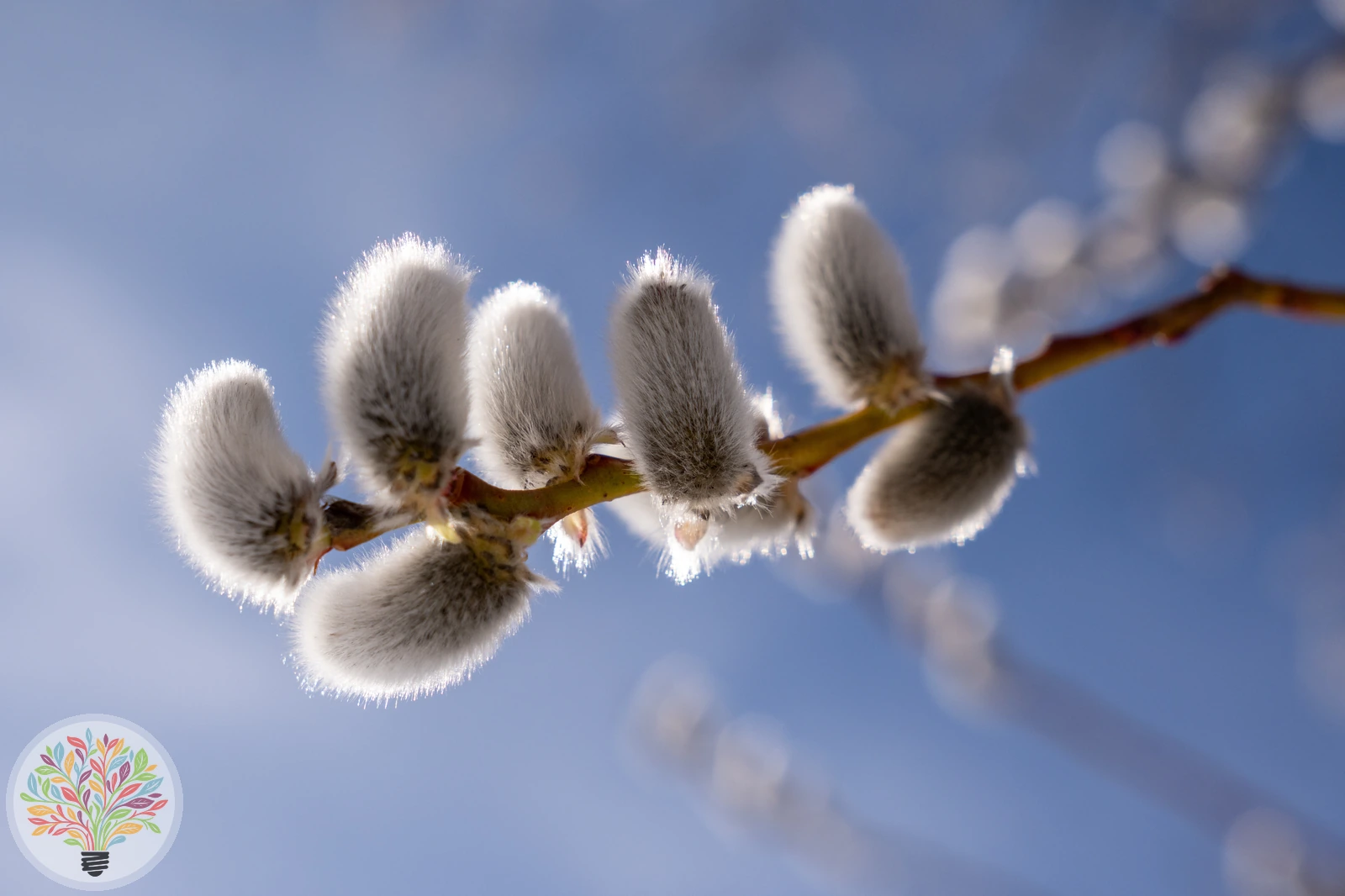
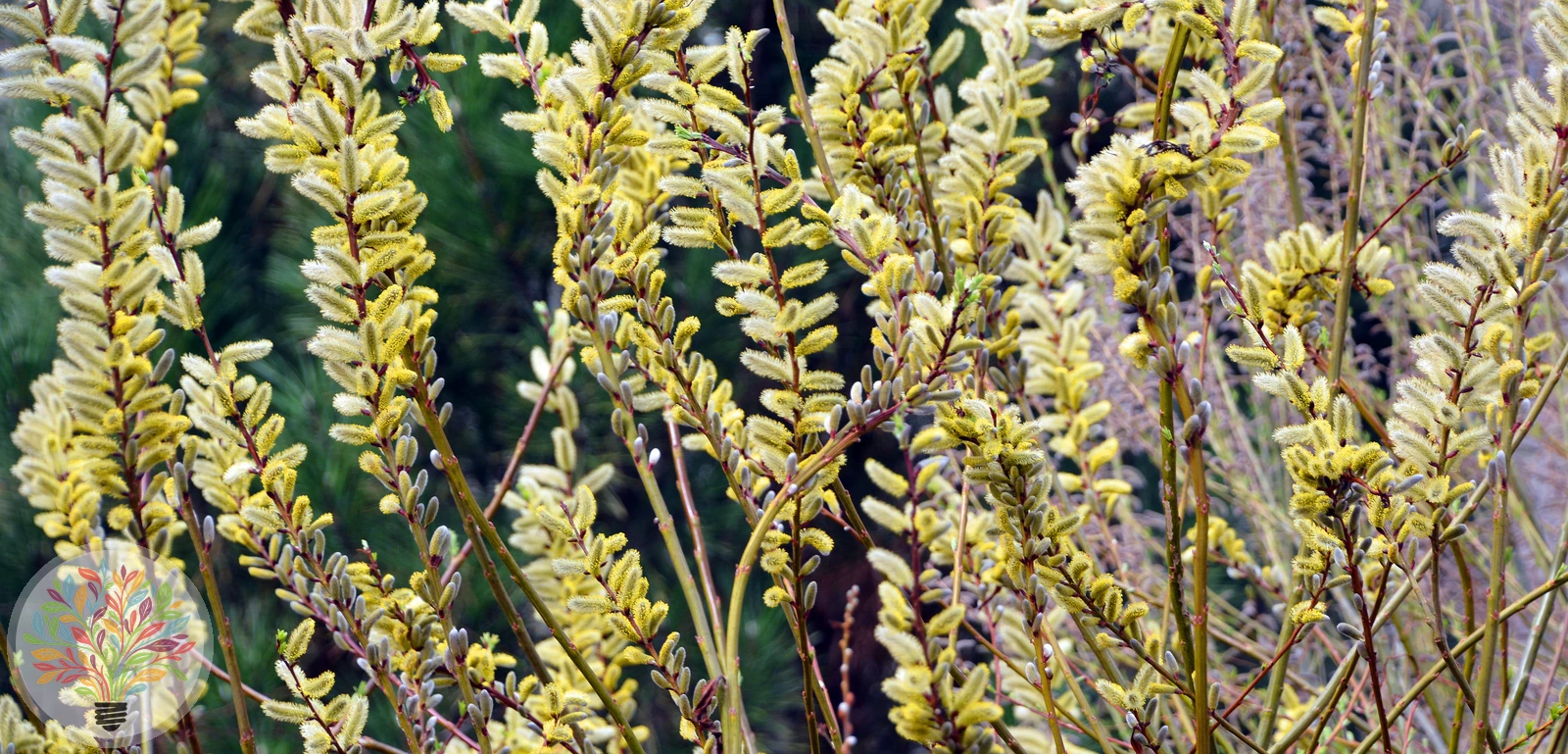
Salix daphnoides
Salix daphnoides
FamilyGenus: Salixnative in Germany
🌿
4
Species
interact
🔗
4
Interactions
documented
🐛
3
Host relationships
Species
About this species
Salix daphnoides is a deciduous broad-leaved tree reaching around 7 metres in height, with catkins appearing in March and April. In Great Britain it is an introduced species that has become established, typically growing in sunny, moist, calcareous habitats.
Ecological network
Click to highlight connections · Click again to open the species page
Loading network...
Larval hostFlower visit
Ecological significance
Salix daphnoides is an introduced species that has become established in Great Britain. There is no evidence that it is invasive or causing ecological harm.
Annual cycle
In March and April, catkins appear. Leaves expand and remain through summer, turning colour and falling in autumn. The tree is dormant in winter.
Safety note
No safety information is recorded for this species.
Standort & Merkmale
Light
Sonne
Moisture
Frisch (Mäßig feucht)
Soil
Mittelzehrer (Normaler Boden)
Flowering period
Mär – Apr
Soil reaction
Basisch / Kalkhold
Bioregion
Continental
Growth form
Baum
Woodiness
Verholzt
Leaf type
Breitblättrig
Leaf phenology
Laubabwerfend
Plant height
7.207 m
Morphological traits: TRY ID3 (CC BY 3.0) & TRY ID81 (CC BY)
Pflege & Anbau
•
Light: Full sun
•
Soil: Moist, calcareous, moderately fertile
•
Watering: Keep soil fresh and evenly moist
•
Planting: Choose a low-disturbance site; mycorrhizal inoculation may help establishment
•
Flowering: March to April
•
Seasonal: Deciduous – leaves are shed in autumn
Scientific profile
Salix daphnoides is a deciduous broad-leaved tree, typically reaching about 7 m in height. Its leaves have an area of around 590 mm², and the tiny winged seeds weigh only 0.14 mg. Flowers appear in early spring, from March to April. The tree is woody and forms ectomycorrhizal associations. Ecologically, Salix daphnoides favours sunny sites with moist, calcareous soil of moderate nutrient content. It is characteristic of fresh meadows of moderate fertility, and can also be found in alpine grassland and snowbeds, as well as at woodland edges. The species tolerates only low levels of disturbance and grows best under moderately warm conditions. The natural range of Salix daphnoides extends across parts of Europe, Eastern Europe, Africa, and central and western Asia. In Great Britain, it is not native but has become established as an introduced species.
Other flower visitors
1 other species visit the flowers
Notodonta ziczac
Sources & data origin
•Interaktionsdaten via GloBI (CC-BY 4.0)
•Baden-Böhm F, App M, Thiele J (2022) — The FloRes Database: A floral resources trait database for pollinator habitat-assessment generated by a multistep workflow. Johann Heinrich von Thünen-Institut, Dryad, DOI: 10.5061/dryad.djh9w0w29 (CC0)
•FloraWeb / BfN
•EIVE 1.0 — Dengler et al. (2023), DOI: 10.3897/VCS.98324 (CC BY 4.0)
•GBIF Backbone Taxonomy — GBIF Secretariat (2024), DOI: 10.15468/39omei (CC BY 4.0)
•TRY Categorical Traits (ID3) — Kattge et al. (2012), DOI: 10.17871/TRY.3 (CC BY 3.0)
•TRY Global Spectrum (ID81) — Díaz et al. (2016/2021), DOI: 10.17871/TRY.81 (CC BY)
•Checklist Alien Plants Belgium — Verloove F (2023), Botanic Garden Meise (CC BY 4.0)
•Govaerts R et al. (2025) — World Checklist of Vascular Plants (WCVP) v14. Royal Botanic Gardens, Kew. DOI: 10.34885/xs7h-ze42 (CC BY 4.0)
•Foto: © Adobe Stock / AdobeStock_746778805
All data is licensed under CC BY 4.0, CC0, or compatible terms. Attribution according to license conditions. Full source overview →