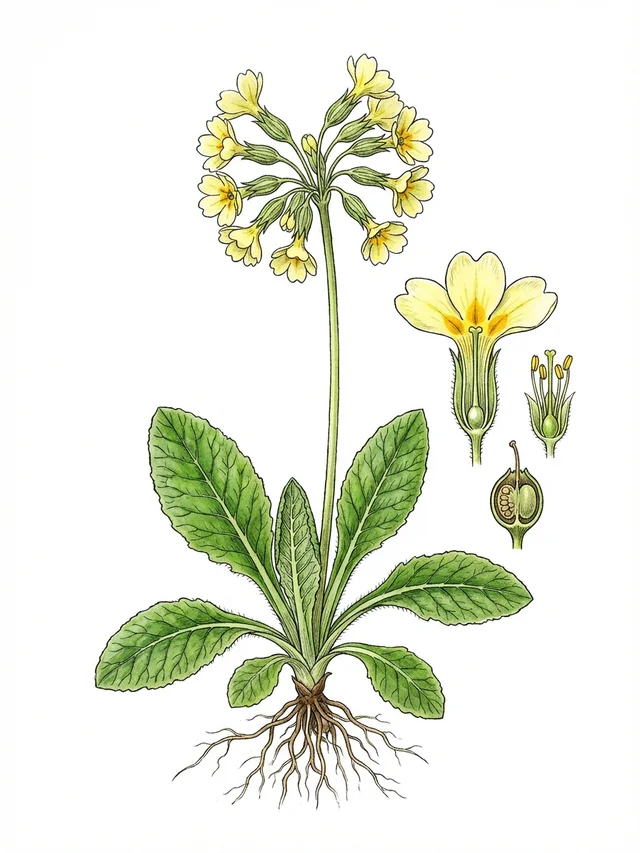
 Image to followAI-generated illustration
Salix myrsinifolia
Salix myrsinifolia
FamilyGenus: Salixnative in Germany
🌿
7
Species
interact
🔗
7
Interactions
documented
🐛
6
Host relationships
Species
About this species
A deciduous native shrub reaching around 2.1 m tall, bearing broad leaves and flowering in April and May. It thrives in sunny, moist locations on moderately fertile soils.
Ecological network
Click to highlight connections · Click again to open the species page
Loading network...
PollinationLarval host
Ecological significance
As a native shrub it offers cover, pollen and foliage that benefit a range of invertebrates and other wildlife.
Annual cycle
Leaf emergence begins in spring; the flowers appear in April and May. Leaves turn colour and drop in autumn, exposing the bare woody framework over winter.
Standort & Merkmale
Light
Sonne
Moisture
Feucht
Soil
Mittelzehrer (Normaler Boden)
Flowering period
Apr – Mai
Soil reaction
Basisch / Kalkhold
Bioregion
Continental
Growth form
Strauch
Woodiness
Verholzt
Leaf type
Breitblättrig
Leaf phenology
Laubabwerfend
Plant height
2.099 m
Morphological traits: TRY ID3 (CC BY 3.0) & TRY ID81 (CC BY)
Pflege & Anbau
Plant in a sunny site with consistently moist, reasonably fertile soil that is neutral to slightly acid. It has a medium nutrient requirement and generally needs no extra feeding; avoid heavily enriched or dry soils.
Scientific profile
Salix myrsinifolia is a woody, broad‑leaved, deciduous shrub, growing to a typical height of about 2.1 m. Its leaves have an average area of 340 mm² and are shed in autumn; the plants are entirely terrestrial. Flowering takes place in April and May. Ecological indicator values assign it to full sun (light value 7), consistently moist soils (moisture value 8), a neutral to weakly acid reaction (reaction value 6), and only moderate nutrient levels (nutrient value 4). It shows low disturbance tolerance (severity 0.52) and prefers moderately warm temperatures (value 4). Deriving from these preferences, it favours wet meadows and marsh meadows, and can also appear in alpine grassland, snowbed communities, and at forest edges.
Pollinators & visitors
1 Arten interagieren mit dieser Pflanze
Andrena rosae
Host relationships
6 species use this plant as a host
Sources & data origin
•Interaktionsdaten via GloBI (CC-BY 4.0)
•Baden-Böhm F, App M, Thiele J (2022) — The FloRes Database: A floral resources trait database for pollinator habitat-assessment generated by a multistep workflow. Johann Heinrich von Thünen-Institut, Dryad, DOI: 10.5061/dryad.djh9w0w29 (CC0)
•FloraWeb / BfN
•EIVE 1.0 — Dengler et al. (2023), DOI: 10.3897/VCS.98324 (CC BY 4.0)
•GBIF Backbone Taxonomy — GBIF Secretariat (2024), DOI: 10.15468/39omei (CC BY 4.0)
•TRY Categorical Traits (ID3) — Kattge et al. (2012), DOI: 10.17871/TRY.3 (CC BY 3.0)
•TRY Global Spectrum (ID81) — Díaz et al. (2016/2021), DOI: 10.17871/TRY.81 (CC BY)
•Checklist Alien Plants Belgium — Verloove F (2023), Botanic Garden Meise (CC BY 4.0)
•Govaerts R et al. (2025) — World Checklist of Vascular Plants (WCVP) v14. Royal Botanic Gardens, Kew. DOI: 10.34885/xs7h-ze42 (CC BY 4.0)
All data is licensed under CC BY 4.0, CC0, or compatible terms. Attribution according to license conditions. Full source overview →