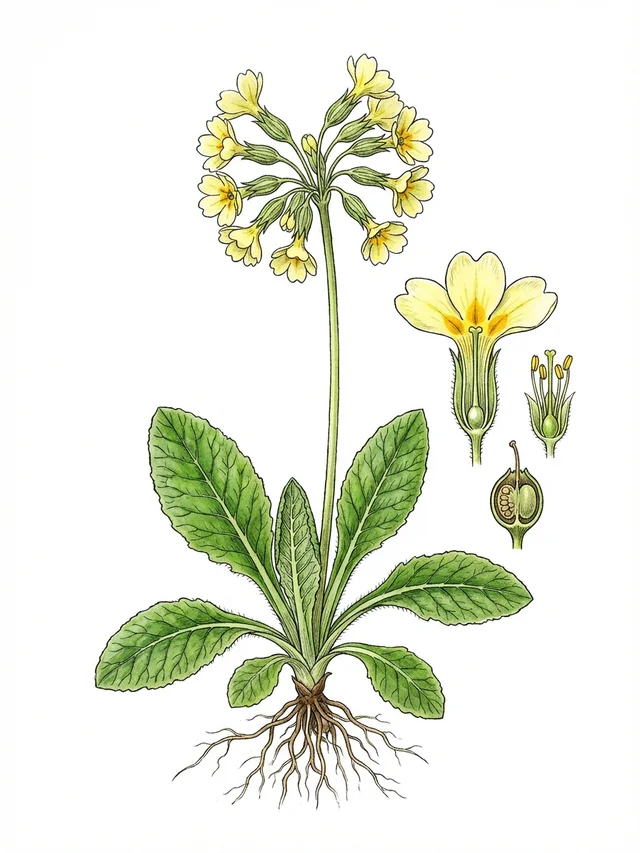
 Image to followAI-generated illustration
Salix repens
Salix repens
FamilyGenus: Salixnative in Germany
🌿
143
Species
interact
🔗
143
Interactions
documented
🐛
133
Host relationships
Species
About this species
A low-growing, native deciduous shrub, Salix repens reaches around 0.4 metres in height and bears broad leaves. It flowers in spring and forms ectomycorrhizal associations.
Ecological network
Click to highlight connections · Click again to open the species page
Loading network...
PollinationLarval hostFlower visit
Ecological significance
As a native shrub with ectomycorrhizal associations, it may contribute to soil fungal networks.
Annual cycle
Flowering takes place in spring, from April to May. The shrub is deciduous, losing its broad leaves in autumn and remaining bare through winter before new growth emerges.
Standort & Merkmale
Light
—
Moisture
—
Soil
—
Flowering period
Apr – Mai
Growth form
Strauch
Woodiness
Verholzt
Leaf type
Breitblättrig
Leaf phenology
Laubabwerfend
Plant height
0.408 m
Morphological traits: TRY ID3 (CC BY 3.0) & TRY ID81 (CC BY)
Pflege & Anbau
This deciduous shrub sheds its leaves in autumn. It naturally forms ectomycorrhizal relationships with soil fungi, which aid nutrient uptake. Flowers appear in April and May.
Scientific profile
Salix repens is a native, woody deciduous shrub of low stature, typically attaining around 0.4 metres in height. It bears broad leaves and is terrestrial. Flowering occurs in April and May. The species forms ectomycorrhizal associations.
Pollinators & visitors
5 Arten interagieren mit dieser Pflanze
Host relationships
133 species use this plant as a host
Apatura irisPolygonia c-albumMalacosoma castrensisGastropacha quercifoliaSmerinthus ocellataLaothoe populiIdaea degenerariaDysstroma citrataLobophora halterataPterapherapteryx sexalataTrichopteryx carpinataMacaria alternataCepphis advenariaEpione repandariaOdontopera bidentataAgriopis aurantiariaHypomecis roborariaDeileptenia ribeataParectropis similariaCampaea margaritariaJodis lacteariaCerura vinulaFurcula bifidaNotodonta ziczacPheosia tremulaClostera anachoretaClostera pigraLeucoma salicisCalliteara pudibundaOrgyia recensCatocala nuptaColocasia coryliAcronicta alniAmphipyra berbera svenssoniAsteroscopus sphinxAllophyes oxyacanthaeHyppa rectilineaEuplexia luciparaAgrochola lychnidisAgrochola helvolaAgrochola lotaAgrochola macilentaLithophane sociaParastichtis suspectaAnorthoa mundaPolia hepaticaLacanobia thalassinaNoctua fimbriataNoctua jantheGraphiphora augur
Other flower visitors
5 other species visit the flowers
Sources & data origin
•Cook et al. (2025) UK Butterfly & Moth Traits (DOI: 10.5285/dbc7cc17-cbbd-49dd-bab4-8e8855768d66)
•pollinator_interactions
•FloraWeb / BfN
•GBIF Backbone Taxonomy — GBIF Secretariat (2024), DOI: 10.15468/39omei (CC BY 4.0)
•TRY Categorical Traits (ID3) — Kattge et al. (2012), DOI: 10.17871/TRY.3 (CC BY 3.0)
•TRY Global Spectrum (ID81) — Díaz et al. (2016/2021), DOI: 10.17871/TRY.81 (CC BY)
•Govaerts R et al. (2025) — World Checklist of Vascular Plants (WCVP) v14. Royal Botanic Gardens, Kew. DOI: 10.34885/xs7h-ze42 (CC BY 4.0)
All data is licensed under CC BY 4.0, CC0, or compatible terms. Attribution according to license conditions. Full source overview →