Salix reticulata
Salix reticulata
FamilyGenus: Salixnative in Germany
🌿
2
Species
interact
🔗
3
Interactions
documented
🐛
1
Host relationships
Species
About this species
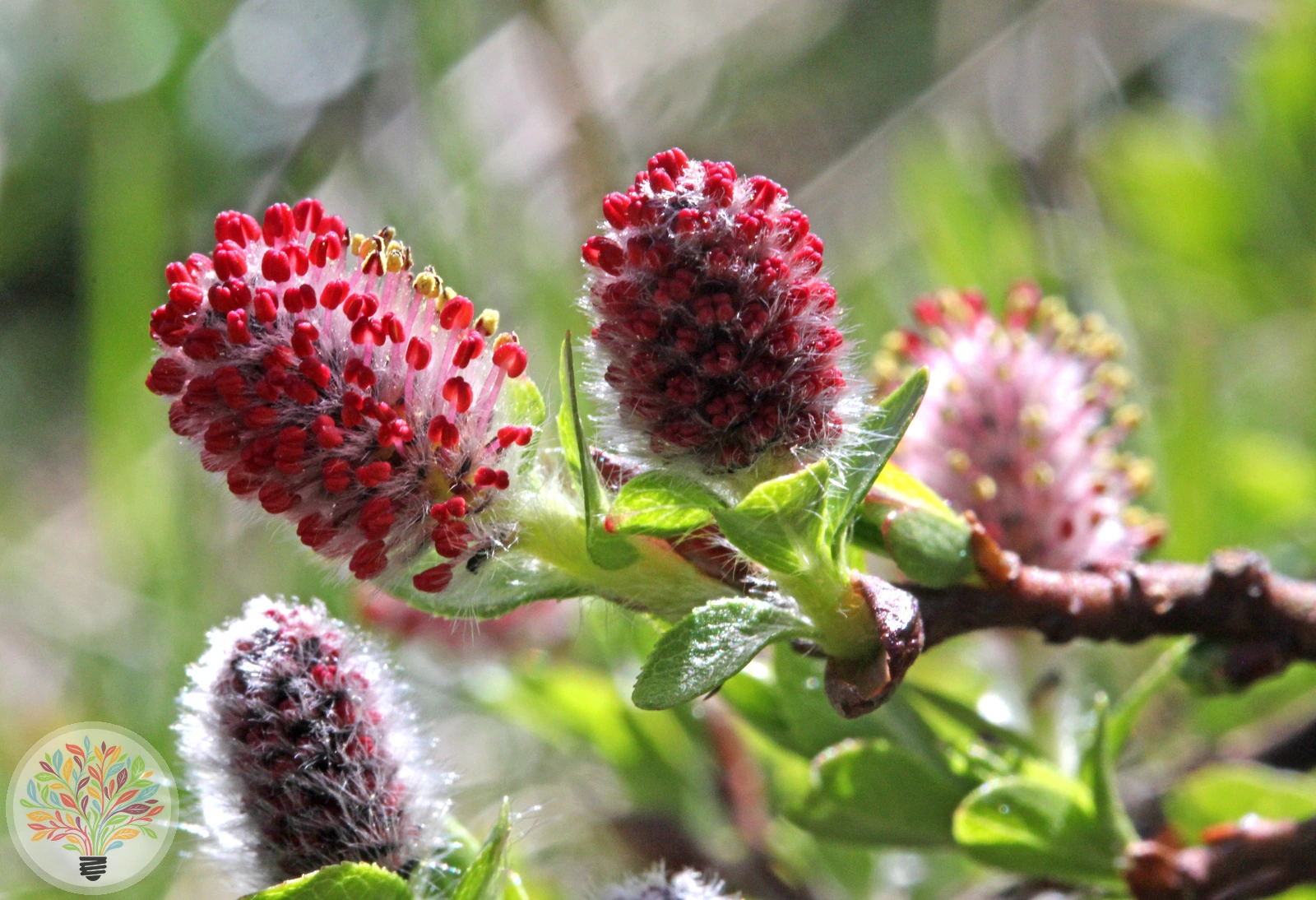
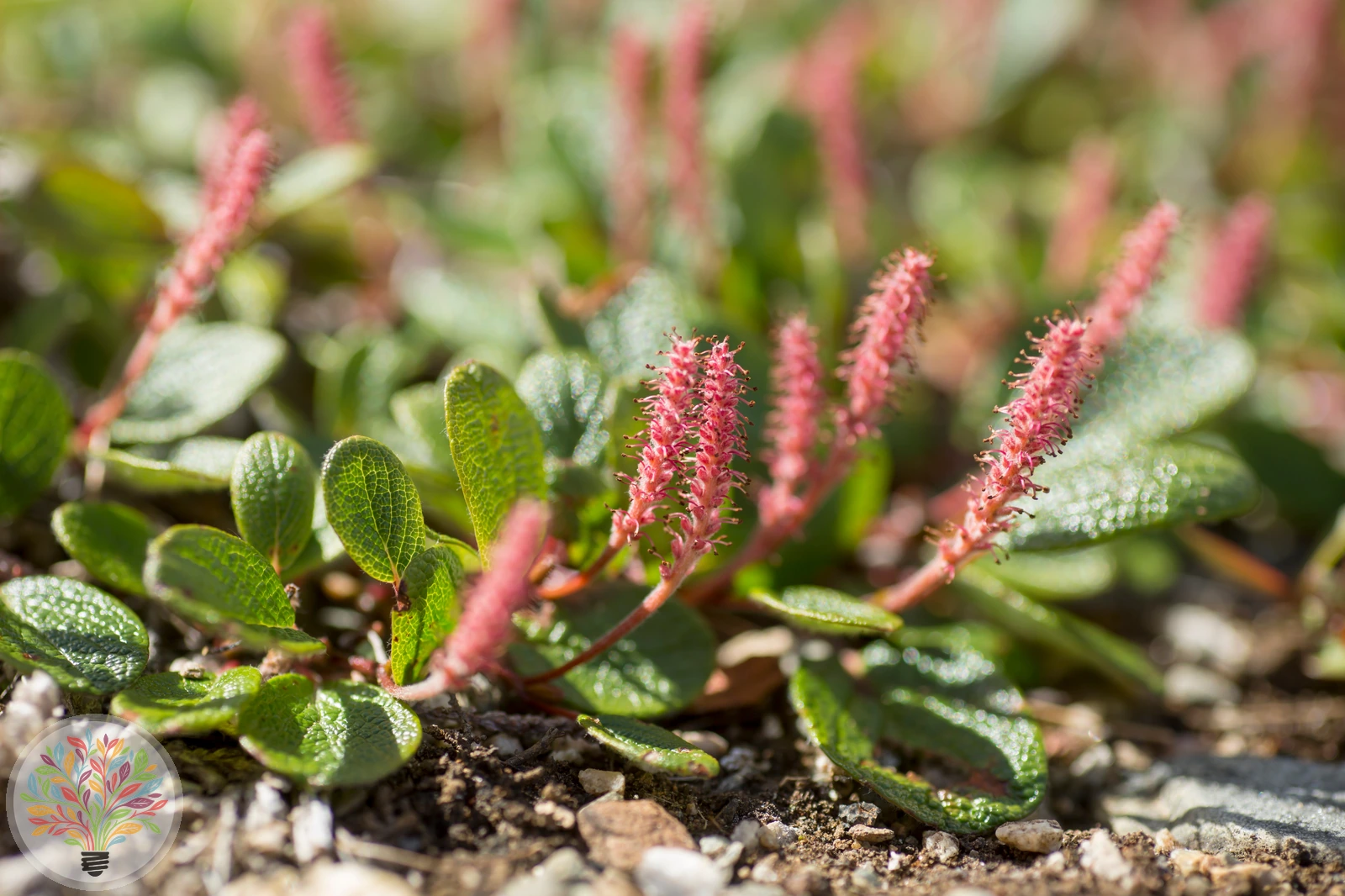
A tiny, ground-hugging willow native to the high mountains of Scotland, where it forms creeping mats on damp, base-rich flushes and ledges. Its broad, strongly net-veined leaves are distinctive, and it flowers in the short alpine summer.
Ecological network
Click to highlight connections · Click again to open the species page
Loading network...
PollinationLarval host
Ecological significance
As a native willow of high-altitude calcareous flushes and heaths, Salix reticulata contributes to the structure of these fragile communities and almost certainly provides microhabitats for specialist invertebrates.
Annual cycle
Deciduous; leaves expand after snowmelt in late spring and are shed in early autumn. Flowering takes place in July and August. The minute seeds, each weighing about 0.12 mg, are wind-dispersed in late summer.
Standort & Merkmale
Light
Sonne
Moisture
Frisch (Mäßig feucht)
Soil
Schwachzehrer (Magerer Boden)
Flowering period
Jul – Aug
Soil reaction
Basisch / Kalkhold
Bioregion
Continental
Growth form
Strauch
Woodiness
Verholzt
Leaf type
Breitblättrig
Leaf phenology
Laubabwerfend
Plant height
0.072 m
Morphological traits: TRY ID3 (CC BY 3.0) & TRY ID81 (CC BY)
Pflege & Anbau
Not widely cultivated; requires a cool, alpine or subalpine situation with full sun and a moist but sharply drained, lime-rich soil of very low fertility.
Scientific profile
Salix reticulata is a dwarf, deciduous shrub that typically reaches a height of only about 7 cm. It produces woody, prostrate stems and broadly elliptical leaves with a conspicuous reticulate vein pattern; the leaf blade area averages around 200 mm². Catkins appear during July and August. The species is an obligate calcicole of cold, alpine environments, occurring in full sun on moist, nutrient-poor, strongly calcareous substrates. The root system forms ectomycorrhizal associations, and the plant is adapted to habitats with very low levels of disturbance. Its overall ecological profile reflects life in open, base-rich, subarctic-alpine communities.
Pollinators & visitors
1 Arten interagieren mit dieser Pflanze
Boloria titania
Sources & data origin
•Interaktionsdaten via GloBI (CC-BY 4.0)
•FloraWeb / BfN
•EIVE 1.0 — Dengler et al. (2023), DOI: 10.3897/VCS.98324 (CC BY 4.0)
•GBIF Backbone Taxonomy — GBIF Secretariat (2024), DOI: 10.15468/39omei (CC BY 4.0)
•TRY Categorical Traits (ID3) — Kattge et al. (2012), DOI: 10.17871/TRY.3 (CC BY 3.0)
•TRY Global Spectrum (ID81) — Díaz et al. (2016/2021), DOI: 10.17871/TRY.81 (CC BY)
•Govaerts R et al. (2025) — World Checklist of Vascular Plants (WCVP) v14. Royal Botanic Gardens, Kew. DOI: 10.34885/xs7h-ze42 (CC BY 4.0)
•Foto: © Adobe Stock / AdobeStock_275174858
All data is licensed under CC BY 4.0, CC0, or compatible terms. Attribution according to license conditions. Full source overview →