Saponaria ocymoides
Saponaria ocymoides
FamilyGenus: Saponarianative in Germany
🌿
7
Species
interact
🔗
7
Interactions
documented
About this species
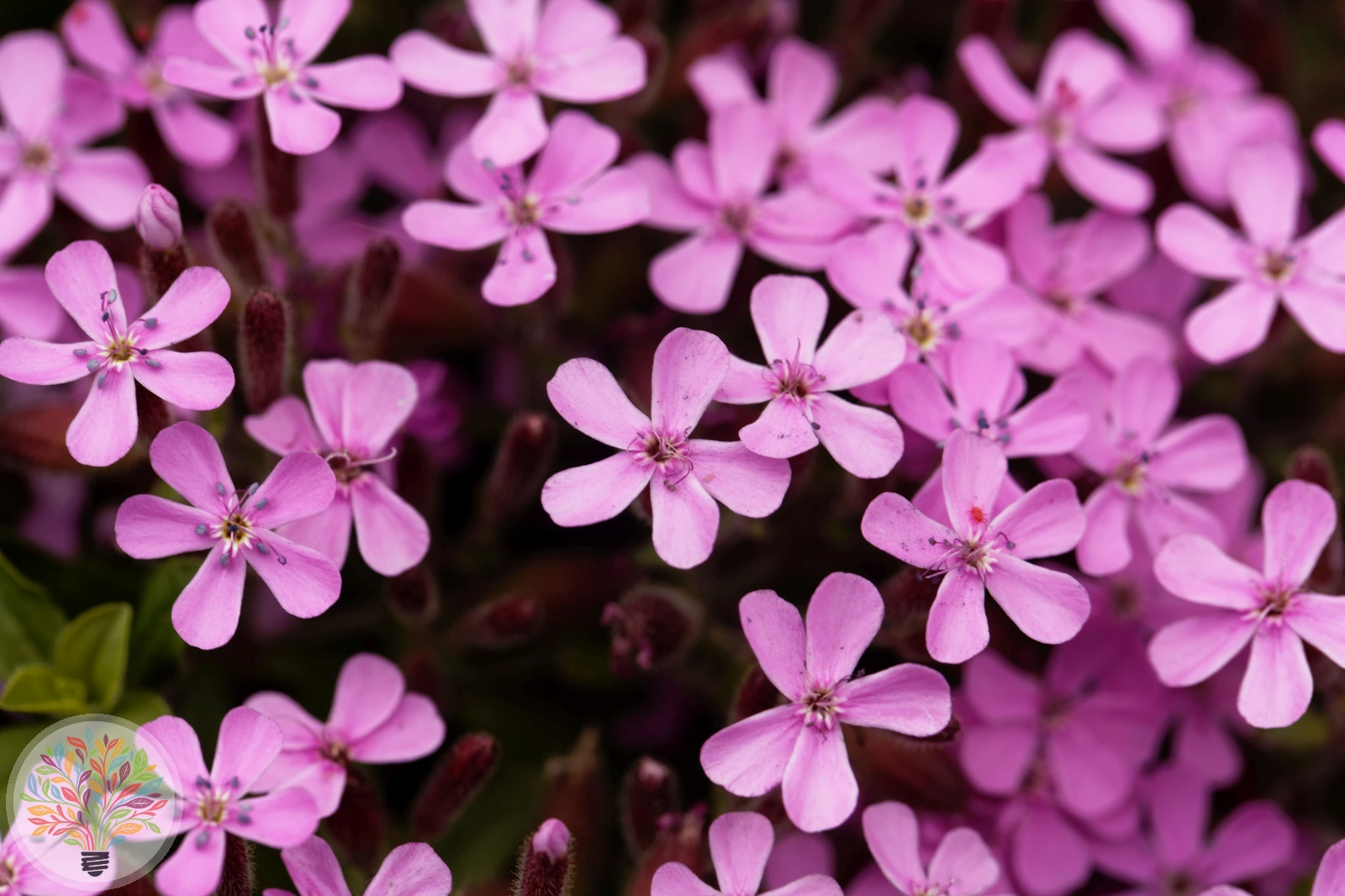
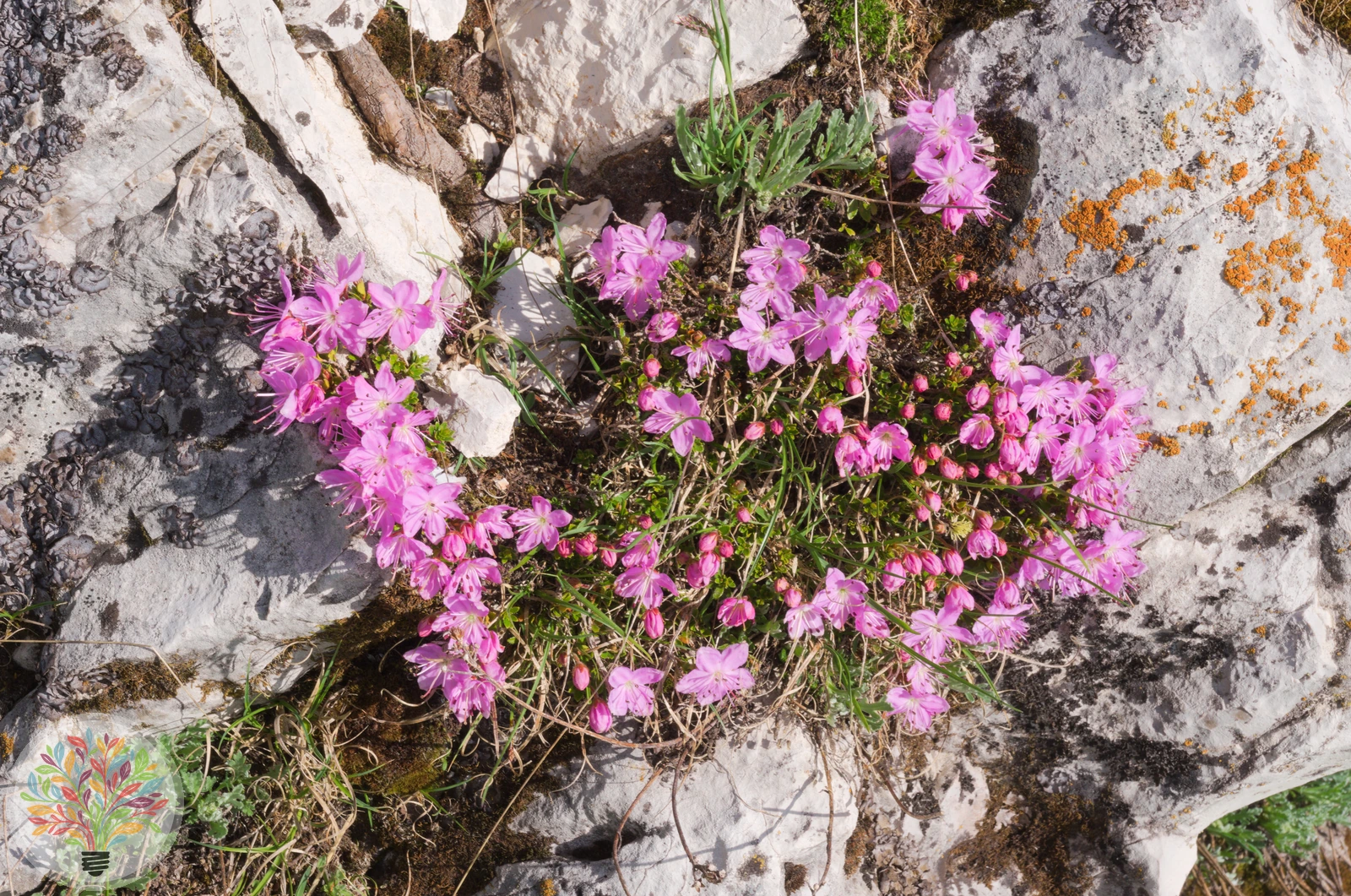
Saponaria ocymoides is a low-growing, broad-leaved herbaceous perennial in the carnation family (Caryophyllaceae), producing masses of small pink flowers over an exceptionally long season from April to October. It thrives in full sun on dry, nutrient-poor, preferably calcareous soils and is often found in dry grassland and rock garden settings. In Great Britain it is an introduced species that has become established in the wild.
Ecological network
Click to highlight connections · Click again to open the species page
Loading network...
Pollination
Ecological significance
Saponaria ocymoides is an introduced species established in Great Britain. No ecological impacts are recorded.
Annual cycle
Flowering occurs from April to October, with seeds maturing through summer and autumn. As a herbaceous perennial, the above‑ground growth dies back in late autumn, re‑emerging the following spring.
Safety note
No hazards are recorded for this species.
Standort & Merkmale
Light
Sonne
Moisture
Trocken
Soil
Schwachzehrer (Magerer Boden)
Flowering period
Apr – Okt
Soil reaction
Basisch / Kalkhold
Bioregion
Continental
Growth form
Krautige Pflanze
Woodiness
Nicht verholzt
Leaf type
Breitblättrig
Plant height
0.186 m
Morphological traits: TRY ID3 (CC BY 3.0) & TRY ID81 (CC BY)
Pflege & Anbau
This sun‑loving plant needs a very well‑drained, low‑fertility soil – ideally slightly alkaline, reflecting the calcareous dry grasslands it favours. Full sun is essential. Once established it tolerates drought and should not be over‑watered. Avoid feeding, as rich soil encourages lax growth and reduces flowering. Suitable for rock gardens, gravel beds, dry stone walls and sunny banks. Cut back after flowering if self‑seeding is not desired.
Scientific profile
Saponaria ocymoides is a herbaceous perennial reaching about 0.19 metres in height. Its leaves are broad and relatively small, with an average leaf area of 42.6 mm². The plant is non‑woody and terrestrial, and it does not form mycorrhizal associations. It shows a strong preference for full sun and dry, infertile soils, particularly on calcareous substrates. Its typical habitats are calcareous dry grasslands and extensive nutrient‑poor meadows; in Great Britain it is an introduced species now established in similar open, dry grassy places. The flowering period extends from April to October, and the tiny diaspores (mass around 2.6 mg) are readily dispersed.
Pollinators & visitors
7 Arten interagieren mit dieser Pflanze
Iphiclides podaliriusHemaris fuciformisPapilio machaonCallophrys rubiCarterocephalus palaemonLasiommata maeraErynnis tages
Sources & data origin
•Interaktionsdaten via GloBI (CC-BY 4.0)
•FloraWeb / BfN
•EIVE 1.0 — Dengler et al. (2023), DOI: 10.3897/VCS.98324 (CC BY 4.0)
•GBIF Backbone Taxonomy — GBIF Secretariat (2024), DOI: 10.15468/39omei (CC BY 4.0)
•TRY Categorical Traits (ID3) — Kattge et al. (2012), DOI: 10.17871/TRY.3 (CC BY 3.0)
•TRY Global Spectrum (ID81) — Díaz et al. (2016/2021), DOI: 10.17871/TRY.81 (CC BY)
•Checklist Alien Plants Belgium — Verloove F (2023), Botanic Garden Meise (CC BY 4.0)
•Govaerts R et al. (2025) — World Checklist of Vascular Plants (WCVP) v14. Royal Botanic Gardens, Kew. DOI: 10.34885/xs7h-ze42 (CC BY 4.0)
•Foto: © Adobe Stock / AdobeStock_359278533
All data is licensed under CC BY 4.0, CC0, or compatible terms. Attribution according to license conditions. Full source overview →