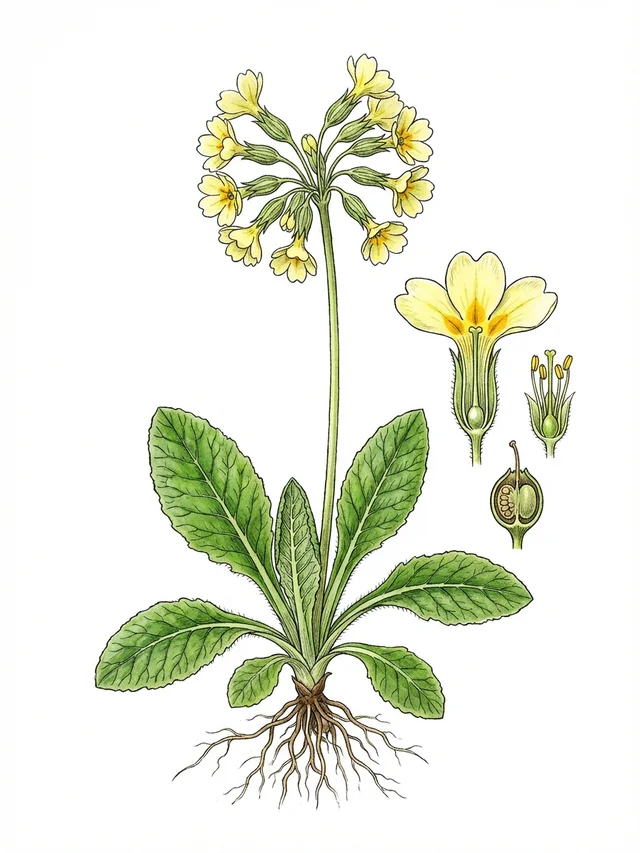
 Image to followAI-generated illustration
Saxifraga aizoides
Saxifraga aizoides
FamilyGenus: Saxifraganative in Germany
🌿
66
Species
interact
🔗
92
Interactions
documented
🐛
3
Host relationships
Species
About this species
A small, herbaceous perennial native to Great Britain, Saxifraga aizoides flowers from late spring into early autumn and thrives in damp, sunlit, lime-rich places.
Ecological network
Click to highlight connections · Click again to open the species page
Loading network...
PollinationLarval hostFlower visit
Ecological significance
As a native wildflower of damp, calcareous sites, it supplies nectar over a long flowering season and contributes to the distinctive communities of alpine and northern flushes.
Annual cycle
A herbaceous perennial, it produces leafy growth in spring, flowers from May to September, and dies back to ground level during the winter months.
Safety note
No specific hazards are recorded for this species.
Standort & Merkmale
Light
Sonne
Moisture
Feucht
Soil
Schwachzehrer (Magerer Boden)
Flowering period
Mai – Sep
Soil reaction
Basisch / Kalkhold
Bioregion
Continental
Growth form
Krautige Pflanze
Woodiness
Nicht verholzt
Leaf type
Breitblättrig
Plant height
0.068 m
Morphological traits: TRY ID3 (CC BY 3.0) & TRY ID81 (CC BY)
Pflege & Anbau
•
Light: full sun
•
Moisture: damp soil that does not dry out
•
Soil: poor, lime-rich ground; well-drained yet moisture-retentive
•
Notes: best suited to rock gardens, scree beds or alpine troughs where its natural requirements can be met. Avoid nutrient-rich composts; low fertility mimics its native habitats.
Scientific profile
Native in Great Britain, Saxifraga aizoides is a low-growing, herbaceous perennial of the saxifrage family. It reaches around 7 cm in height and bears broad, non-woody leaves. The plant produces flowers between May and September. It shows a strong preference for full sun, consistently damp, nutrient‑poor soils that are calcareous to basic. Typically found in cool, alpine or northern situations, it colonises ground where moisture is reliable and disturbance is low. The minute seeds, each weighing roughly 0.05 mg, are dispersed on the spot and the species remains wholly terrestrial.
Pollinators & visitors
24 Arten interagieren mit dieser Pflanze
Bombus lapidariusPlateumaris sericeaAndrena lapponicaAndrena nigroaeneaBombus monticolaBombus sylvestrisAndrena fucataHylaeus hyalinatusHylaeus alpinusEupeodes corollaeSyritta pipiensMimumesa atratinaBombus terrestris/lucorumBombus pratorumBombus teluBombus ssApamea remissaBombus terrestrisSphaerophoria scriptaSericomyia silentisCheilosia fraternaDolichovespula norwegicaEristalis arbustorumBombus pyrenaeus
Host relationships
3 species use this plant as a host
Other flower visitors
39 other species visit the flowers
Formica fuscaMyrmica rubraCantharis pellucidaSepsis fulgensAclastus micatorAnthophagus alpinusArgyra argentinaCtenicera cupreaCalliphora vicinaDolichopus atratusDolichopus pennatusDolichopus signatusCynomya mortuorumDilophus femoratusDrymeia hamataEpuraea aestivaEuphylidorea meigeniiHilara clavipesIchneumon molitoriusLimerodops subsericansHydrellia griseolaHerina frondescentiaePimpla turionellaePlateumaris discolorRhamphomyia albosegmentataSpilogona solitarianaScathophaga furcataSericus brunneusTenthredo olivaceaTachina feraSepsis cynipseaBibio pomonaeEmpis punctataPhaonia erransPollenia rudisEmpis tessellataMeligethes viridescensCalliphora vomitoriaPhaonia incana
Sources & data origin
•Interaktionsdaten via GloBI (CC-BY 4.0)
•Cook et al. (2025) UK Butterfly & Moth Traits (DOI: 10.5285/dbc7cc17-cbbd-49dd-bab4-8e8855768d66)
•pollinator_interactions
•FloraWeb / BfN
•EIVE 1.0 — Dengler et al. (2023), DOI: 10.3897/VCS.98324 (CC BY 4.0)
•GBIF Backbone Taxonomy — GBIF Secretariat (2024), DOI: 10.15468/39omei (CC BY 4.0)
•TRY Categorical Traits (ID3) — Kattge et al. (2012), DOI: 10.17871/TRY.3 (CC BY 3.0)
•TRY Global Spectrum (ID81) — Díaz et al. (2016/2021), DOI: 10.17871/TRY.81 (CC BY)
•Govaerts R et al. (2025) — World Checklist of Vascular Plants (WCVP) v14. Royal Botanic Gardens, Kew. DOI: 10.34885/xs7h-ze42 (CC BY 4.0)
All data is licensed under CC BY 4.0, CC0, or compatible terms. Attribution according to license conditions. Full source overview →