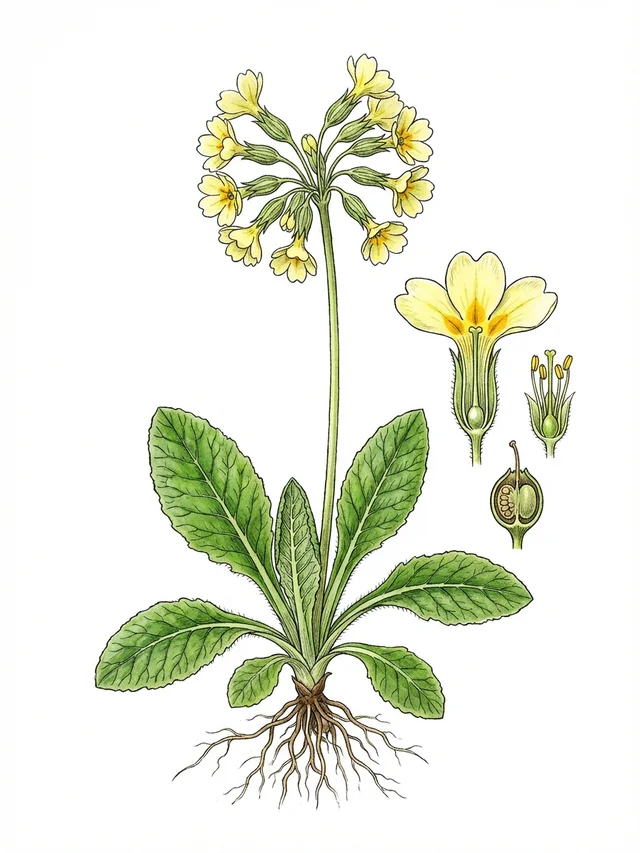
 Image to followAI-generated illustration
Fallopia baldschuanica
Fallopia baldschuanica
FamilyGenus: Flügelknöterichenative in Germany
🌿
6
Species
interact
🔗
21
Interactions
documented
About this species
Fallopia baldschuanica is a vigorous climbing plant introduced to Great Britain, where it has become established in the wild. It bears clusters of small flowers from July to October and provides a useful source of nectar and pollen for insects. Thriving in sunny, nutrient-rich soils, it can scramble to a height of just over four metres, making it a noticeable addition to hedgerows and scrubby places.
Ecological network
Click to highlight connections · Click again to open the species page
Loading network...
PollinationFlower visit
Ecological significance
Introduced and established in Great Britain, Fallopia baldschuanica often escapes from gardens and can become naturalised in the wider countryside. It is not currently listed as invasive under UK legislation, but its vigorous climbing habit may smother other vegetation where conditions suit it. The flowers provide a late-season nectar and pollen source for insects.
Annual cycle
Growth begins in spring, with climbing stems extending rapidly. Flowers appear from July and continue until October. Typically the stems die back during winter and new shoots emerge from the base the following spring.
Standort & Merkmale
Light
Sonne
Moisture
Frisch (Mäßig feucht)
Soil
—
Flowering period
Jul – Okt
Bioregion
Continental
Nectar value
3
Pollen value
3
Growth form
Kletterpflanze
Woodiness
Nicht verholzt
Leaf type
Breitblättrig
Plant height
4.066 m
Morphological traits: TRY ID3 (CC BY 3.0) & TRY ID81 (CC BY)
Pflege & Anbau
**Position:** full sun.
**Soil:** fertile, humus-rich, moist but well-drained, preferably neutral to alkaline.
**Watering:** keep the soil evenly moist during the growing season.
**Support:** provide a sturdy trellis or similar structure, as this climber can reach over 4 m.
**Maintenance:** cut back after flowering or in early spring to control size and encourage fresh growth.
Scientific profile
Fallopia baldschuanica is a non-woody, broad-leaved climber capable of reaching around 4 metres in height. It is not native to Great Britain but is now established in the wild after being introduced as an ornamental garden plant. The species originates from temperate Asia, including Western Asia, China and Mongolia. Flowering takes place from July to October, and the small flowers offer nectar and pollen to visiting insects, with both resources rated at moderate significance. The plant forms arbuscular mycorrhizal associations. It grows best in sunny positions on fresh, moderately moist, nutrient-rich soils that are calcareous to neutral in reaction; it is a strong nutrient feeder and is found in moderately warm situations.
Pollinators & visitors
5 Arten interagieren mit dieser Pflanze
Sources & data origin
•Interaktionsdaten via GloBI (CC-BY 4.0)
•Middleton-Welling_2020
•pollinator_interactions
•EIVE 1.0 — Dengler et al. (2023), DOI: 10.3897/VCS.98324 (CC BY 4.0)
•EuPPollNet — Kuppler et al. (2025), DOI: 10.1111/geb.70000 (CC BY 4.0)
•Database of Pollinator Interactions (DoPI) — Pocock et al. (2022), DOI: 10.1002/ecy.3801 (CC BY)
•GBIF Backbone Taxonomy — GBIF Secretariat (2024), DOI: 10.15468/39omei (CC BY 4.0)
•TRY Categorical Traits (ID3) — Kattge et al. (2012), DOI: 10.17871/TRY.3 (CC BY 3.0)
•TRY Global Spectrum (ID81) — Díaz et al. (2016/2021), DOI: 10.17871/TRY.81 (CC BY)
•Checklist Alien Plants Belgium — Verloove F (2023), Botanic Garden Meise (CC BY 4.0)
•Govaerts R et al. (2025) — World Checklist of Vascular Plants (WCVP) v14. Royal Botanic Gardens, Kew. DOI: 10.34885/xs7h-ze42 (CC BY 4.0)
All data is licensed under CC BY 4.0, CC0, or compatible terms. Attribution according to license conditions. Full source overview →