Scrophularia nodosa
Scrophularia nodosa
FamilyGenus: Scrophularianative in Germany
🌿
23
Species
interact
🔗
80
Interactions
documented
🐛
1
Host relationships
Species
About this species
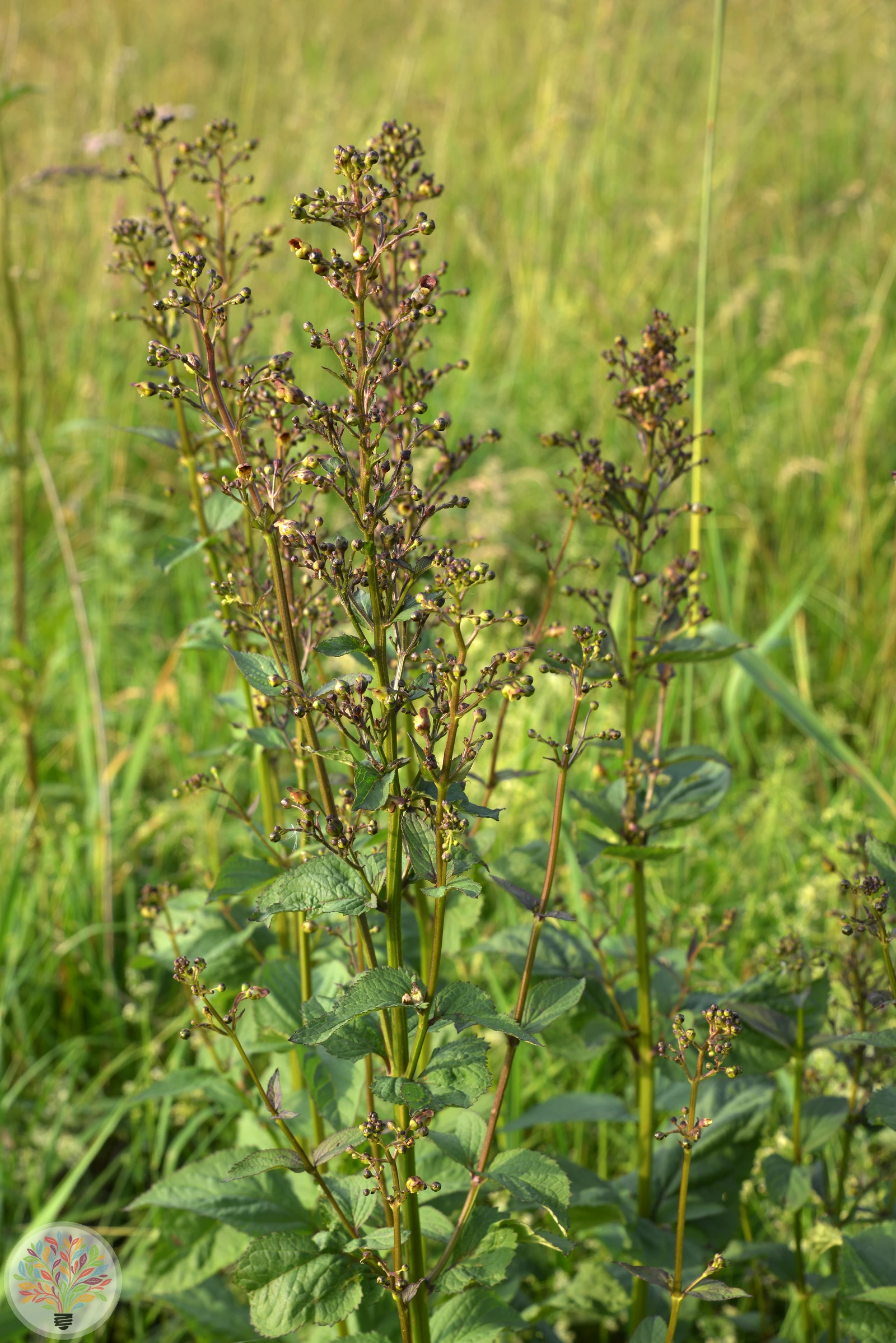
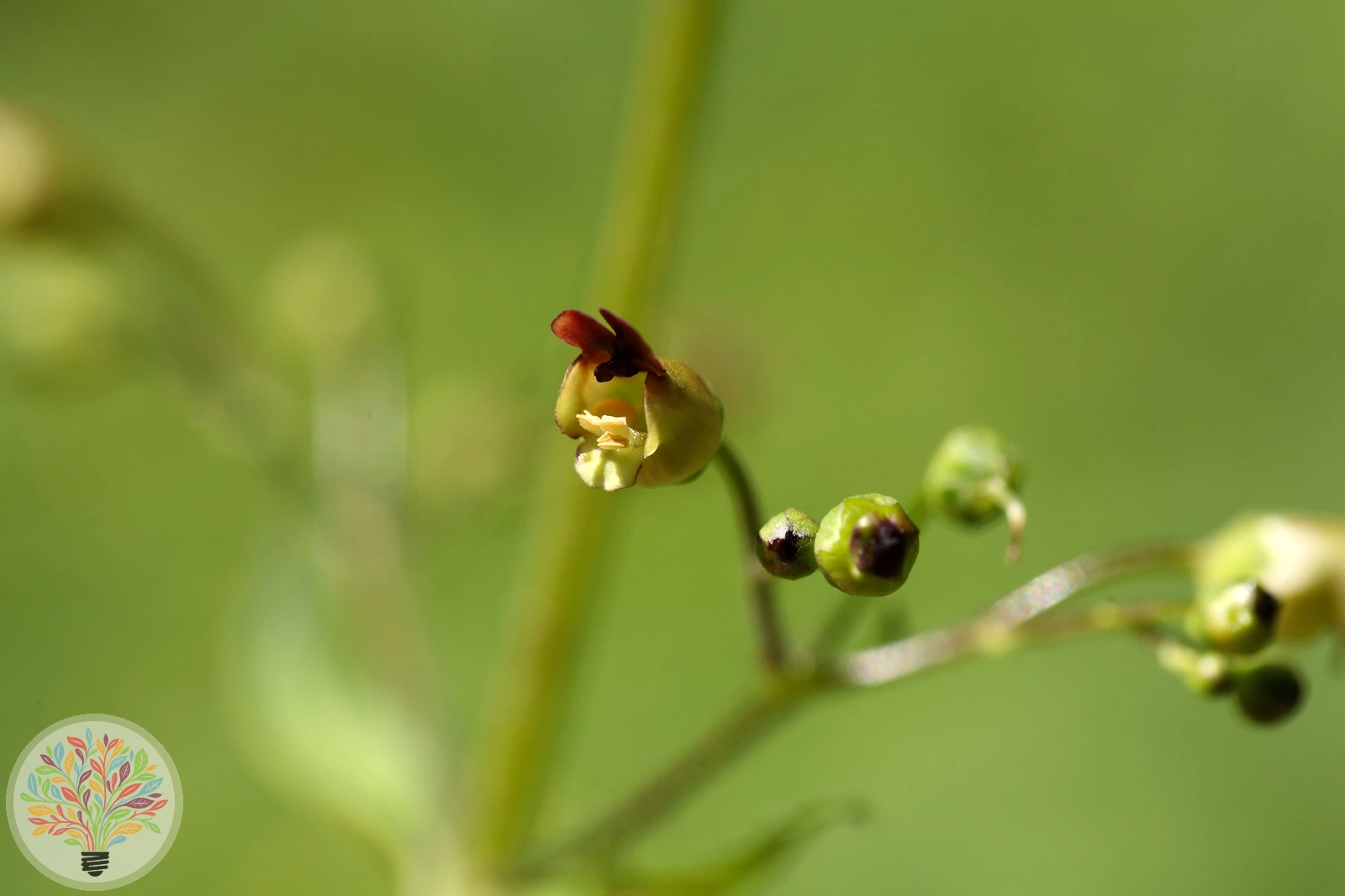
A native herbaceous perennial of damp, shaded, nutrient-rich calcareous soils, Scrophularia nodosa has broad leaves and typically grows 0.75 m tall. Its flowers open from June to September, providing nectar and pollen for insects.
Ecological network
Click to highlight connections · Click again to open the species page
Loading network...
PollinationLarval hostFlower visit
Ecological significance
The flowers are a valuable nectar and pollen source for a range of insects during the summer months. The plant forms arbuscular mycorrhizal partnerships, which can benefit soil structure and nutrient exchange. As a native perennial of low-disturbance habitats, it can contribute to the stability of semi-shaded, damp communities.
Annual cycle
New growth appears in spring. Flowers are produced from June to September. Aerial parts die down in autumn, with the plant surviving winter as underground storage organs.
Standort & Merkmale
Light
Schatten
Moisture
Frisch (Mäßig feucht)
Soil
Starkzehrer (Nährstoffreicher/Fetter Boden)
Flowering period
Jun – Sep
Soil reaction
Mäßig sauer bis neutral
Bioregion
Continental
Nectar value
4
Pollen value
4
Growth form
Krautige Pflanze
Woodiness
Nicht verholzt
Leaf type
Breitblättrig
Plant height
0.75 m
Morphological traits: TRY ID3 (CC BY 3.0) & TRY ID81 (CC BY)
Pflege & Anbau
Plant in partial shade in ground that remains reasonably moist. A fertile, calcareous soil suits it best. Once established, it needs little attention; avoid heavy disturbance and allow leaf litter to accumulate to mimic its natural conditions.
Scientific profile
Scrophularia nodosa is a broad-leaved, non-woody herbaceous perennial native in Great Britain. It favours half-shaded situations with fresh, moderately moist, nutrient-rich soils that are calcareous or basic in reaction. The plant typically attains a height of 0.75 m. It forms arbuscular mycorrhizal associations. Flowering spans June to September, and the blooms yield both nectar and pollen (value 4). The species shows a preference for moderately warm temperatures and tolerates only low levels of disturbance.
Pollinators & visitors
21 Arten interagieren mit dieser Pflanze
Bombus hypnorumLasioglossum morioBombus pascuorumBombus pratorumBombus lapidariusDolichovespula sylvestrisBombus hortorumBombus sylvestrisBombus muscorumBombus jonellusVespula vulgarisVespula germanicaTenthredo scrophulariaeDolichovespula saxonicaBombusLasioglossum nitidulumBombus vestalisBombus terrestrisMegachile versicolorLasioglossum laticepsLasioglossum minutissimum
Host relationships
1 species use this plant as a host
Cionus tuberculosus
Other flower visitors
1 other species visit the flowers
Strophosoma melanogrammum
Sources & data origin
•Interaktionsdaten via GloBI (CC-BY 4.0)
•pollinator_interactions
•FloraWeb / BfN
•EIVE 1.0 — Dengler et al. (2023), DOI: 10.3897/VCS.98324 (CC BY 4.0)
•EuPPollNet — Kuppler et al. (2025), DOI: 10.1111/geb.70000 (CC BY 4.0)
•Database of Pollinator Interactions (DoPI) — Pocock et al. (2022), DOI: 10.1002/ecy.3801 (CC BY)
•GBIF Backbone Taxonomy — GBIF Secretariat (2024), DOI: 10.15468/39omei (CC BY 4.0)
•TRY Categorical Traits (ID3) — Kattge et al. (2012), DOI: 10.17871/TRY.3 (CC BY 3.0)
•TRY Global Spectrum (ID81) — Díaz et al. (2016/2021), DOI: 10.17871/TRY.81 (CC BY)
•Govaerts R et al. (2025) — World Checklist of Vascular Plants (WCVP) v14. Royal Botanic Gardens, Kew. DOI: 10.34885/xs7h-ze42 (CC BY 4.0)
•Foto: © Peter Oetelshofen / Adobe Stock / AdobeStock_1466702693
All data is licensed under CC BY 4.0, CC0, or compatible terms. Attribution according to license conditions. Full source overview →