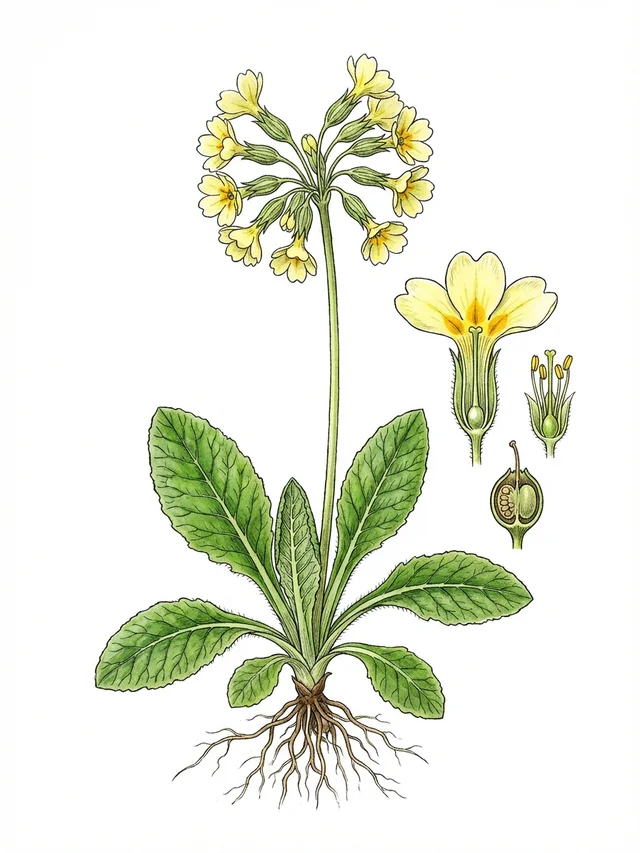
 Image to followAI-generated illustration
Silene acaulis
Silene acaulis
FamilyGenus: Silenenative in Germany
🌿
21
Species
interact
🔗
43
Interactions
documented
🐛
2
Host relationships
Species
About this species
A tight cushion-forming perennial native to Britain's cooler uplands, bearing tiny pink flowers from late spring into early autumn. It grows in full sun on meagre, well-drained soils and remains only a few centimetres tall.
Ecological network
Click to highlight connections · Click again to open the species page
Loading network...
PollinationLarval hostFlower visit
Ecological significance
As a native wildflower of exposed mountain and subalpine ground, Silene acaulis contributes to the character of rocky heaths and wind-clipped grasslands. Its long flowering period supports pollinating insects that are active in cool, short-season habitats.
Annual cycle
The evergreen cushion persists through winter. New growth becomes apparent in spring, with flowers opening from May through to September. Seed maturation and dispersal follow over late summer and autumn.
Standort & Merkmale
Light
Sonne
Moisture
Frisch (Mäßig feucht)
Soil
Schwachzehrer (Magerer Boden)
Flowering period
Mai – Sep
Soil reaction
Basisch / Kalkhold
Bioregion
Continental
Growth form
Krautige Pflanze
Woodiness
Nicht verholzt
Leaf type
Breitblättrig
Plant height
0.031 m
Morphological traits: TRY ID3 (CC BY 3.0) & TRY ID81 (CC BY)
Pflege & Anbau
**Light**: Full sun.
**Moisture**: Moderately moist but with perfect drainage.
**Soil**: Lean, gritty or rocky soil; avoid nutrient-rich amendments.
Suitable for alpine troughs, scree gardens and crevice plantings. Over-feeding or waterlogged ground will cause the cushions to rot.
Scientific profile
Silene acaulis is a herbaceous, non-woody plant with broad leaves that forms dense, mossy cushions just a few centimetres high. The foliage stays green all year, and the flowering season lasts from May to September. Its terrestrial habit is adapted to full light and very low nutrient conditions, with an affinity for cold, alpine-like temperatures and sites experiencing minimal disturbance. The diaspores are light, averaging around 0.3 mg in mass.
Pollinators & visitors
15 Arten interagieren mit dieser Pflanze
Thera britannicaCoenotephria salicataBombus jonellusAglais urticaeBombus wurfleniiErebia pandroseBombus lapidariusZygaena exulansOsmia cornutaAgriades glandonBombus hortorumBombus monticolaBombus mendaxBombus ssBombus soroeensis
Host relationships
2 species use this plant as a host
Eupithecia venosataHadena confusa
Other flower visitors
4 other species visit the flowers
Sources & data origin
•Cook et al. (2025) UK Butterfly & Moth Traits (DOI: 10.5285/dbc7cc17-cbbd-49dd-bab4-8e8855768d66)
•Interaktionsdaten via GloBI (CC-BY 4.0)
•pollinator_interactions
•FloraWeb / BfN
•EIVE 1.0 — Dengler et al. (2023), DOI: 10.3897/VCS.98324 (CC BY 4.0)
•GBIF Backbone Taxonomy — GBIF Secretariat (2024), DOI: 10.15468/39omei (CC BY 4.0)
•TRY Categorical Traits (ID3) — Kattge et al. (2012), DOI: 10.17871/TRY.3 (CC BY 3.0)
•TRY Global Spectrum (ID81) — Díaz et al. (2016/2021), DOI: 10.17871/TRY.81 (CC BY)
•Govaerts R et al. (2025) — World Checklist of Vascular Plants (WCVP) v14. Royal Botanic Gardens, Kew. DOI: 10.34885/xs7h-ze42 (CC BY 4.0)
All data is licensed under CC BY 4.0, CC0, or compatible terms. Attribution according to license conditions. Full source overview →