Silene dioica
Silene dioica
FamilyGenus: Silenenative in Germany
🌿
87
Species
interact
🔗
168
Interactions
documented
🐛
10
Host relationships
Species
About this species
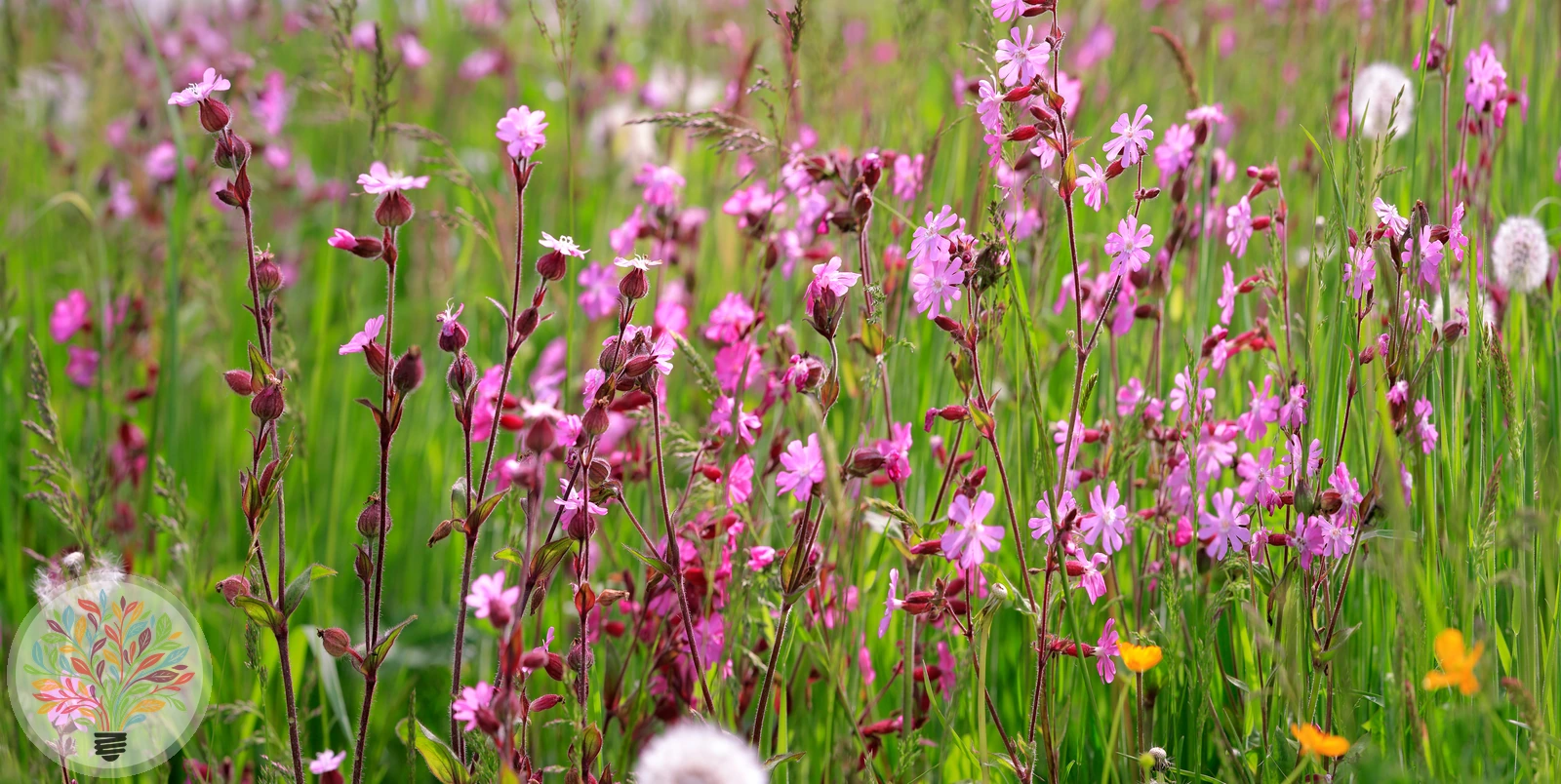
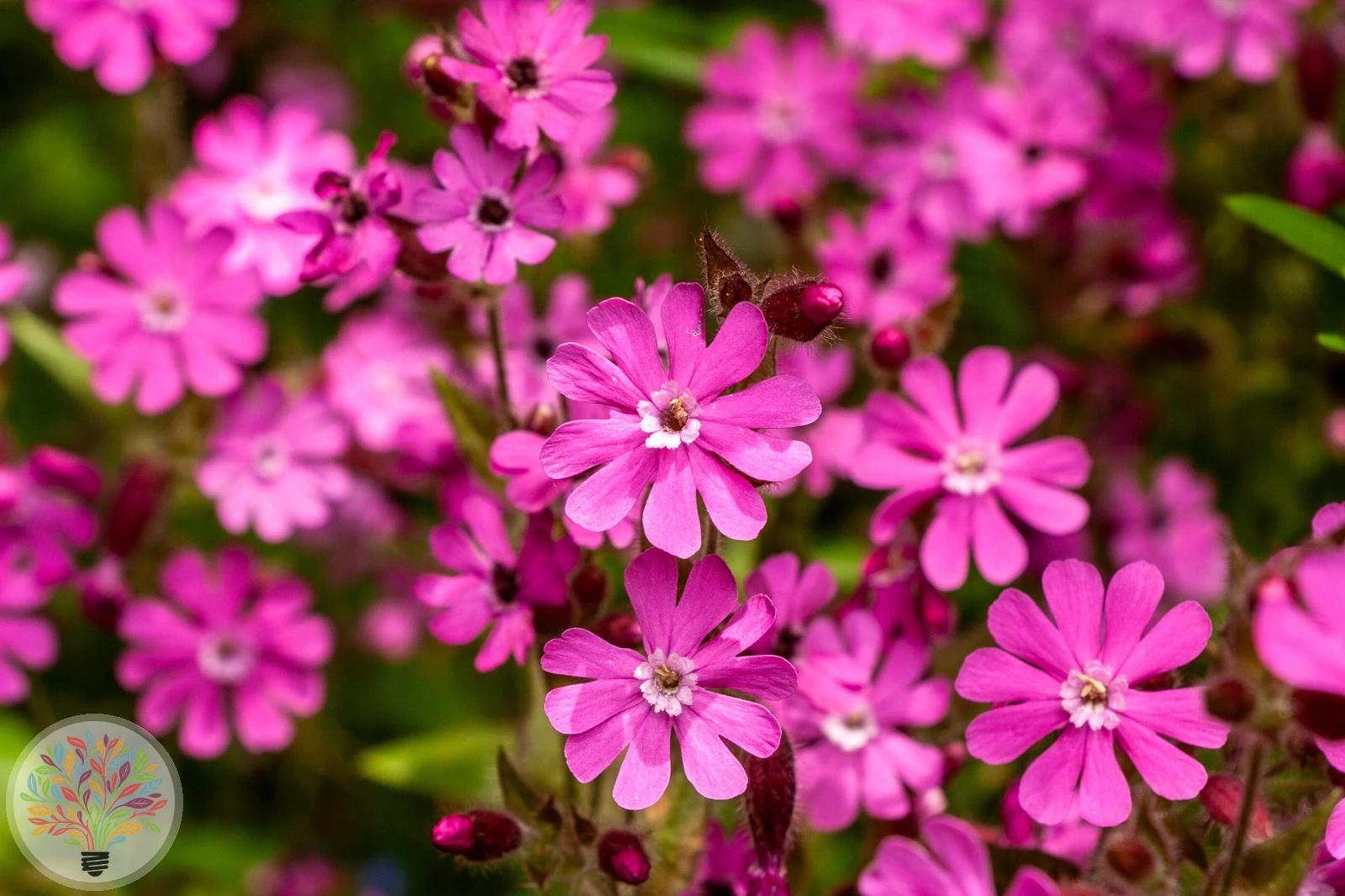
A native herbaceous perennial with bright pink flowers from March to September, favouring partial shade and moist, fertile soils.
Ecological network
Click to highlight connections · Click again to open the species page
Loading network...
PollinationLarval hostFlower visit
Ecological significance
As a native wildflower, red campion contributes to the structure of low-disturbance habitats such as hedgerows, woodland edges and damp meadows. Its long flowering season provides a reliable source of pollen and nectar for a variety of insects.
Annual cycle
In spring, new basal rosettes emerge, followed by upright flowering stems from March onwards. The main blooming period runs through to September, with peak flowering in early summer. After pollination, seed capsules develop and shed tiny seeds. Above-ground growth dies back in late autumn, with the perennial rootstock overwintering to fuel the next year's growth.
Standort & Merkmale
Light
Halbschatten
Moisture
Frisch (Mäßig feucht)
Soil
Starkzehrer (Nährstoffreicher/Fetter Boden)
Flowering period
Mär – Sep
Soil reaction
Basisch / Kalkhold
Bioregion
Continental
Growth form
Krautige Pflanze
Woodiness
Nicht verholzt
Leaf type
Breitblättrig
Plant height
0.556 m
Morphological traits: TRY ID3 (CC BY 3.0) & TRY ID81 (CC BY)
Pollen
0.3638 mg/Blüte
Pflege & Anbau
## Growing Red Campion
•
Light: Partial shade is ideal; avoid full sun in the hottest part of the day.
•
Soil: Thrives in fertile, humus-rich soil that stays evenly moist. A neutral to slightly alkaline pH suits it best, so avoid strongly acidic ground.
•
Watering: Keep soil consistently moist, especially during dry spells. Good drainage is important to prevent waterlogging.
•
Feeding: As a nutrient-demanding plant, it benefits from an annual mulch of well-rotted garden compost or a controlled-release fertiliser in spring.
•
Pruning: Deadhead spent flowers regularly to prolong the flowering period. Cut back stems after the main flush fades to encourage a second bloom.
•
Propagation: Sow seed in autumn or divide clumps in spring. It self-seeds freely under suitable conditions.
•
Note: This species does not form mycorrhizal associations, so soil inoculants are unnecessary.
Scientific profile
Silene dioica is a herbaceous, non-woody perennial with broad leaves, native in Great Britain. It typically reaches a height of around 0.56 metres and produces flowers from March to September. The plant is terrestrial and thrives in partial shade, on fresh to moderately moist, nutrient-rich soils that tend towards neutral to alkaline conditions. It is a species of low-disturbance habitats, indicative of stable environments. The tiny seeds, each weighing around 0.68 milligrams, are dispersed from capsules after flowering. Red campion belongs to the family Caryophyllaceae and is not mycorrhizal.
Pollinators & visitors
65 Arten interagieren mit dieser Pflanze
Vanessa atalantaLycaena phlaeasPieris brassicaeBombus muscorumAphantopus hyperantusBombus sylvestrisPieris napiPieris rapaeAglais urticaeAnthocharis cardaminesPapilio machaonColias croceusGonepteryx rhamniLasiommata megeraBombus hypnorumBombus lucorumBombus lapidariusEucera longicornisLasioglossum calceatumBombus hortorumBombus vestalisAndrena labiataVespula vulgarisAndrena nigroaeneaAndrena barbilabrisThymelicus sylvestrisAndrena fucataAndrena clarkellaLasioglossum zonulumBombus pratorumApis melliferaPararge aegeriaBombus jonellusBombus pascuorumOsmia bicornisByturus ochraceusNemophora degeerellaTimandra comaeAnthophora plumipesDiaea dorsataHalictus tumulorumBombus terrestrisManiola jurtinaPolyommatus icarusBombus soroeensisAdscita staticesEpisyrphus balteatusLasioglossum morioEupeodes nitensVolucella pellucens
Host relationships
10 species use this plant as a host
Hemaris fuciformisPerizoma flavofasciataEupithecia venosataSideridis rivularisHadena confusaHadena bicrurisDeilephila porcellusPerizoma affinitataEupithecia virgaureataSideridis reticulata
Other flower visitors
12 other species visit the flowers
Emberiza citrinellaFringilla coelebsPasser domesticusDasytes plumbeusBrassicogethes aeneusPsithyrusRhamphomyia longipesMeligethes viridescensEmpis lividaThricops semicinereusPhaonia angelicaeBicellaria vana
Sources & data origin
•Interaktionsdaten via GloBI (CC-BY 4.0)
•Cook et al. (2025) UK Butterfly & Moth Traits (DOI: 10.5285/dbc7cc17-cbbd-49dd-bab4-8e8855768d66)
•pollinator_interactions
•Baden-Böhm F, App M, Thiele J (2022) — The FloRes Database: A floral resources trait database for pollinator habitat-assessment generated by a multistep workflow. Johann Heinrich von Thünen-Institut, Dryad, DOI: 10.5061/dryad.djh9w0w29 (CC0)
•FloraWeb / BfN
•EIVE 1.0 — Dengler et al. (2023), DOI: 10.3897/VCS.98324 (CC BY 4.0)
•GBIF Backbone Taxonomy — GBIF Secretariat (2024), DOI: 10.15468/39omei (CC BY 4.0)
•TRY Categorical Traits (ID3) — Kattge et al. (2012), DOI: 10.17871/TRY.3 (CC BY 3.0)
•TRY Global Spectrum (ID81) — Díaz et al. (2016/2021), DOI: 10.17871/TRY.81 (CC BY)
•Govaerts R et al. (2025) — World Checklist of Vascular Plants (WCVP) v14. Royal Botanic Gardens, Kew. DOI: 10.34885/xs7h-ze42 (CC BY 4.0)
•Foto: © Adobe Stock / AdobeStock_302239321
All data is licensed under CC BY 4.0, CC0, or compatible terms. Attribution according to license conditions. Full source overview →