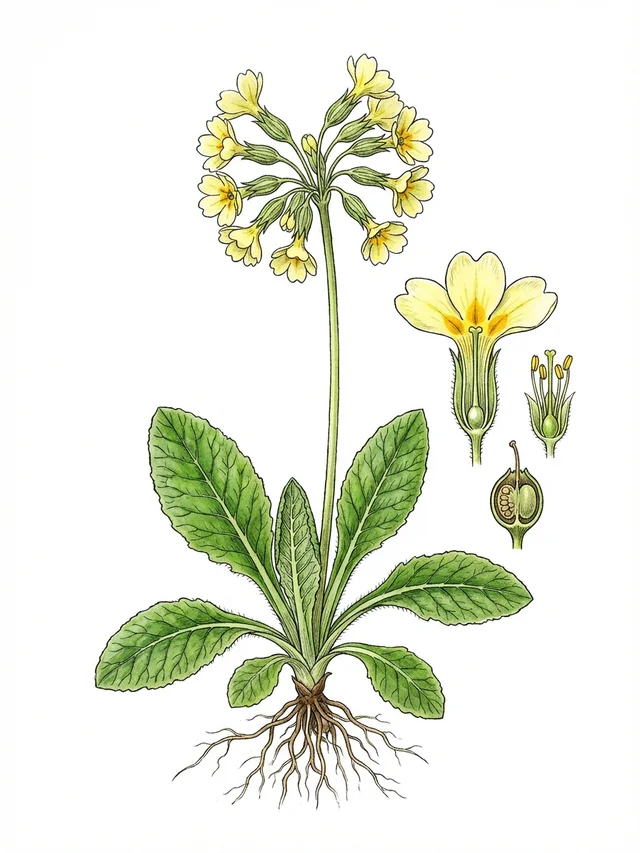
 Image to followAI-generated illustration
Sisymbrium officinale
Sisymbrium officinale
FamilyGenus: Sisymbriumnative in Germany
🌿
44
Species
interact
🔗
73
Interactions
documented
🐛
3
Host relationships
Species
About this species
An archaeophyte herb in Great Britain, Sisymbrium officinale favours sunny, nutrient-rich, moderately moist, calcareous ground and flowers from May to October, offering nectar and pollen to visiting insects.
Ecological network
Click to highlight connections · Click again to open the species page
Loading network...
PollinationLarval hostFlower visit
Ecological significance
Flowers provide a moderate resource of nectar and pollen for flower-visiting insects. The species is non-mycorrhizal, which may influence local soil fungal networks.
Annual cycle
Bloom occurs from May to October. As an herbaceous archaeophyte, the plant completes its above-ground cycle within one growing season.
Standort & Merkmale
Light
Sonne
Moisture
Frisch (Mäßig feucht)
Soil
Starkzehrer (Nährstoffreicher/Fetter Boden)
Flowering period
Mai – Okt
Soil reaction
Basisch / Kalkhold
Bioregion
Continental
Nectar value
2
Pollen value
2
Growth form
Krautige Pflanze
Woodiness
Nicht verholzt
Leaf type
Breitblättrig
Plant height
0.466 m
Morphological traits: TRY ID3 (CC BY 3.0) & TRY ID81 (CC BY)
Pollen
0.0195 mg/Blüte
Pflege & Anbau
The species does best in full sun and a moderately moist, nutrient-rich, calcareous soil.
Scientific profile
Sisymbrium officinale is a terrestrial, non-woody, broad-leaved herb in the Brassicaceae family. It attains a mean height of about 0.47 metres and has a leaf area around 2726 mm², with minute diaspores averaging 0.26 mg. The species is non-mycorrhizal. Ellenberg-type indicator values characterise it as a plant of full sun (7.9), moderately moist soil (4), calcareous to basic reaction (7) and high nutrient levels (7). It shows no tolerance of salinity and typically occurs in sites of low disturbance (severity 0.77) and moderately warm temperatures (6). Flowering extends from May through October; both nectar and pollen values are rated 2. The plant is an archaeophyte in Great Britain, established before 1500. First records in Central Europe also date from around 1500. It is recorded from parts of Southwestern and Southeastern Europe and Northeast Tropical Africa.
Pollinators & visitors
34 Arten interagieren mit dieser Pflanze
Pieris rapaePieris napiAndrena flavipesAndrena minutulaPlutella xylostellaBombus humilisAndrena clarkellaAndrena haemorrhoaBombus lapidariusAndrena dorsataAndrena labiataOligia strigilisAndrena nigroaeneaBombus sylvestrisXanthorhoe montanata (Denis & Schiffermüller), 1775Halictus tumulorumAndrena helvolaBombus pascuorumApis melliferaAndrena nitidaAndrena chrysoscelesAndrena cinerariaBombus lucorumPontia edusaMacropis europaeaPasser domesticusLasioglossum nitidiusculumSyritta pipiensEristalis nemorumEupeodes corollaeSphaerophoria scriptaAndrena bicolorAndrena scoticaBombus terrestris
Host relationships
3 species use this plant as a host
Anthocharis cardaminesPieris brassicaePsyllobora vigintiduopunctata
Other flower visitors
7 other species visit the flowers
Ceutorhynchus pallidactylusOxythyrea funestaHarpalus affinisHarpalus rufipesAnthophilaRhinophora lepidaDelia radicum
Sources & data origin
•Cook et al. (2025) UK Butterfly & Moth Traits (DOI: 10.5285/dbc7cc17-cbbd-49dd-bab4-8e8855768d66)
•Interaktionsdaten via GloBI (CC-BY 4.0)
•pollinator_interactions
•Baden-Böhm F, App M, Thiele J (2022) — The FloRes Database: A floral resources trait database for pollinator habitat-assessment generated by a multistep workflow. Johann Heinrich von Thünen-Institut, Dryad, DOI: 10.5061/dryad.djh9w0w29 (CC0)
•FloraWeb / BfN
•EIVE 1.0 — Dengler et al. (2023), DOI: 10.3897/VCS.98324 (CC BY 4.0)
•EuPPollNet — Kuppler et al. (2025), DOI: 10.1111/geb.70000 (CC BY 4.0)
•Database of Pollinator Interactions (DoPI) — Pocock et al. (2022), DOI: 10.1002/ecy.3801 (CC BY)
•GBIF Backbone Taxonomy — GBIF Secretariat (2024), DOI: 10.15468/39omei (CC BY 4.0)
•TRY Categorical Traits (ID3) — Kattge et al. (2012), DOI: 10.17871/TRY.3 (CC BY 3.0)
•TRY Global Spectrum (ID81) — Díaz et al. (2016/2021), DOI: 10.17871/TRY.81 (CC BY)
•Govaerts R et al. (2025) — World Checklist of Vascular Plants (WCVP) v14. Royal Botanic Gardens, Kew. DOI: 10.34885/xs7h-ze42 (CC BY 4.0)
All data is licensed under CC BY 4.0, CC0, or compatible terms. Attribution according to license conditions. Full source overview →