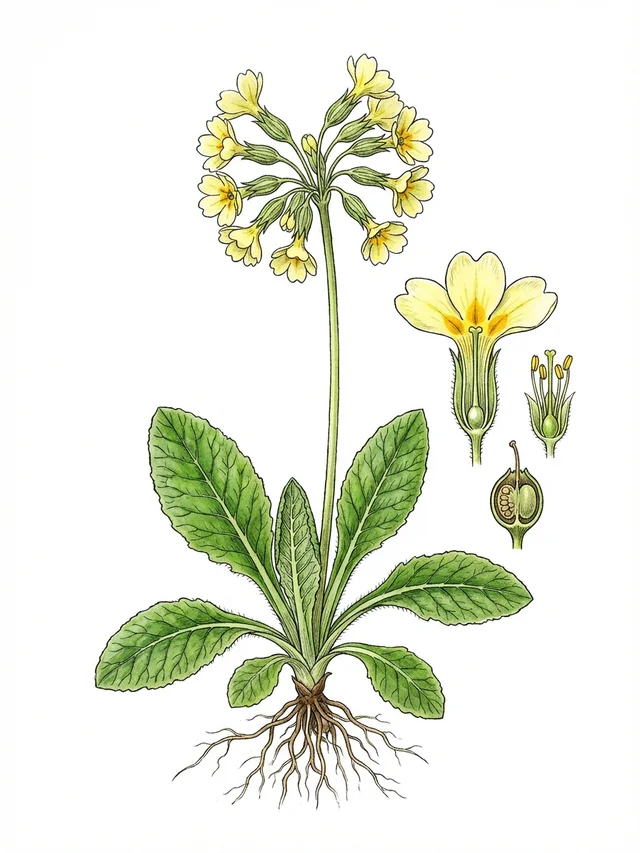
 Image to followAI-generated illustration
Sonchus asper
Sonchus asper
FamilyGenus: Sonchusnative in Germany
🌿
59
Species
interact
🔗
199
Interactions
documented
About this species
Sonchus asper, the prickly sow-thistle, is a native broad-leaved herb of Great Britain, producing yellow composite flower heads from June to October. It thrives in sunny, nutrient-rich, moderately moist and calcareous soils.
Ecological network
Click to highlight connections · Click again to open the species page
Loading network...
PollinationFlower visit
Ecological significance
As a native species, it is part of the natural flora of Great Britain and has no documented adverse ecological impact in the region.
Annual cycle
Herbaceous growth appears in spring, and the main flowering period extends from June through to October. The small seeds are wind-dispersed after flowering.
Safety note
No harmful properties are recorded for Sonchus asper.
Standort & Merkmale
Light
Sonne
Moisture
Frisch (Mäßig feucht)
Soil
Starkzehrer (Nährstoffreicher/Fetter Boden)
Flowering period
Jun – Okt
Soil reaction
Basisch / Kalkhold
Bioregion
Continental
Growth form
Krautige Pflanze
Woodiness
Nicht verholzt
Leaf type
Breitblättrig
Plant height
0.493 m
Morphological traits: TRY ID3 (CC BY 3.0) & TRY ID81 (CC BY)
Pollen
0.6085 mg/Blüte
Pflege & Anbau
Prefers full sun and nutrient-rich, moderately moist soils. It grows readily on calcareous, slightly saline ground and needs little to no intervention in a wild garden setting.
Scientific profile
Sonchus asper is a non-woody, broad-leaved herb that typically reaches a height of about 0.5 metres. The leaves are broad, with an average leaf area of around 5060 mm². Flowering occurs from June through to October, with yellow composite heads characteristic of the sow-thistle group. It is a terrestrial species found in full sun on fresh to moderately moist, nutrient-rich soils that are calcareous and slightly salt-tolerant. It tolerates only low levels of disturbance. The plant is native in Great Britain.
Pollinators & visitors
35 Arten interagieren mit dieser Pflanze
Polygonia c-albumLasioglossum villosulumBombus pratorumBombus lapidariusPanurgus banksianusPieris brassicaePieris napiApis melliferaLasioglossum malachurumPieris rapaeMelitaea didymaAgrotis ipsilonLasioglossum leucozoniumLasioglossum zonulumAndrena orientanaEristalis tenaxLasioglossum cristulaOsmia scutellarisHalictus sexcinctusHalictus scabiosaeLasioglossum puncticolleSphaerophoria scriptaBombus lucorumEristalisHelophilusEupeodes lunigerSyrphus ribesiiSyritta pipiensHelophilus pendulusLasioglossum calceatumEpisyrphus balteatusPlatycheirus scutatusEupeodes corollaeMelanostoma mellinumSyrphus vitripennis
Other flower visitors
24 other species visit the flowers
Emberiza citrinellaPasser domesticusFringilla coelebsCoccinella septempunctataLinaria cannabinaOedemera nobilisCarduelis carduelisBranta canadensisPsyllobora vigintiduopunctataCryptocephalus rugicollisOedemera flavipesSphaerophoriaPegoplata aestivaAphidius erviChorebus leptogasterChrysocharis pentheusChrysocharis pubicornisDacnusa areolarisDiglyphus isaeaIonympha carnePhaedrotoma exiguaSeladerma diffineSeladerma tarsalePollenia rudis
Sources & data origin
•Interaktionsdaten via GloBI (CC-BY 4.0)
•pollinator_interactions
•Baden-Böhm F, App M, Thiele J (2022) — The FloRes Database: A floral resources trait database for pollinator habitat-assessment generated by a multistep workflow. Johann Heinrich von Thünen-Institut, Dryad, DOI: 10.5061/dryad.djh9w0w29 (CC0)
•FloraWeb / BfN
•EIVE 1.0 — Dengler et al. (2023), DOI: 10.3897/VCS.98324 (CC BY 4.0)
•GBIF Backbone Taxonomy — GBIF Secretariat (2024), DOI: 10.15468/39omei (CC BY 4.0)
•TRY Categorical Traits (ID3) — Kattge et al. (2012), DOI: 10.17871/TRY.3 (CC BY 3.0)
•TRY Global Spectrum (ID81) — Díaz et al. (2016/2021), DOI: 10.17871/TRY.81 (CC BY)
•Checklist Alien Plants Belgium — Verloove F (2023), Botanic Garden Meise (CC BY 4.0)
•Govaerts R et al. (2025) — World Checklist of Vascular Plants (WCVP) v14. Royal Botanic Gardens, Kew. DOI: 10.34885/xs7h-ze42 (CC BY 4.0)
All data is licensed under CC BY 4.0, CC0, or compatible terms. Attribution according to license conditions. Full source overview →