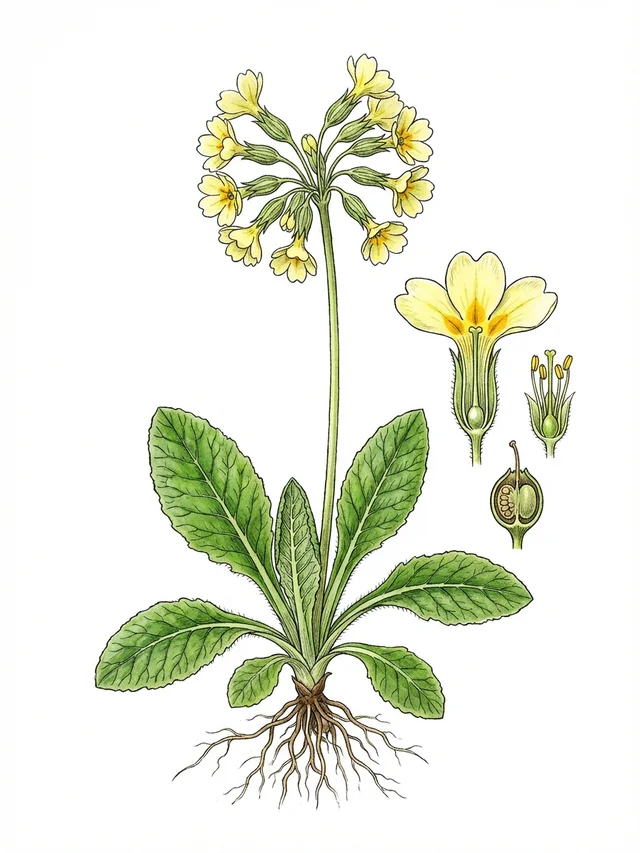
 Image to followAI-generated illustration
Sorbaria sorbifolia
Sorbaria sorbifolia
FamilyGenus: Sorbarianative in Germany
🌿
19
Species
interact
🔗
35
Interactions
documented
🐛
2
Host relationships
Species
About this species
A shrubby member of the rose family, Sorbaria sorbifolia is valued for its long summer display of flower plumes and its elegant, fern-like foliage. Originally from eastern Asia, it has become established in Britain where it thrives in partial shade and moist, fertile ground.
Ecological network
Click to highlight connections · Click again to open the species page
Loading network...
PollinationLarval hostFlower visit
Ecological significance
As an introduced ornamental, Sorbaria sorbifolia is established in Britain. There is no evidence to suggest it is invasive, and its summer flowers provide nectar for pollinating insects over a long season.
Annual cycle
Deciduous; new leaves appear in spring, and the shrub flowers from June to September. Seeds develop in late summer and autumn. Leaves are shed in autumn, and the plant remains leafless through winter.
Standort & Merkmale
Light
Halbschatten
Moisture
Frisch (Mäßig feucht)
Soil
Starkzehrer (Nährstoffreicher/Fetter Boden)
Flowering period
Jun – Sep
Soil reaction
Mäßig sauer bis neutral
Bioregion
Continental
Growth form
Strauch
Woodiness
Verholzt
Leaf type
Breitblättrig
Leaf phenology
Laubabwerfend
Plant height
1.536 m
Morphological traits: TRY ID3 (CC BY 3.0) & TRY ID81 (CC BY)
Pflege & Anbau
Grow in partial shade in a moist but well-drained, fertile soil. This shrub tolerates a range of soil pH from neutral to slightly acid. Water regularly during dry spells to maintain moderate soil moisture. A layer of organic mulch will help retain moisture and supply nutrients. Prune after flowering if needed to control size and shape.
Scientific profile
Sorbaria sorbifolia is a deciduous, woody shrub reaching about 1.5 m in height. Its broad, pinnate leaves are reminiscent of ferns and are shed in autumn. From June to September it produces dense, pyramidal panicles of small flowers. Its natural range includes temperate and tropical Asia, from Siberia to China and eastern Asia. In Great Britain it is an introduced neophyte, established through ornamental plantings. It grows best in partial shade on moist, nutrient-rich soils that are neutral to slightly acid, in moderately warm situations.
Pollinators & visitors
13 Arten interagieren mit dieser Pflanze
Host relationships
2 species use this plant as a host
Biston betulariaSphinx ligustri
Other flower visitors
4 other species visit the flowers
Sources & data origin
•Interaktionsdaten via GloBI (CC-BY 4.0)
•pollinator_interactions
•FloraWeb / BfN
•EIVE 1.0 — Dengler et al. (2023), DOI: 10.3897/VCS.98324 (CC BY 4.0)
•GBIF Backbone Taxonomy — GBIF Secretariat (2024), DOI: 10.15468/39omei (CC BY 4.0)
•TRY Categorical Traits (ID3) — Kattge et al. (2012), DOI: 10.17871/TRY.3 (CC BY 3.0)
•TRY Global Spectrum (ID81) — Díaz et al. (2016/2021), DOI: 10.17871/TRY.81 (CC BY)
•Checklist Alien Plants Belgium — Verloove F (2023), Botanic Garden Meise (CC BY 4.0)
•Govaerts R et al. (2025) — World Checklist of Vascular Plants (WCVP) v14. Royal Botanic Gardens, Kew. DOI: 10.34885/xs7h-ze42 (CC BY 4.0)
All data is licensed under CC BY 4.0, CC0, or compatible terms. Attribution according to license conditions. Full source overview →