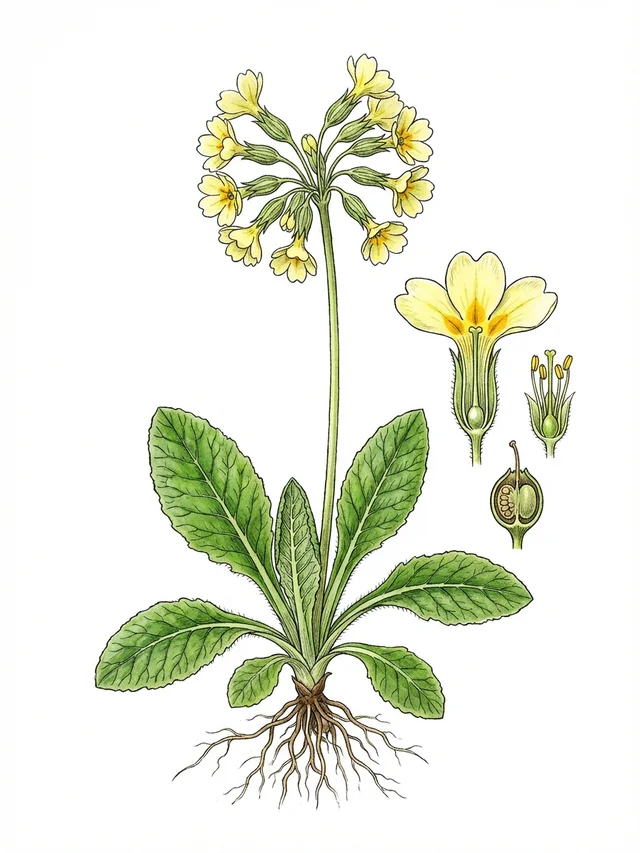
 Image to followAI-generated illustration
Spiraea japonica
Spiraea japonica
FamilyGenus: Spiraeanon-native in Germany
🌿
15
Species
interact
🔗
39
Interactions
documented
🐛
2
Host relationships
Species
About this species
Spiraea japonica is a deciduous, broad-leaved shrub that reaches around 1.2 metres in height. It flowers from early summer to early autumn, offering abundant nectar and pollen that make it very appealing to bees and other pollinating insects. Originally from eastern Asia (China and Japan), it was introduced to Great Britain as an ornamental plant and is now established in the wild here.
Ecological network
Click to highlight connections · Click again to open the species page
Loading network...
PollinationLarval host
Ecological significance
The available evidence does not include an assessment of the ecological impact of this introduced species in Britain.
Annual cycle
A deciduous shrub. New foliage appears in spring. Flowering lasts from June to September. Leaves are lost in autumn; the plant remains leafless through winter.
Safety note
Safety information is not present in the source data.
Standort & Merkmale
Light
—
Moisture
—
Soil
—
Flowering period
Jun – Sep
Nectar value
5
Pollen value
5
Growth form
Strauch
Woodiness
Verholzt
Leaf type
Breitblättrig
Leaf phenology
Laubabwerfend
Plant height
1.166 m
Morphological traits: TRY ID3 (CC BY 3.0) & TRY ID81 (CC BY)
Pflege & Anbau
No cultivation guidance is included in the source evidence.
Scientific profile
A woody shrub of bushy habit, Spiraea japonica bears broad, deciduous leaves and typically grows to about 1.2 m tall. Flowering occurs from June to September; the blooms are a rich source of nectar (rated 5) and pollen (rated 5), attracting a wide range of insects. The leaves are shed in autumn. Originally from temperate eastern Asia, including China and Japan, the species was brought to Britain through horticultural trade and has become established outside cultivation. Its minute seeds, averaging 0.055 mg, aid dispersal. The plant is terrestrial and fully woody, with an above-ground lifespan of several years.
Pollinators & visitors
13 Arten interagieren mit dieser Pflanze
Bombus pascuorumBombus muscorumBombus lapidariusPieris brassicaeSyritta pipiensBombus lucorum aggBombus pratorumBombus terrestrisAndrena minutuloidesPlatycheirus albimanusSyrphus vitripennisEpisyrphus balteatusApis mellifera
Sources & data origin
•Cook et al. (2025) UK Butterfly & Moth Traits (DOI: 10.5285/dbc7cc17-cbbd-49dd-bab4-8e8855768d66)
•pollinator_interactions
•EuPPollNet — Kuppler et al. (2025), DOI: 10.1111/geb.70000 (CC BY 4.0)
•Database of Pollinator Interactions (DoPI) — Pocock et al. (2022), DOI: 10.1002/ecy.3801 (CC BY)
•GBIF Backbone Taxonomy — GBIF Secretariat (2024), DOI: 10.15468/39omei (CC BY 4.0)
•TRY Categorical Traits (ID3) — Kattge et al. (2012), DOI: 10.17871/TRY.3 (CC BY 3.0)
•TRY Global Spectrum (ID81) — Díaz et al. (2016/2021), DOI: 10.17871/TRY.81 (CC BY)
•Checklist Alien Plants Belgium — Verloove F (2023), Botanic Garden Meise (CC BY 4.0)
•Govaerts R et al. (2025) — World Checklist of Vascular Plants (WCVP) v14. Royal Botanic Gardens, Kew. DOI: 10.34885/xs7h-ze42 (CC BY 4.0)
All data is licensed under CC BY 4.0, CC0, or compatible terms. Attribution according to license conditions. Full source overview →