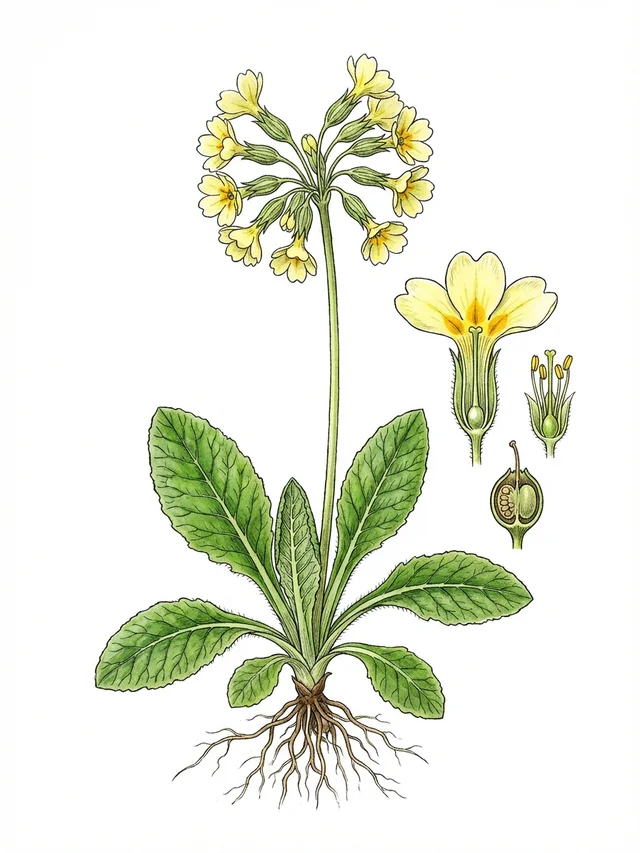
 Image to followAI-generated illustration
Spiraea salicifolia
Spiraea salicifolia
FamilyGenus: Spiraeanative in Germany
🌿
4
Species
interact
🔗
5
Interactions
documented
🐛
3
Host relationships
Species
About this species
A deciduous shrub introduced and established in Great Britain, reaching about 1.5 m in height, with broad leaves and pink flower clusters from June to August.
Ecological network
Click to highlight connections · Click again to open the species page
Loading network...
PollinationLarval host
Ecological significance
As an introduced shrub, its ecological effects in Great Britain are not well documented. It may provide nectar for pollinating insects during its summer flowering period, but no further impact data are available.
Annual cycle
Deciduous, shedding its leaves in autumn. New foliage appears in spring. The flowering period runs from June to August.
Safety note
No specific safety risks are indicated in the available evidence.
Standort & Merkmale
Light
Halbschatten
Moisture
Frisch (Mäßig feucht)
Soil
Mittelzehrer (Normaler Boden)
Flowering period
Jun – Aug
Soil reaction
Mäßig sauer bis neutral
Bioregion
Continental
Growth form
Strauch
Woodiness
Verholzt
Leaf type
Breitblättrig
Leaf phenology
Laubabwerfend
Plant height
1.442 m
Morphological traits: TRY ID3 (CC BY 3.0) & TRY ID81 (CC BY)
Pflege & Anbau
Grow in partial shade in moderately moist, normal garden soil. No special feeding is required, as it is adapted to average nutrient levels. Water during prolonged dry spells, but avoid waterlogging.
Scientific profile
Spiraea salicifolia is a woody, deciduous shrub of moderate size, typically growing to around 1.44 m tall. Its leaves are broad, and the plant is wholly terrestrial in habit. It thrives in partial shade and prefers moderately moist, normal soil of neutral to weakly acid reaction. Established in Great Britain as an introduced neophyte, it bears its flowers in summer, from June through to August.
Sources & data origin
•Interaktionsdaten via GloBI (CC-BY 4.0)
•FloraWeb / BfN
•EIVE 1.0 — Dengler et al. (2023), DOI: 10.3897/VCS.98324 (CC BY 4.0)
•GBIF Backbone Taxonomy — GBIF Secretariat (2024), DOI: 10.15468/39omei (CC BY 4.0)
•TRY Categorical Traits (ID3) — Kattge et al. (2012), DOI: 10.17871/TRY.3 (CC BY 3.0)
•TRY Global Spectrum (ID81) — Díaz et al. (2016/2021), DOI: 10.17871/TRY.81 (CC BY)
•Govaerts R et al. (2025) — World Checklist of Vascular Plants (WCVP) v14. Royal Botanic Gardens, Kew. DOI: 10.34885/xs7h-ze42 (CC BY 4.0)
All data is licensed under CC BY 4.0, CC0, or compatible terms. Attribution according to license conditions. Full source overview →