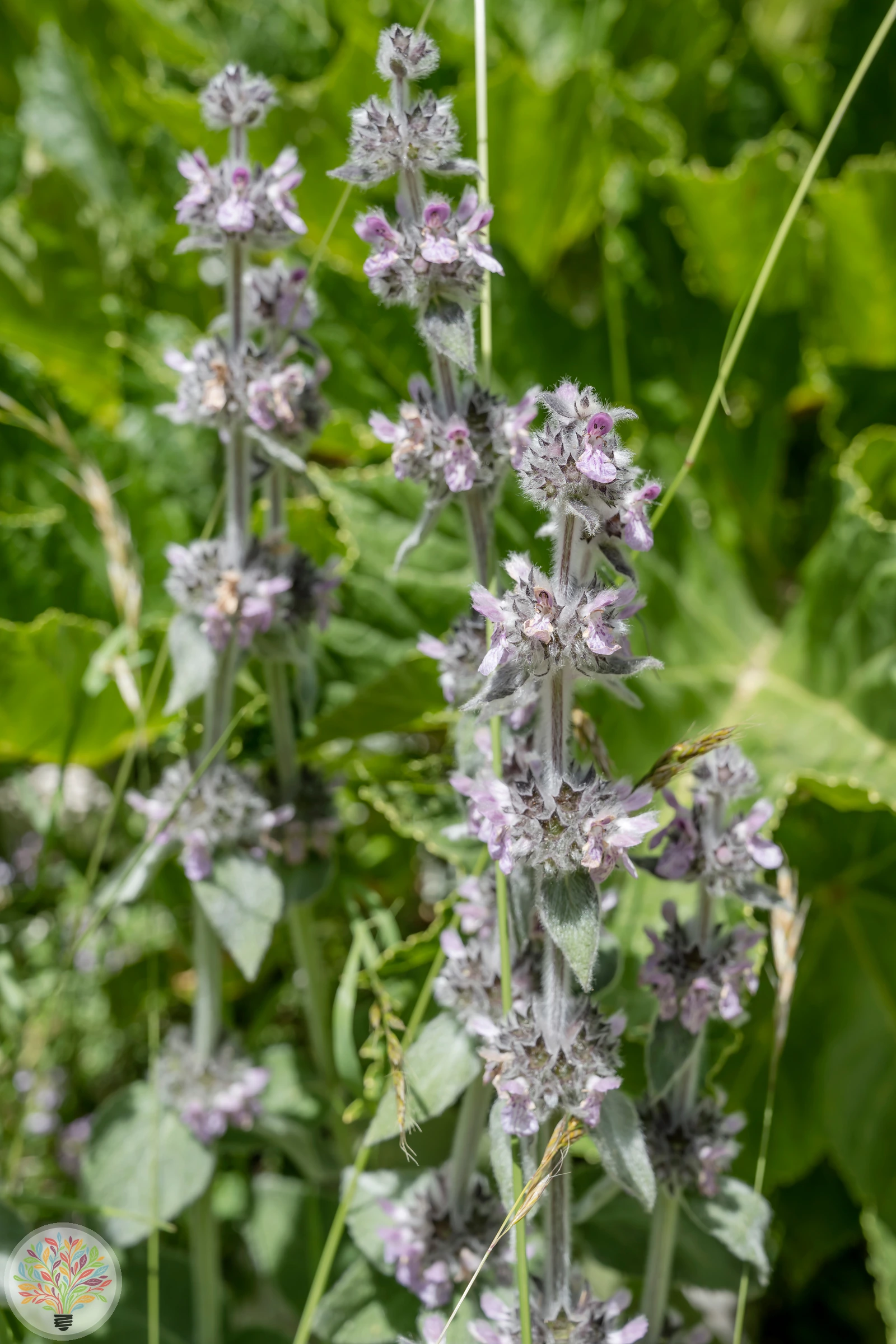
Stachys alpina
Stachys alpina
FamilyGenus: Stachysnative in Germany
🌿
9
Species
interact
🔗
20
Interactions
documented
About this species
Stachys alpina is a herbaceous broad-leaved plant in the mint family, typically reaching around 0.6 m in height. It blooms from July to September and grows in semi-shaded, fresh to moderately moist, nutrient-rich, calcareous soils with low disturbance. Its flowers provide modest amounts of nectar and pollen.
Ecological network
Click to highlight connections · Click again to open the species page
Loading network...
Pollination
Ecological significance
The flowers supply a modest resource for pollinating insects, with nectar and pollen values of 2. The plant is associated with low-disturbance, calcareous habitats.
Annual cycle
As a herbaceous plant, Stachys alpina puts on leafy growth and flowers from July to September. After flowering, seeds are produced and dispersed. Details of its wintering strategy are not recorded in the current evidence.
Safety note
No safety information is available from the current evidence.
Standort & Merkmale
Light
Halbschatten
Moisture
Frisch (Mäßig feucht)
Soil
Starkzehrer (Nährstoffreicher/Fetter Boden)
Flowering period
Jul – Sep
Soil reaction
Basisch / Kalkhold
Bioregion
Continental
Nectar value
2
Pollen value
2
Growth form
Krautige Pflanze
Woodiness
Nicht verholzt
Leaf type
Breitblättrig
Plant height
0.622 m
Morphological traits: TRY ID3 (CC BY 3.0) & TRY ID81 (CC BY)
Scientific profile
Stachys alpina is a herbaceous, non-woody member of the Lamiaceae family, bearing broad leaves. The plant stands about 0.6 m tall and occurs in semi-shaded situations on fresh to moderately moist, nutrient-rich, calcareous soils. Flowering extends from July through September, the blooms offering nectar and pollen in small amounts (nectar value 2, pollen value 2). Its ecological profile points to a preference for low-disturbance habitats. The species forms arbuscular mycorrhizal associations (AM). Seeds (diaspores) weigh roughly 4.6 mg on average, and the leaf area is approximately 3160 mm².
Pollinators & visitors
9 Arten interagieren mit dieser Pflanze
Osmia caerulescensBombus pascuorumBombus hortorumAnthidium manicatumBombus pratorumAnthophora furcataBombus ruderariusBombus lapidariusLasioglossum fulvicorne
Sources & data origin
•Interaktionsdaten via GloBI (CC-BY 4.0)
•pollinator_interactions
•FloraWeb / BfN
•EIVE 1.0 — Dengler et al. (2023), DOI: 10.3897/VCS.98324 (CC BY 4.0)
•EuPPollNet — Kuppler et al. (2025), DOI: 10.1111/geb.70000 (CC BY 4.0)
•Database of Pollinator Interactions (DoPI) — Pocock et al. (2022), DOI: 10.1002/ecy.3801 (CC BY)
•GBIF Backbone Taxonomy — GBIF Secretariat (2024), DOI: 10.15468/39omei (CC BY 4.0)
•TRY Categorical Traits (ID3) — Kattge et al. (2012), DOI: 10.17871/TRY.3 (CC BY 3.0)
•TRY Global Spectrum (ID81) — Díaz et al. (2016/2021), DOI: 10.17871/TRY.81 (CC BY)
•Govaerts R et al. (2025) — World Checklist of Vascular Plants (WCVP) v14. Royal Botanic Gardens, Kew. DOI: 10.34885/xs7h-ze42 (CC BY 4.0)
•Foto: © halpand©2023 / Adobe Stock / AdobeStock_654407864
All data is licensed under CC BY 4.0, CC0, or compatible terms. Attribution according to license conditions. Full source overview →