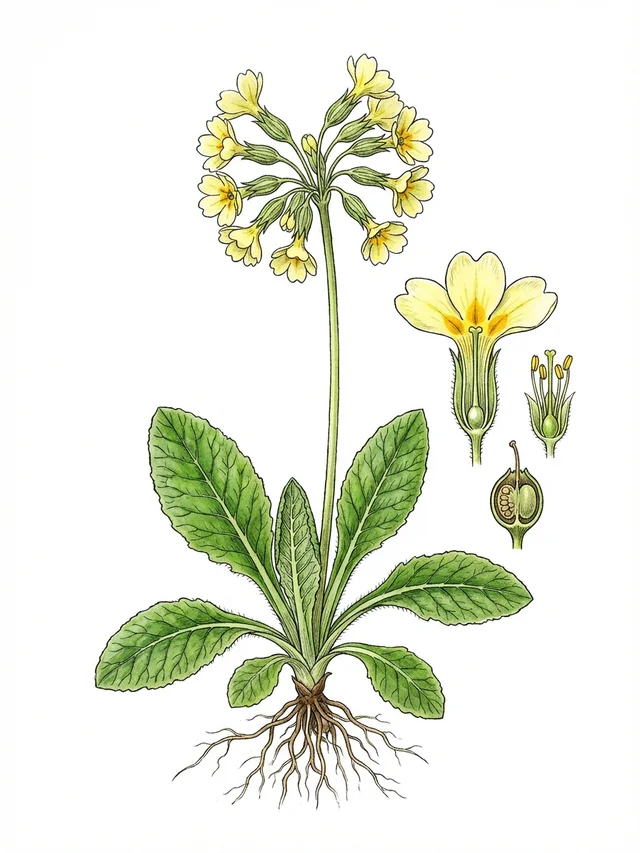
 Image to followAI-generated illustration
Stachys byzantina
Stachys byzantina
FamilyGenus: Stachysnon-native in Germany
🌿
12
Species
interact
🔗
21
Interactions
documented
🐛
1
Host relationships
Species
About this species
Stachys byzantina is an introduced, herbaceous perennial established in Great Britain. It grows to 28 cm in height, has broad, non-woody leaves, and bears flowers in June and July that provide nectar and pollen for insects. It originates from Europe, temperate and tropical Asia, and the Arabian Peninsula.
Ecological network
Click to highlight connections · Click again to open the species page
Loading network...
PollinationLarval host
Ecological significance
The flowers supply nectar and pollen, benefiting a range of flower-visiting insects during the early summer months.
Annual cycle
Flowering occurs from June to July, with seeds developing afterwards. As a herbaceous perennial, the plant dies back to ground level over winter and resumes growth in spring, reaching its full height of about 28 cm by early summer.
Standort & Merkmale
Light
—
Moisture
—
Soil
—
Flowering period
Jun – Jul
Nectar value
3
Pollen value
3
Growth form
Krautige Pflanze
Woodiness
Nicht verholzt
Leaf type
Breitblättrig
Plant height
0.28 m
Morphological traits: TRY ID3 (CC BY 3.0) & TRY ID81 (CC BY)
Pflege & Anbau
Stachys byzantina can be grown in garden borders to enjoy its broad foliage and summer flowers. The plant reaches about 28 cm in height and blooms in June and July.
Scientific profile
Stachys byzantina is a terrestrial, herbaceous perennial in the mint family Lamiaceae. It reaches a height of approximately 28 cm and produces broad, non-woody leaves with a leaf area of around 19.9 cm². Flowering occurs in June and July, offering nectar and pollen that attract a variety of flower-visiting insects. The plant forms small seeds weighing about 1.9 mg. In Great Britain, Stachys byzantina is an introduced species that has become established in the wild; it is not native or archaeophyte. Its natural distribution includes Europe, temperate and tropical Asia, and the Arabian Peninsula.
Pollinators & visitors
11 Arten interagieren mit dieser Pflanze
Sources & data origin
•Cook et al. (2025) UK Butterfly & Moth Traits (DOI: 10.5285/dbc7cc17-cbbd-49dd-bab4-8e8855768d66)
•pollinator_interactions
•EuPPollNet — Kuppler et al. (2025), DOI: 10.1111/geb.70000 (CC BY 4.0)
•Database of Pollinator Interactions (DoPI) — Pocock et al. (2022), DOI: 10.1002/ecy.3801 (CC BY)
•GBIF Backbone Taxonomy — GBIF Secretariat (2024), DOI: 10.15468/39omei (CC BY 4.0)
•TRY Categorical Traits (ID3) — Kattge et al. (2012), DOI: 10.17871/TRY.3 (CC BY 3.0)
•TRY Global Spectrum (ID81) — Díaz et al. (2016/2021), DOI: 10.17871/TRY.81 (CC BY)
•Checklist Alien Plants Belgium — Verloove F (2023), Botanic Garden Meise (CC BY 4.0)
•Govaerts R et al. (2025) — World Checklist of Vascular Plants (WCVP) v14. Royal Botanic Gardens, Kew. DOI: 10.34885/xs7h-ze42 (CC BY 4.0)
All data is licensed under CC BY 4.0, CC0, or compatible terms. Attribution according to license conditions. Full source overview →