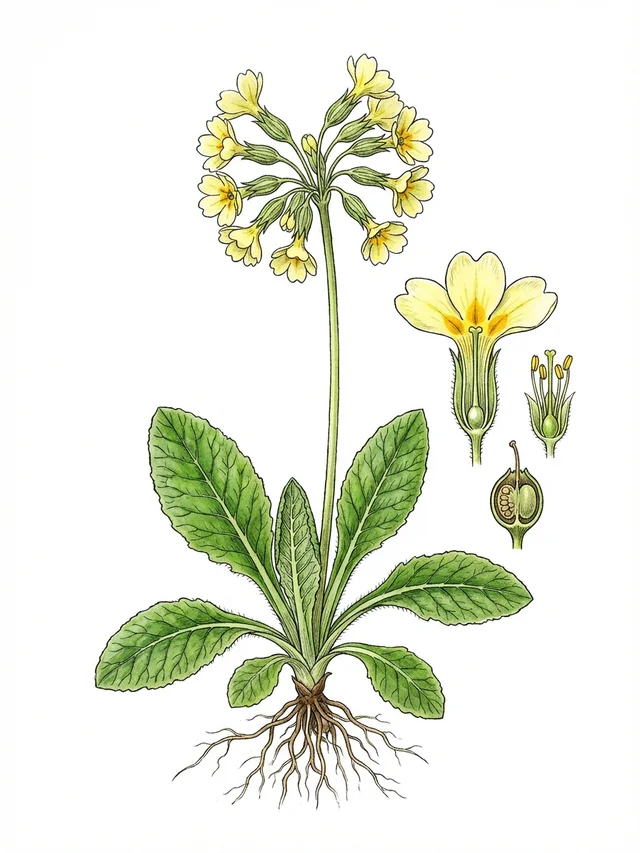
 Image to followAI-generated illustration
Rabelera holostea
Rabelera holostea
FamilyGenus: Rabeleranative in Germany
🌿
13
Species
interact
🔗
17
Interactions
documented
About this species
A native wild plant of shady habitats, Rabelera holostea provides both nectar and pollen for flower-visiting insects. It may bloom from January to November.
Ecological network
Click to highlight connections · Click again to open the species page
Loading network...
PollinationFlower visit
Ecological significance
The plant provides nectar and pollen, serving as a food source for flower-visiting insects.
Annual cycle
Flowering may occur from January to November.
Standort & Merkmale
Light
Schatten
Moisture
Frisch (Mäßig feucht)
Soil
Mittelzehrer (Normaler Boden)
Flowering period
Jan – Nov
Soil reaction
Mäßig sauer bis neutral
Bioregion
Continental
Nectar value
5
Pollen value
5
Pflege & Anbau
Thrives in shade with fresh, moderately moist soil of neutral to slightly acid reaction and moderate nutrient levels.
Scientific profile
A member of the pink family (Caryophyllaceae), this herbaceous species is native in Great Britain. It typically occupies shaded sites with fresh, moderately moist, neutral to slightly acid soils of average fertility, and prefers moderately warm conditions. The flowers supply nectar and pollen.
Pollinators & visitors
11 Arten interagieren mit dieser Pflanze
Other flower visitors
2 other species visit the flowers
Brassicogethes aeneusTenthredo koehleri
Sources & data origin
•Interaktionsdaten via GloBI (CC-BY 4.0)
•EIVE 1.0 — Dengler et al. (2023), DOI: 10.3897/VCS.98324 (CC BY 4.0)
•EuPPollNet — Kuppler et al. (2025), DOI: 10.1111/geb.70000 (CC BY 4.0)
•Database of Pollinator Interactions (DoPI) — Pocock et al. (2022), DOI: 10.1002/ecy.3801 (CC BY)
•GBIF Backbone Taxonomy — GBIF Secretariat (2024), DOI: 10.15468/39omei (CC BY 4.0)
•Govaerts R et al. (2025) — World Checklist of Vascular Plants (WCVP) v14. Royal Botanic Gardens, Kew. DOI: 10.34885/xs7h-ze42 (CC BY 4.0)
All data is licensed under CC BY 4.0, CC0, or compatible terms. Attribution according to license conditions. Full source overview →