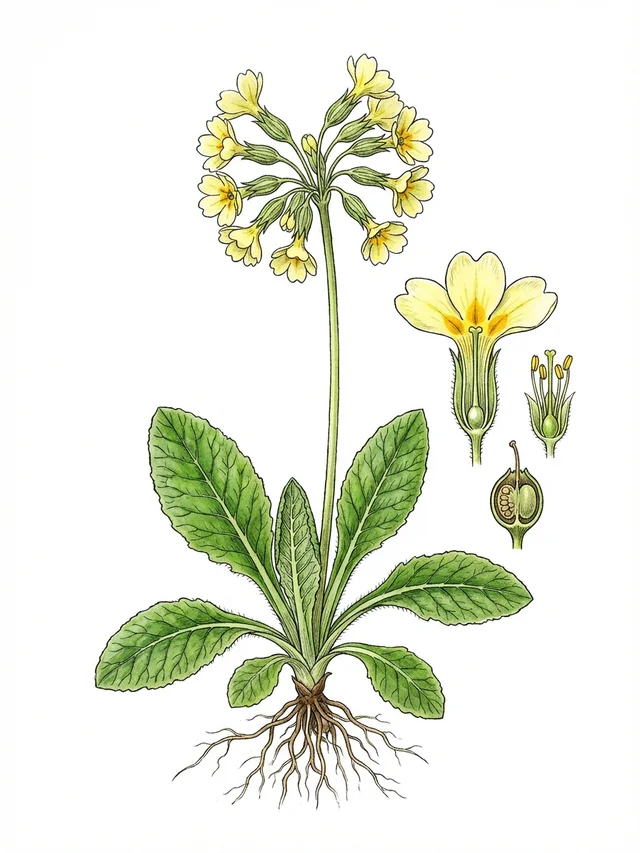
 Image to followAI-generated illustration
Lobularia maritima
Lobularia maritima
FamilyGenus: Lobularianative in Germany
🌿
44
Species
interact
🔗
89
Interactions
documented
🐛
4
Host relationships
Species
About this species
Lobularia maritima is an introduced, established herbaceous plant in Great Britain, belonging to the Brassicaceae family. It produces flowers from June to November and provides both nectar and pollen for visiting insects. The plant thrives in sunny, dry, calcareous to neutral soils and tolerates slight salinity and low disturbance.
Ecological network
Click to highlight connections · Click again to open the species page
Loading network...
PollinationLarval hostFlower visit
Ecological significance
The extended flowering period supplies nectar and pollen for a range of insects.
Annual cycle
Flowering from June to November.
Standort & Merkmale
Light
Sonne
Moisture
Trocken
Soil
—
Flowering period
Jun – Nov
Bioregion
Continental
Nectar value
4
Pollen value
4
Growth form
Krautige Pflanze
Woodiness
Nicht verholzt
Leaf type
Breitblättrig
Plant height
0.158 m
Morphological traits: TRY ID3 (CC BY 3.0) & TRY ID81 (CC BY)
Corolla tube
2 mm
Pollen
0.0125 mg/Blüte
Pflege & Anbau
Grow in full sun in well-drained, alkaline to neutral soil. Once established, it tolerates dry conditions and slight salinity. It performs well on moderately fertile ground and does not require heavy feeding. Flowering from early summer until late autumn.
Scientific profile
Lobularia maritima is an introduced, established plant in Great Britain. This herbaceous, non‑woody species has broad leaves (average area 32 mm²) and typically reaches about 16 cm in height. It grows in full sun on dry, calcareous to neutral soils of medium nutrient content; it is slightly salt tolerant and tolerates only low disturbance. Flowering lasts from June to November, offering a long season of nectar and pollen (both scored 4). The plant forms arbuscular mycorrhizal associations. Its tiny seeds have a diaspore mass of approximately 0.3 mg. The natural range includes parts of Europe, especially southwestern and southeastern Europe, and northern Africa.
Pollinators & visitors
28 Arten interagieren mit dieser Pflanze
Oedemera flavipesPieris rapaePolyommatus icarusPieris napiCelastrina argiolusAglais urticaeAnthocharis cardaminesLycaena phlaeasLasiommata megeraThymelicus sylvestrisVanessa atalantaManiola jurtinaPieris brassicaePyronia tithonusPolistes dominulaSphecodes gibbusIsodontia mexicanaVanessa carduiApis melliferaHalictus confususVespula germanicaSceliphron caementariumAndrena fulvaPararge aegeriaHalictus rubicundusLasioglossum albipesHalictus gemmeusHylaeus hyalinatus
Host relationships
4 species use this plant as a host
Other flower visitors
12 other species visit the flowers
oedemera luridaAnthrenus verbasciCoccinella septempunctataCamponotus fallaxDasytes nigroaeneusDolycoris baccarumDasyphora albofasciataDionaea aurifronsPsilothrix aureolaMusca autumnalisPsilothrix cyaneusStenopterus rufus
Sources & data origin
•Cook et al. (2025) UK Butterfly & Moth Traits (DOI: 10.5285/dbc7cc17-cbbd-49dd-bab4-8e8855768d66)
•Interaktionsdaten via GloBI (CC-BY 4.0)
•pollinator_interactions
•Baden-Böhm F, App M, Thiele J (2022) — The FloRes Database: A floral resources trait database for pollinator habitat-assessment generated by a multistep workflow. Johann Heinrich von Thünen-Institut, Dryad, DOI: 10.5061/dryad.djh9w0w29 (CC0)
•EIVE 1.0 — Dengler et al. (2023), DOI: 10.3897/VCS.98324 (CC BY 4.0)
•EuPPollNet — Kuppler et al. (2025), DOI: 10.1111/geb.70000 (CC BY 4.0)
•Database of Pollinator Interactions (DoPI) — Pocock et al. (2022), DOI: 10.1002/ecy.3801 (CC BY)
•GBIF Backbone Taxonomy — GBIF Secretariat (2024), DOI: 10.15468/39omei (CC BY 4.0)
•TRY Categorical Traits (ID3) — Kattge et al. (2012), DOI: 10.17871/TRY.3 (CC BY 3.0)
•TRY Global Spectrum (ID81) — Díaz et al. (2016/2021), DOI: 10.17871/TRY.81 (CC BY)
•Checklist Alien Plants Belgium — Verloove F (2023), Botanic Garden Meise (CC BY 4.0)
•Govaerts R et al. (2025) — World Checklist of Vascular Plants (WCVP) v14. Royal Botanic Gardens, Kew. DOI: 10.34885/xs7h-ze42 (CC BY 4.0)
All data is licensed under CC BY 4.0, CC0, or compatible terms. Attribution according to license conditions. Full source overview →