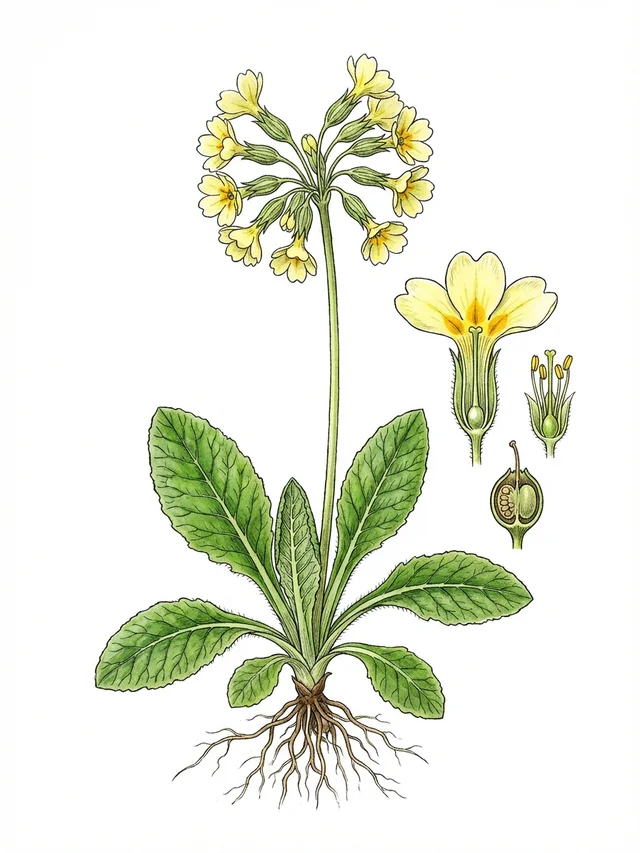
 Image to followAI-generated illustration
Symphyotrichum novae-angliae
Symphyotrichum novae-angliae
FamilyGenus: Symphyotrichumnative in Germany
🌿
28
Species
interact
🔗
53
Interactions
documented
🐛
1
Host relationships
Species
About this species
An introduced herbaceous plant that is established in Great Britain and flowers in autumn.
Ecological network
Click to highlight connections · Click again to open the species page
Loading network...
PollinationLarval hostFlower visit
Ecological significance
As an introduced, established species, its ecological impact in Great Britain has not been formally assessed.
Annual cycle
The flowering period extends from September to November.
Safety note
No specific safety hazards have been documented for this species.
Standort & Merkmale
Light
Sonne
Moisture
Frisch (Mäßig feucht)
Soil
Starkzehrer (Nährstoffreicher/Fetter Boden)
Flowering period
Sep – Nov
Soil reaction
Basisch / Kalkhold
Bioregion
Continental
Growth form
Krautige Pflanze
Woodiness
Nicht verholzt
Leaf type
Breitblättrig
Plant height
0.885 m
Morphological traits: TRY ID3 (CC BY 3.0) & TRY ID81 (CC BY)
Pflege & Anbau
Grow in full sun and a moderately moist, fertile soil that is calcareous to basic. Enrich the soil with organic matter to satisfy its heavy feeding requirements.
Scientific profile
Symphyotrichum novae-angliae is an introduced herbaceous plant now established in Great Britain. It reaches around 0.9 metres in height and bears broad leaves. The plant is non-woody and terrestrial. It favours sunny, moderately moist conditions on calcareous to basic, nutrient-rich soils. Flowering occurs from September to November. The light diaspores have a mass of about 0.54 milligrams, and the leaf area averages roughly 571 square millimetres. The species forms arbuscular mycorrhizal associations.
Pollinators & visitors
25 Arten interagieren mit dieser Pflanze
Helicoverpa armigeraBombus pascuorumCelastrina argiolusPieris rapaeApis melliferaMegachile centuncularisBombus sylvestrisAncistrocerus gazellaAcalymma vittatumAnthidium manicatumAnthidium oblongatumHalictus scabiosaeVanessa atalantaLasioglossum leucozoniumVespula germanicaBombus lapidariusVanessa carduiEnoplognatha ovataPseudoanthidium nanumPolistes dominulaBombus soroeensisHalictus rubicundusHalictus confususPieris brassicaeLasioglossum zonulum
Host relationships
1 species use this plant as a host
Eupithecia subfuscata
Sources & data origin
•Interaktionsdaten via GloBI (CC-BY 4.0)
•FloraWeb / BfN
•EIVE 1.0 — Dengler et al. (2023), DOI: 10.3897/VCS.98324 (CC BY 4.0)
•GBIF Backbone Taxonomy — GBIF Secretariat (2024), DOI: 10.15468/39omei (CC BY 4.0)
•TRY Categorical Traits (ID3) — Kattge et al. (2012), DOI: 10.17871/TRY.3 (CC BY 3.0)
•TRY Global Spectrum (ID81) — Díaz et al. (2016/2021), DOI: 10.17871/TRY.81 (CC BY)
•Checklist Alien Plants Belgium — Verloove F (2023), Botanic Garden Meise (CC BY 4.0)
•Govaerts R et al. (2025) — World Checklist of Vascular Plants (WCVP) v14. Royal Botanic Gardens, Kew. DOI: 10.34885/xs7h-ze42 (CC BY 4.0)
All data is licensed under CC BY 4.0, CC0, or compatible terms. Attribution according to license conditions. Full source overview →