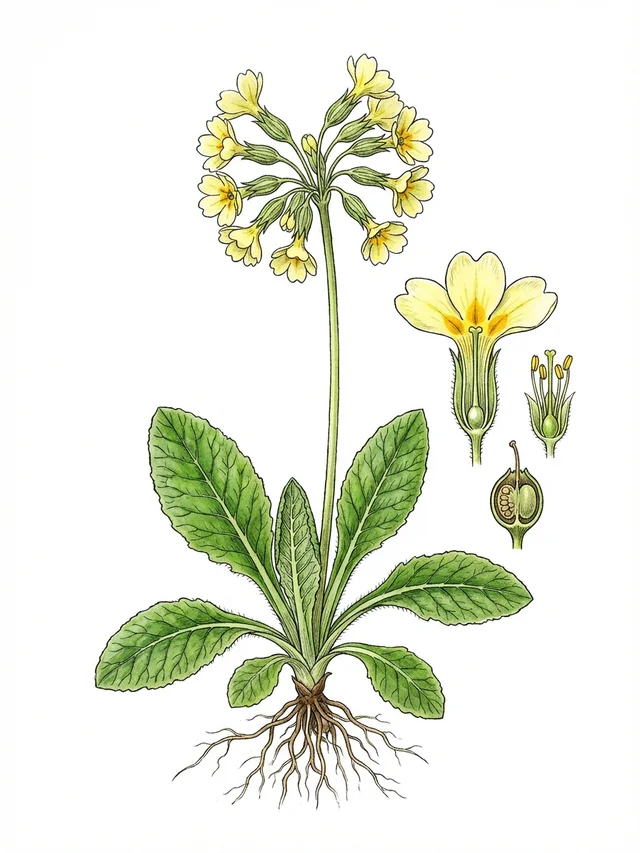
 Image to followAI-generated illustration
Cornus alba
Cornus alba
FamilyGenus: Hartriegelnative in Germany
🌿
15
Species
interact
🔗
33
Interactions
documented
About this species
An introduced, established deciduous shrub that produces flowers in late spring and early summer, offering moderate nectar and pollen for pollinators.
Ecological network
Click to highlight connections · Click again to open the species page
Loading network...
PollinationFlower visit
Ecological significance
As an introduced shrub, it provides nectar and pollen for insects when in flower.
Annual cycle
Leaves emerge in spring; flowering occurs in May and June; leaves are shed in autumn, leaving bare stems through winter.
Standort & Merkmale
Light
Sonne
Moisture
Feucht
Soil
—
Flowering period
Mai – Jun
Bioregion
Continental
Nectar value
3
Pollen value
3
Growth form
Strauch
Woodiness
Verholzt
Leaf type
Breitblättrig
Leaf phenology
Laubabwerfend
Plant height
1.901 m
Morphological traits: TRY ID3 (CC BY 3.0) & TRY ID81 (CC BY)
Pflege & Anbau
Choose a sunny spot with consistently moist soil. Water regularly to keep the soil damp, especially during dry spells. Prune in late winter or early spring to maintain shape and encourage vigorous new growth. Apply a mulch to help retain moisture.
Scientific profile
Cornus alba is a woody, broad-leaved shrub that typically reaches about 1.9 m in height. It is deciduous, shedding its leaves in autumn. The flowers appear in May and June, providing moderate amounts of nectar and pollen, with both values rated 3. It grows best in full sun and moist soil, and is associated with low-disturbance habitats. In Great Britain it is an introduced species, established in the wild, with a first record in cultivation dating back to 1500. The plant forms arbuscular mycorrhizal associations.
Pollinators & visitors
14 Arten interagieren mit dieser Pflanze
Andrena clarkellaAndrena dorsataBombus sylvestrisBombus lucorumApis melliferaHylaeus hyalinatusLasioglossum laticepsHylaeus communisBombus terrestrisAndrena haemorrhoaBombus pascuorumAndrena bicolorSyrphus vitripennisEpisyrphus balteatus
Other flower visitors
1 other species visit the flowers
Phyto discrepans
Sources & data origin
•Interaktionsdaten via GloBI (CC-BY 4.0)
•pollinator_interactions
•EIVE 1.0 — Dengler et al. (2023), DOI: 10.3897/VCS.98324 (CC BY 4.0)
•EuPPollNet — Kuppler et al. (2025), DOI: 10.1111/geb.70000 (CC BY 4.0)
•Database of Pollinator Interactions (DoPI) — Pocock et al. (2022), DOI: 10.1002/ecy.3801 (CC BY)
•GBIF Backbone Taxonomy — GBIF Secretariat (2024), DOI: 10.15468/39omei (CC BY 4.0)
•TRY Categorical Traits (ID3) — Kattge et al. (2012), DOI: 10.17871/TRY.3 (CC BY 3.0)
•TRY Global Spectrum (ID81) — Díaz et al. (2016/2021), DOI: 10.17871/TRY.81 (CC BY)
•Govaerts R et al. (2025) — World Checklist of Vascular Plants (WCVP) v14. Royal Botanic Gardens, Kew. DOI: 10.34885/xs7h-ze42 (CC BY 4.0)
All data is licensed under CC BY 4.0, CC0, or compatible terms. Attribution according to license conditions. Full source overview →