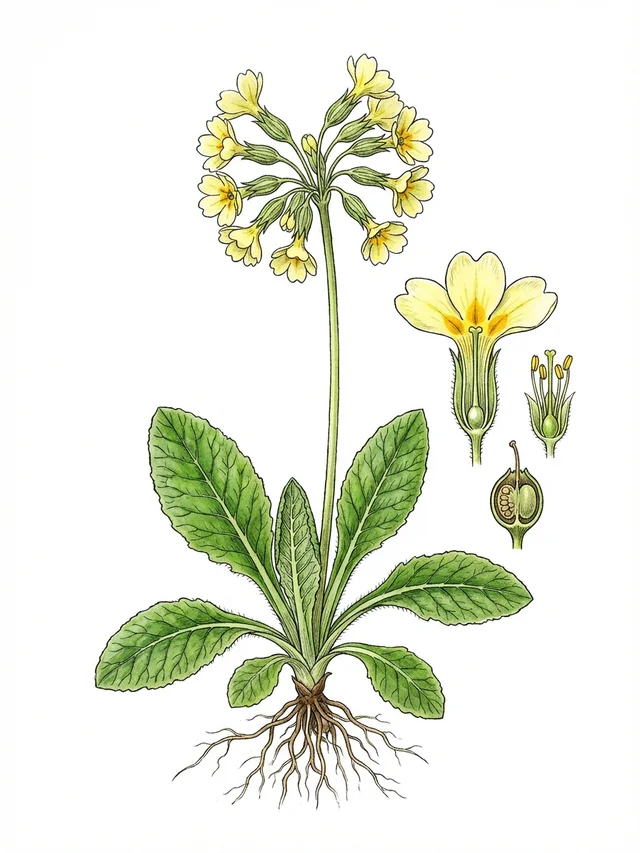
 Image to followAI-generated illustration
Turritis glabra
Turritis glabra
FamilyGenus: Turritisnative in Germany
🌿
4
Species
interact
🔗
10
Interactions
documented
🐛
2
Host relationships
Species
About this species
Turritis glabra is a native herbaceous plant of dry, moderately fertile soils in partial shade, producing flowers from May to July.
Ecological network
Click to highlight connections · Click again to open the species page
Loading network...
PollinationLarval host
Ecological significance
As a native wildflower, it supports local biodiversity and provides a nectar source for pollinators during its flowering period.
Annual cycle
Herbaceous growth begins in spring; flowering occurs from May to July.
Standort & Merkmale
Light
Halbschatten
Moisture
Trocken
Soil
Mittelzehrer (Normaler Boden)
Flowering period
Mai – Jul
Soil reaction
Basisch / Kalkhold
Bioregion
Continental
Growth form
Krautige Pflanze
Woodiness
Nicht verholzt
Leaf type
Breitblättrig
Plant height
0.659 m
Morphological traits: TRY ID3 (CC BY 3.0) & TRY ID81 (CC BY)
Pflege & Anbau
Turritis glabra prefers a position in partial shade with well-drained, moderately fertile soil. It tolerates dry conditions and requires little watering once established.
Scientific profile
Turritis glabra is a native herbaceous plant in Great Britain, belonging to the Brassicaceae family. It typically reaches a height of around 0.66 metres and has broad, non-woody leaves with a leaf area of approximately 1820 mm². The plant grows in partial shade on dry to moderately moist, moderately fertile soils, favouring habitats with low disturbance and moderately warm conditions. Flowering takes place from May to July. Its root system forms arbuscular mycorrhizal (AM) associations, which aid nutrient uptake.
Sources & data origin
•Cook et al. (2025) UK Butterfly & Moth Traits (DOI: 10.5285/dbc7cc17-cbbd-49dd-bab4-8e8855768d66)
•Interaktionsdaten via GloBI (CC-BY 4.0)
•FloraWeb / BfN
•EIVE 1.0 — Dengler et al. (2023), DOI: 10.3897/VCS.98324 (CC BY 4.0)
•GBIF Backbone Taxonomy — GBIF Secretariat (2024), DOI: 10.15468/39omei (CC BY 4.0)
•TRY Categorical Traits (ID3) — Kattge et al. (2012), DOI: 10.17871/TRY.3 (CC BY 3.0)
•TRY Global Spectrum (ID81) — Díaz et al. (2016/2021), DOI: 10.17871/TRY.81 (CC BY)
•Govaerts R et al. (2025) — World Checklist of Vascular Plants (WCVP) v14. Royal Botanic Gardens, Kew. DOI: 10.34885/xs7h-ze42 (CC BY 4.0)
All data is licensed under CC BY 4.0, CC0, or compatible terms. Attribution according to license conditions. Full source overview →