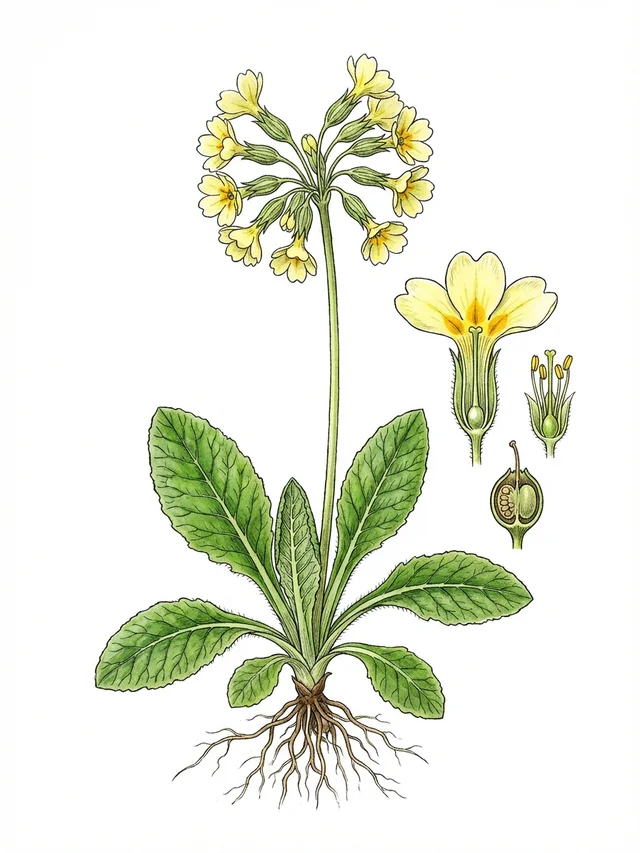
 Image to followAI-generated illustration
Typha latifolia
Typha latifolia
FamilyGenus: Typhanative in Germany
🌿
5
Species
interact
🔗
7
Interactions
documented
🐛
1
Host relationships
Species
About this species
A tall, native perennial of wet habitats, Typha latifolia bears large brown flower spikes from June to August and thrives in full sun on nutrient-rich, calcareous soils.
Ecological network
Click to highlight connections · Click again to open the species page
Loading network...
PollinationLarval hostFlower visit
Ecological significance
As a native component of reedbeds and emergent wetland vegetation, Typha latifolia contributes to shoreline stabilisation and provides cover and feeding opportunities for wildlife.
Annual cycle
Shoots emerge from rhizomes in spring. Flowering occurs from June to August. Foliage is shed in autumn, and the plant overwinters as dormant underground stems.
Standort & Merkmale
Light
Sonne
Moisture
Feucht
Soil
Starkzehrer (Nährstoffreicher/Fetter Boden)
Flowering period
Jun – Aug
Soil reaction
Basisch / Kalkhold
Bioregion
Continental
Growth form
Gras
Woodiness
Nicht verholzt
Leaf type
Breitblättrig
Leaf phenology
Laubabwerfend
Plant height
1.526 m
Morphological traits: TRY ID3 (CC BY 3.0) & TRY ID81 (CC BY)
Pflege & Anbau
Site: full sun.
Soil: wet, fertile, calcareous.
Suitable for the margins of ponds, streams and bog gardens. The foliage dies back in autumn and can be cut down once withered.
Scientific profile
Typha latifolia is a deciduous, grass-like perennial of swamps, marshes and shallow water margins. It is native in Great Britain. The erect, broad, strap-shaped leaves are borne in dense clumps, and the stout flowering stems commonly reach 1.5 metres in height. From June through to August, the plant produces its characteristic dense, cylindrical brown inflorescences. The species is adapted to aquatic environments, showing a strong preference for full sun and permanently wet, nutrient-rich, basic substrates. It is only slightly tolerant of saline conditions and is associated with habitats that experience low levels of disturbance.
Host relationships
1 species use this plant as a host
Nonagria typhae
Sources & data origin
•Cook et al. (2025) UK Butterfly & Moth Traits (DOI: 10.5285/dbc7cc17-cbbd-49dd-bab4-8e8855768d66)
•Interaktionsdaten via GloBI (CC-BY 4.0)
•FloraWeb / BfN
•EIVE 1.0 — Dengler et al. (2023), DOI: 10.3897/VCS.98324 (CC BY 4.0)
•GBIF Backbone Taxonomy — GBIF Secretariat (2024), DOI: 10.15468/39omei (CC BY 4.0)
•TRY Categorical Traits (ID3) — Kattge et al. (2012), DOI: 10.17871/TRY.3 (CC BY 3.0)
•TRY Global Spectrum (ID81) — Díaz et al. (2016/2021), DOI: 10.17871/TRY.81 (CC BY)
•Govaerts R et al. (2025) — World Checklist of Vascular Plants (WCVP) v14. Royal Botanic Gardens, Kew. DOI: 10.34885/xs7h-ze42 (CC BY 4.0)
All data is licensed under CC BY 4.0, CC0, or compatible terms. Attribution according to license conditions. Full source overview →