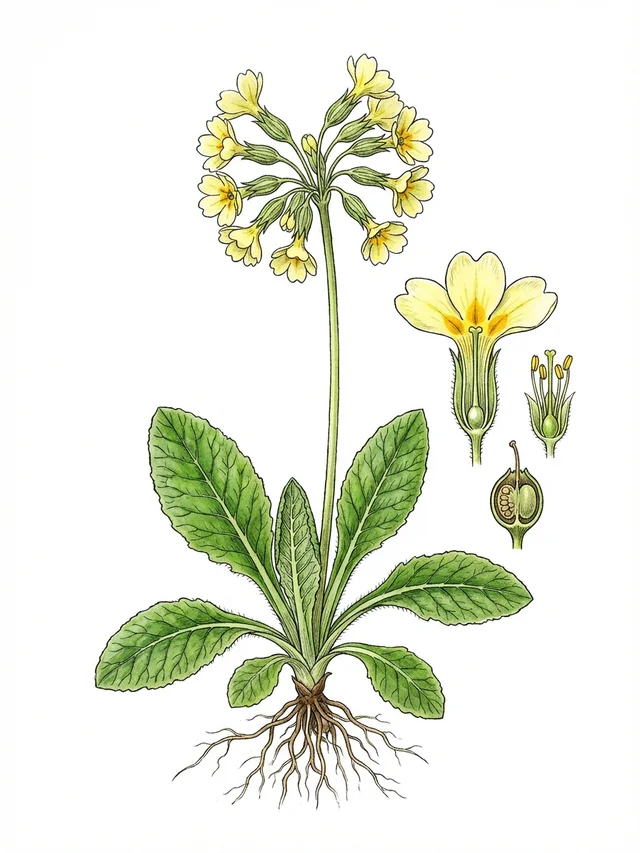
 Image to followAI-generated illustration
Urtica urens
Urtica urens
FamilyGenus: Urticanative in Germany
🌿
15
Species
interact
🔗
22
Interactions
documented
🐛
8
Host relationships
Species
About this species
Urtica urens is a herbaceous archaeophyte long established in the British Isles. It bears stinging hairs and grows in sunny, fertile, moderately moist soils. Flowering occurs from May to September.
Ecological network
Click to highlight connections · Click again to open the species page
Loading network...
PollinationLarval hostFlower visit
Ecological significance
No specific ecological impact data are recorded for this species in Great Britain.
Annual cycle
Flowering occurs from May to September.
Standort & Merkmale
Light
Sonne
Moisture
Frisch (Mäßig feucht)
Soil
Starkzehrer (Nährstoffreicher/Fetter Boden)
Flowering period
Mai – Sep
Soil reaction
Mäßig sauer bis neutral
Bioregion
Continental
Growth form
Krautige Pflanze
Woodiness
Nicht verholzt
Leaf type
Breitblättrig
Plant height
0.249 m
Morphological traits: TRY ID3 (CC BY 3.0) & TRY ID81 (CC BY)
Pflege & Anbau
Provide a sunny position with fresh, fertile soil. Avoid saline substrates and heavily disturbed sites.
Scientific profile
Urtica urens is a herbaceous plant reaching around 25 cm tall. It has broad leaves and is covered in stinging hairs. The root system associates with arbuscular mycorrhizal fungi. It requires full sun and grows best in fresh, fertile soils that are neutral to mildly acidic, avoiding saline conditions and frequent disturbance. In Great Britain, it is an archaeophyte, present since ancient times. Flowering occurs from May to September, and the minute seeds weigh less than a milligram.
Pollinators & visitors
5 Arten interagieren mit dieser Pflanze
Host relationships
8 species use this plant as a host
Aglais ioAutographa pulchrinaAutographa gammaPeridroma sauciaPolygonia c-albumPhyllobius pomaceusabrostola triplasiaDiachrysia chrysitis
Sources & data origin
•Cook et al. (2025) UK Butterfly & Moth Traits (DOI: 10.5285/dbc7cc17-cbbd-49dd-bab4-8e8855768d66)
•Interaktionsdaten via GloBI (CC-BY 4.0)
•FloraWeb / BfN
•EIVE 1.0 — Dengler et al. (2023), DOI: 10.3897/VCS.98324 (CC BY 4.0)
•GBIF Backbone Taxonomy — GBIF Secretariat (2024), DOI: 10.15468/39omei (CC BY 4.0)
•TRY Categorical Traits (ID3) — Kattge et al. (2012), DOI: 10.17871/TRY.3 (CC BY 3.0)
•TRY Global Spectrum (ID81) — Díaz et al. (2016/2021), DOI: 10.17871/TRY.81 (CC BY)
•Govaerts R et al. (2025) — World Checklist of Vascular Plants (WCVP) v14. Royal Botanic Gardens, Kew. DOI: 10.34885/xs7h-ze42 (CC BY 4.0)
All data is licensed under CC BY 4.0, CC0, or compatible terms. Attribution according to license conditions. Full source overview →