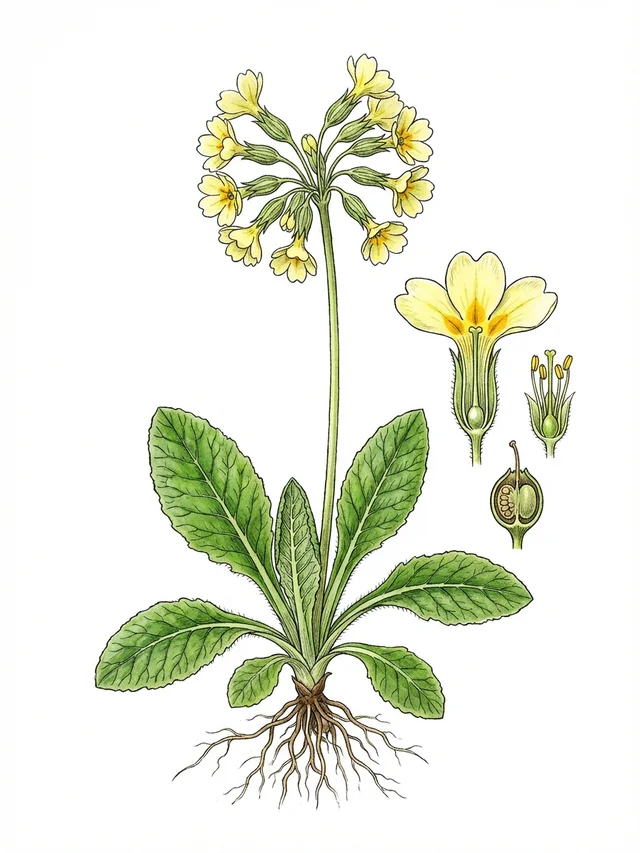
 Image to followAI-generated illustration
Veronica chamaedrys
Veronica chamaedrys
FamilyGenus: Veronicanative in Germany
🌿
144
Species
interact
🔗
571
Interactions
documented
🐛
2
Host relationships
Species
About this species
A low, spreading perennial herb native to Great Britain, found in grassy habitats and light woodland. Its flowers appear from early spring to early autumn, and the plant reaches about 20 cm in height.
Ecological network
Click to highlight connections · Click again to open the species page
Loading network...
PollinationLarval hostFlower visit
Ecological significance
A benign native species, it plays a natural role in grassland and woodland-floor communities without displaying any invasive behaviour or ecological harm.
Annual cycle
Flowers are produced from March to September. As a herbaceous perennial, the plant dies back to ground level over winter and re-sprouts from its rootstock in spring.
Safety note
There are no known toxicity or safety concerns for humans, pets or livestock associated with Veronica chamaedrys.
Standort & Merkmale
Light
Halbschatten
Moisture
Frisch (Mäßig feucht)
Soil
Mittelzehrer (Normaler Boden)
Flowering period
Mär – Sep
Soil reaction
Mäßig sauer bis neutral
Bioregion
Continental
Growth form
Krautige Pflanze
Woodiness
Nicht verholzt
Leaf type
Breitblättrig
Plant height
0.2 m
Morphological traits: TRY ID3 (CC BY 3.0) & TRY ID81 (CC BY)
Pflege & Anbau
This native wildflower is best enjoyed in its natural setting; no specific cultivation guidance is necessary.
Scientific profile
Veronica chamaedrys is a non-woody, terrestrial perennial with broad leaves, typically growing to around 20 cm tall. It favours half-shaded situations and fresh, moderately nutrient-rich soils that are neutral to slightly acid. Flowering extends from March through September. The plant is a native component of the British flora, widespread in meadows, hedge banks and open woods. It holds a red-list status of least concern.
Pollinators & visitors
98 Arten interagieren mit dieser Pflanze
Osmia bicolorAndrena subopacaBombus terrestris aggBombus ssBombus pratorumBombus monticolaBombus jonellusBombus soroeensisBombus hypnorumBombus mendaxAndrena viridescensNomada succinctaLasioglossum pauxillumLasioglossum laticepsLasioglossum albipesHalictus tumulorumHalictus simplex.agg.Andrena ovatulaEupeodes corollaeBombus pascuorumLasioglossum fratellumLasioglossum calceatumAndrena unknownPlatycheirus albimanusPlatycheirus manicatusPlatycheirus peltatusAndrena haemorrhoaBombus lucorum aggLasioglossumAndrena cinerariaPlatycheirus spec.Anthophora aestivalisAndrena minutulaLasioglossum villosulumOsmia bicornisEpisyrphus balteatusLasioglossum rufitarseAndrena labiataOsmia brevicornisPieris napiSphaerophoria scriptaVolucella bombylansPipiza fenestrataSphaerophoria interruptaLeptidea sinapisEupeodes nitensPlatycheirus tarsalisDasysyrphus tricinctusMelanostoma mellinumHelophilus trivittatus
Other flower visitors
44 other species visit the flowers
Sphaerophoria specPsithyrusSyrphidae spec1Melinda viridicyaenaThricops nigritellusPegoplata aestivaThricops cunctansThricops genarumAdia cinerellaCerodontha denticornisRhamphomyia longipesRhamphomyia umbripennisEmpis tessellataOpomyza germinationisPhaonia incanaSiphona geniculataAtherigona variaHercostomus parvilamellatusOedemera nobilisRhinophora lepidaSarcophaga nigriventrisDelia radicumMelinda gentilisEmpis scoticaScathophaga stercorariaPollenia rudisThricops semicinereusEmpis planeticaMiarus campanulae (Linnaeus,1767)Formica cuniculariaMerodon aureusMerodonEmpis praeviaPhilhelius laetusAnthomyiidaeCleopomiarus graminisSphaerophoriaBotanophila fugaxThricops innocuusChloromyia formosaCoenosia obscuriculaMelinda cognataPipiza fasciataAnthomyiidae sp. 3
Sources & data origin
•Cook et al. (2025) UK Butterfly & Moth Traits (DOI: 10.5285/dbc7cc17-cbbd-49dd-bab4-8e8855768d66)
•pollinator_interactions
•FloraWeb / BfN
•EIVE 1.0 — Dengler et al. (2023), DOI: 10.3897/VCS.98324 (CC BY 4.0)
•GBIF Backbone Taxonomy — GBIF Secretariat (2024), DOI: 10.15468/39omei (CC BY 4.0)
•TRY Categorical Traits (ID3) — Kattge et al. (2012), DOI: 10.17871/TRY.3 (CC BY 3.0)
•TRY Global Spectrum (ID81) — Díaz et al. (2016/2021), DOI: 10.17871/TRY.81 (CC BY)
•Govaerts R et al. (2025) — World Checklist of Vascular Plants (WCVP) v14. Royal Botanic Gardens, Kew. DOI: 10.34885/xs7h-ze42 (CC BY 4.0)
All data is licensed under CC BY 4.0, CC0, or compatible terms. Attribution according to license conditions. Full source overview →