Veronica officinalis
Veronica officinalis
FamilyGenus: Veronicanative in Germany
🌿
47
Species
interact
🔗
85
Interactions
documented
About this species
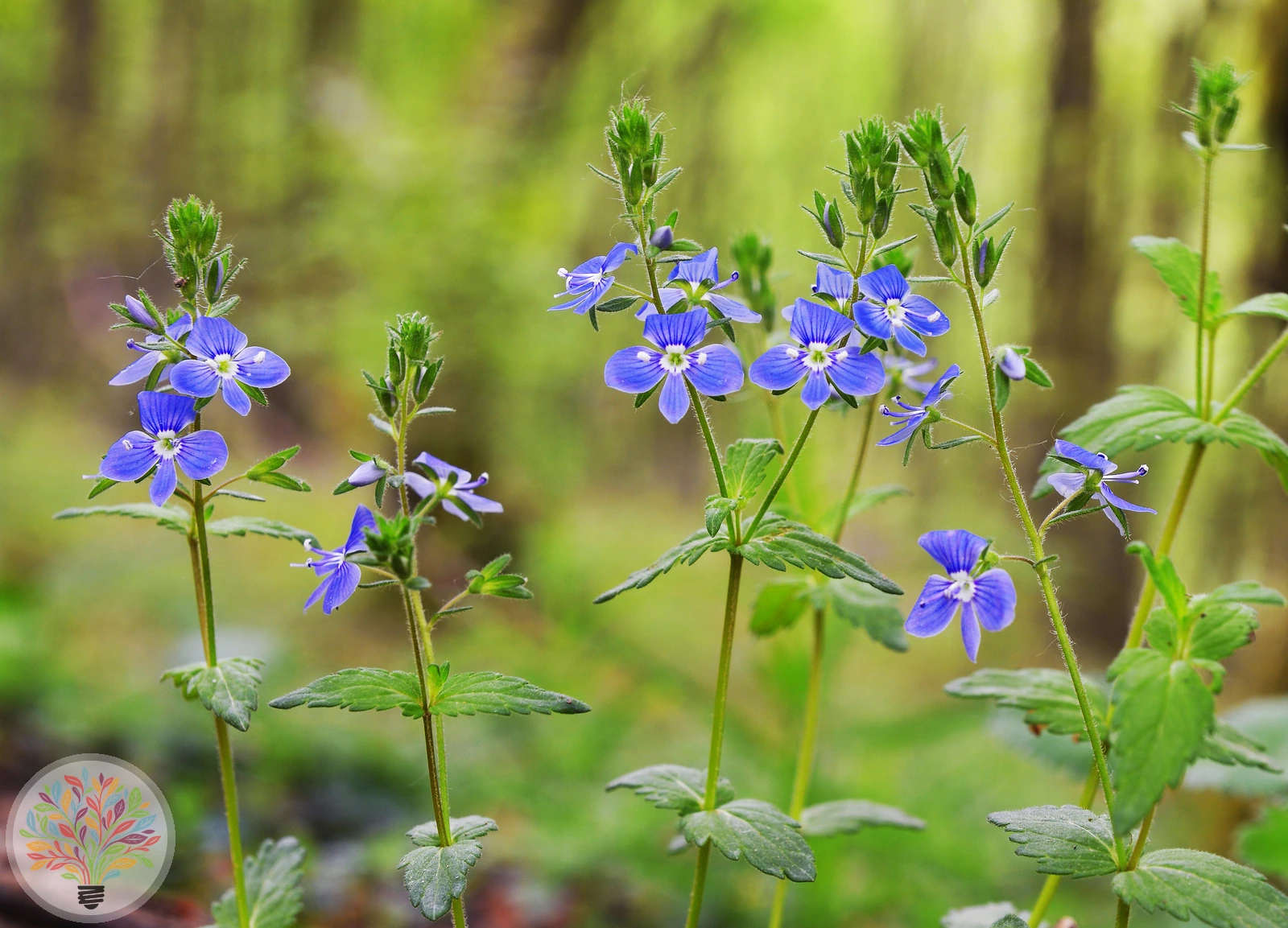
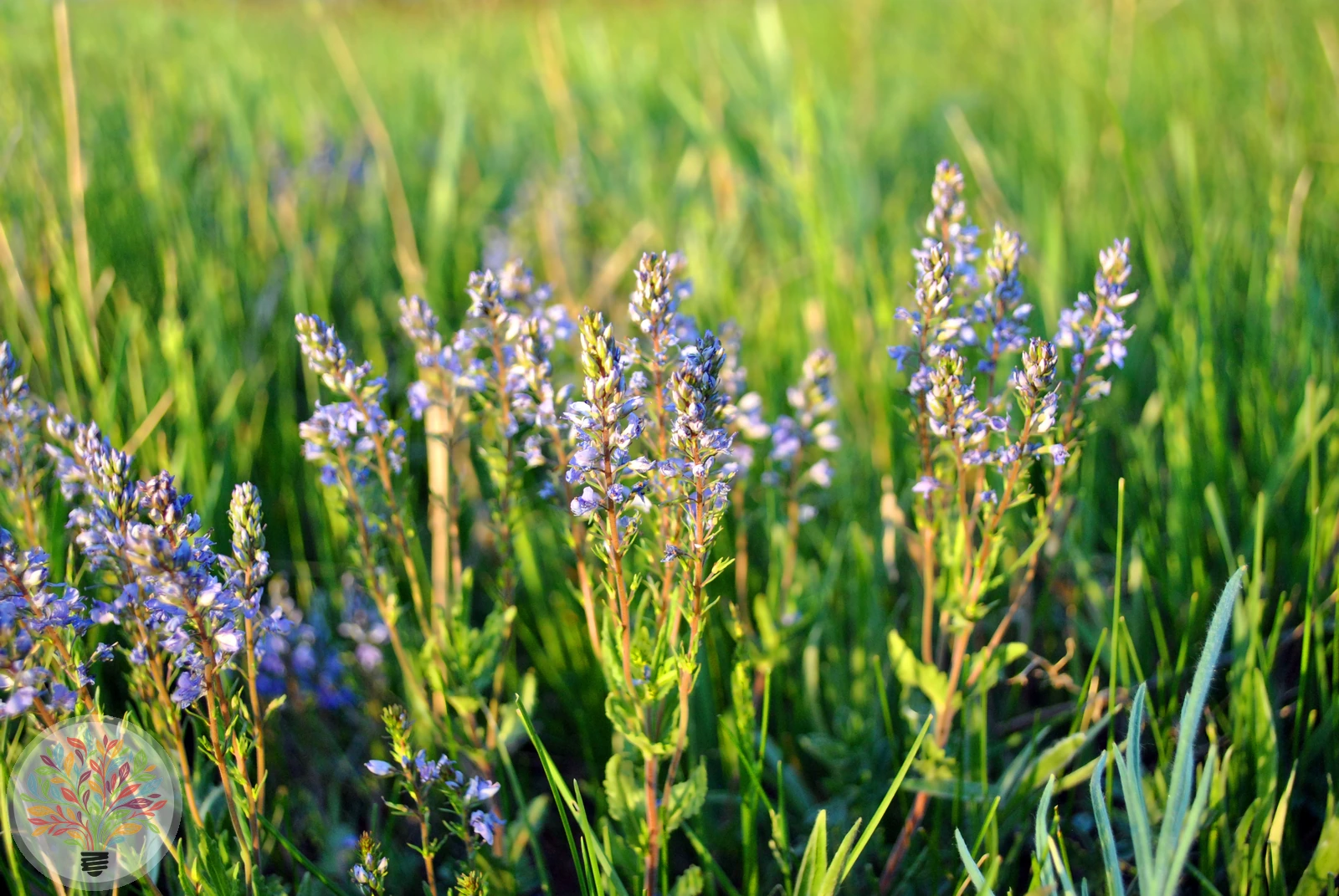
Veronica officinalis is a native wild herb in Great Britain. It belongs to the plantain family (Plantaginaceae) and grows in semi-shaded places on lean, moderately moist, acid soil. Flowering from April to September, the blooms provide abundant nectar and pollen (rated 4 out of 4), making it a valuable resource for pollinators. The plant is low-growing, reaching about 13 cm in height, and bears broad leaves.
Ecological network
Click to highlight connections · Click again to open the species page
Loading network...
PollinationFlower visit
Ecological significance
The flowers of Veronica officinalis offer high-value nectar and pollen (score 4/4), making the plant a beneficial resource for pollinating insects.
Annual cycle
This herbaceous plant produces foliage in spring and flowers from April to September. Top growth dies back after the flowering season, re-emerging the following spring.
Safety note
No specific hazards are recorded in the source data.
Standort & Merkmale
Light
Halbschatten
Moisture
Frisch (Mäßig feucht)
Soil
Schwachzehrer (Magerer Boden)
Flowering period
Apr – Sep
Soil reaction
Sauer (Säurezeiger)
Bioregion
Continental
Nectar value
4
Pollen value
4
Growth form
Krautige Pflanze
Woodiness
Nicht verholzt
Leaf type
Breitblättrig
Plant height
0.126 m
Morphological traits: TRY ID3 (CC BY 3.0) & TRY ID81 (CC BY)
Pflege & Anbau
Plant in semi-shade, in well-drained but moisture-retentive, lean, acid soil. No fertiliser is required; it thrives on nutrient-poor ground. Keep the soil moderately moist during the growing season. Flowers appear from April to September and are highly attractive to pollinators.
Scientific profile
Veronica officinalis is a low-growing, non-woody herbaceous plant, typically 12–13 cm tall, with broad leaves. It grows in semi-shaded conditions and favours fresh (moderately moist) soils that are acid and low in nutrients. Flowering lasts from April to September; the flowers provide nectar and pollen at the highest value on a 4-point scale, attracting a range of insects. The species forms arbuscular mycorrhizas (AM) and is a member of the plantain family (Plantaginaceae). It is native in Great Britain.
Pollinators & visitors
45 Arten interagieren mit dieser Pflanze
Pyronia tithonusPieris brassicaeNomada panzeriNomada goodenianaOsmia bicolorHylaeus communisMelitta leporinaAglais urticaeLasioglossum zonulumLasioglossum calceatumNomada flavaHalictus confususSphecodes ephippiusMegachile willughbiellaAndrena subopacaAndrena flavipesAndrena bicolorBombus pascuorumAndrena fucataAndrena haemorrhoaAndrena nigroaeneaAndrena wilkellaAndrena minutulaLasioglossum morioLasiommata megeraCelastrina argiolusBombus lucorumNomada flavoguttataAndrena labiataPieris rapaeVanessa atalantaOsmia bicornisPolygonia c-albumAnthophora bimaculataAndrena cinerariaHalictus tumulorumAndrena coitanaCoenonympha pamphilusPlatycheirus manicatusSphaerophoria scriptaAndrena minutuloidesSeladonia tumulorumEpisyrphus balteatusBombus terrestrisEpisyrphus
Other flower visitors
2 other species visit the flowers
PipizellaDelia nigrescens
Sources & data origin
•Interaktionsdaten via GloBI (CC-BY 4.0)
•pollinator_interactions
•FloraWeb / BfN
•EIVE 1.0 — Dengler et al. (2023), DOI: 10.3897/VCS.98324 (CC BY 4.0)
•EuPPollNet — Kuppler et al. (2025), DOI: 10.1111/geb.70000 (CC BY 4.0)
•Database of Pollinator Interactions (DoPI) — Pocock et al. (2022), DOI: 10.1002/ecy.3801 (CC BY)
•GBIF Backbone Taxonomy — GBIF Secretariat (2024), DOI: 10.15468/39omei (CC BY 4.0)
•TRY Categorical Traits (ID3) — Kattge et al. (2012), DOI: 10.17871/TRY.3 (CC BY 3.0)
•TRY Global Spectrum (ID81) — Díaz et al. (2016/2021), DOI: 10.17871/TRY.81 (CC BY)
•Govaerts R et al. (2025) — World Checklist of Vascular Plants (WCVP) v14. Royal Botanic Gardens, Kew. DOI: 10.34885/xs7h-ze42 (CC BY 4.0)
•Foto: © Adobe Stock / AdobeStock_224406840
All data is licensed under CC BY 4.0, CC0, or compatible terms. Attribution according to license conditions. Full source overview →