Viburnum lantana
Viburnum lantana
FamilyGenus: Viburnumnative in Germany
🌿
78
Species
interact
🔗
135
Interactions
documented
🐛
4
Host relationships
Species
About this species
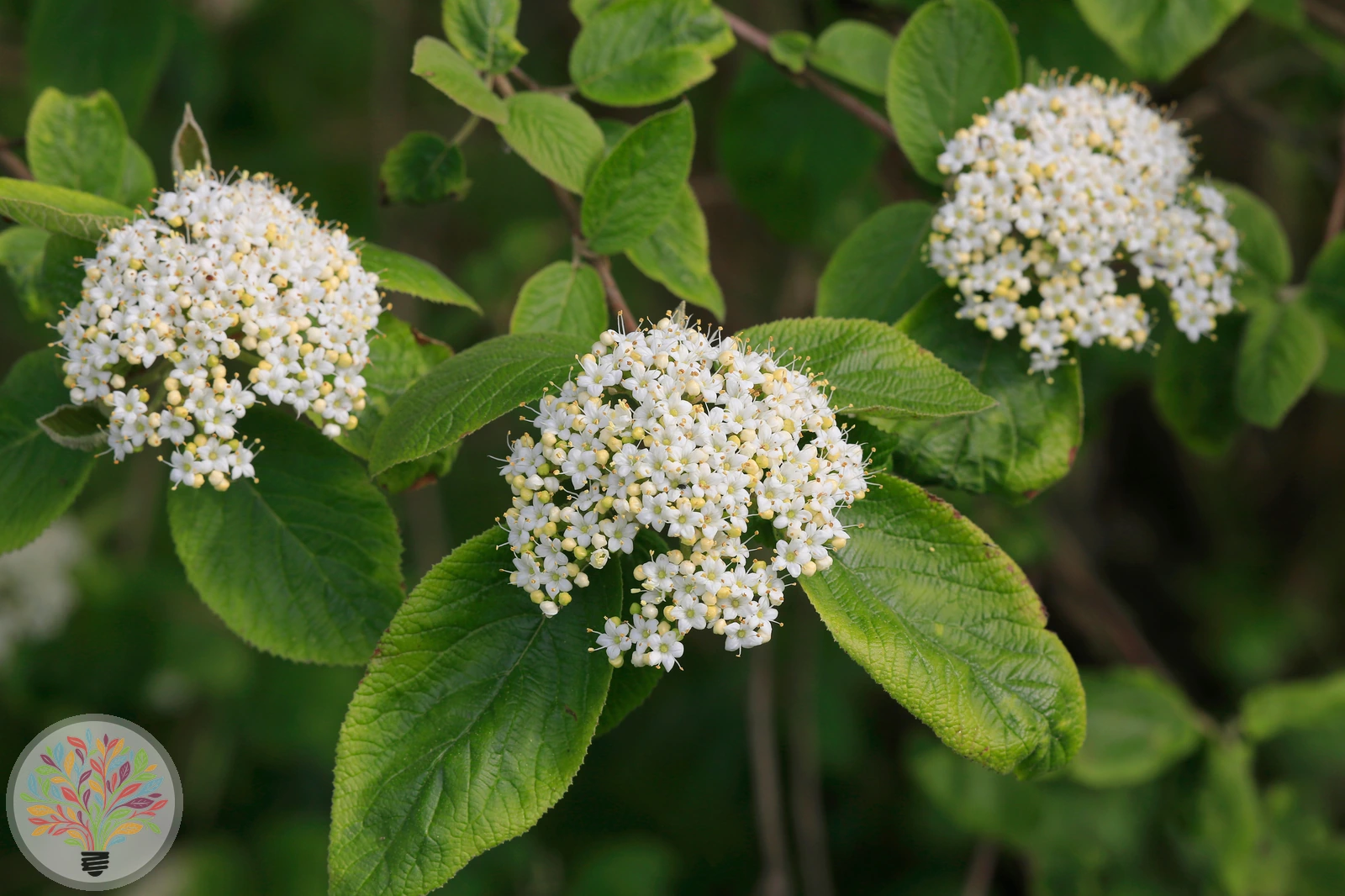
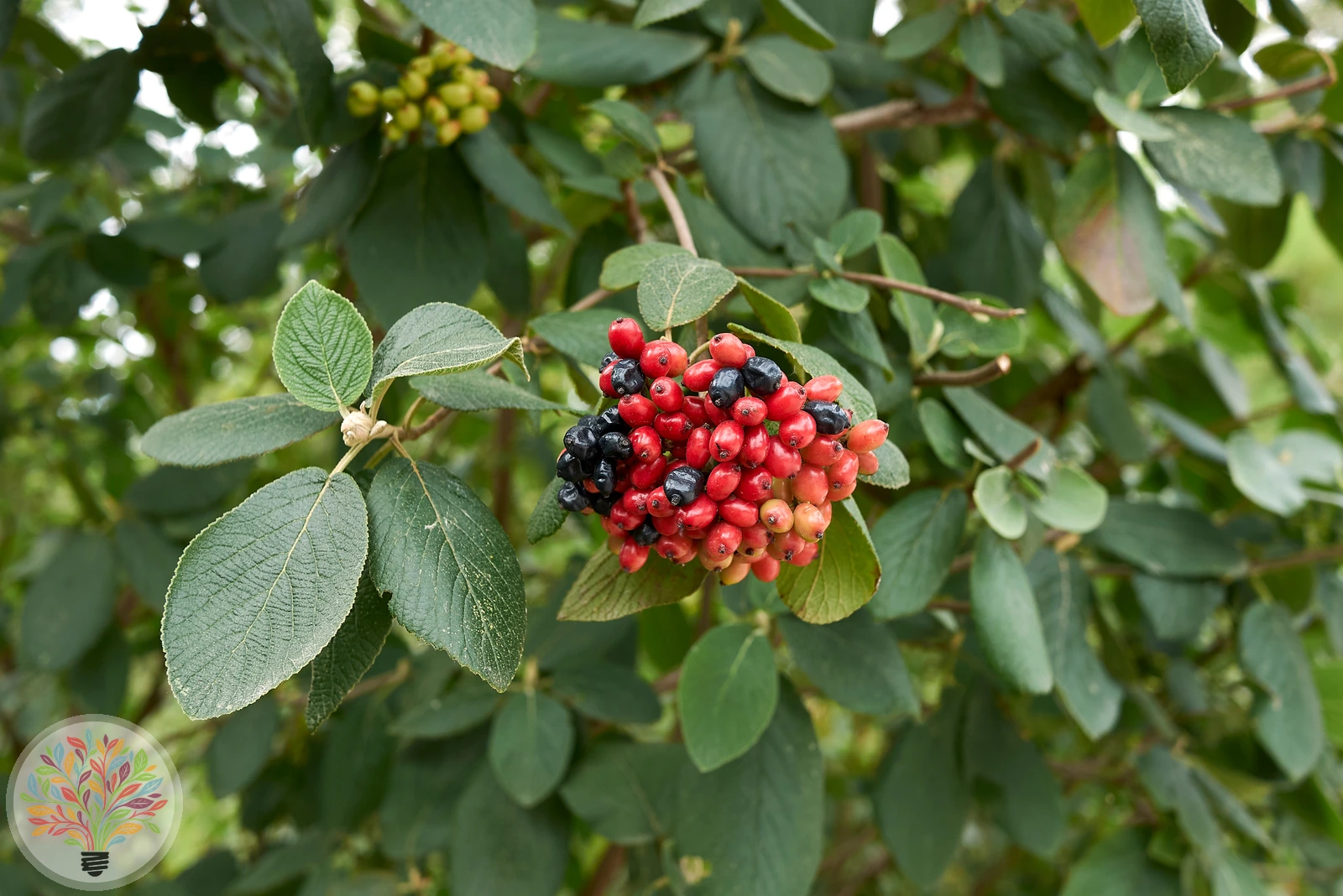
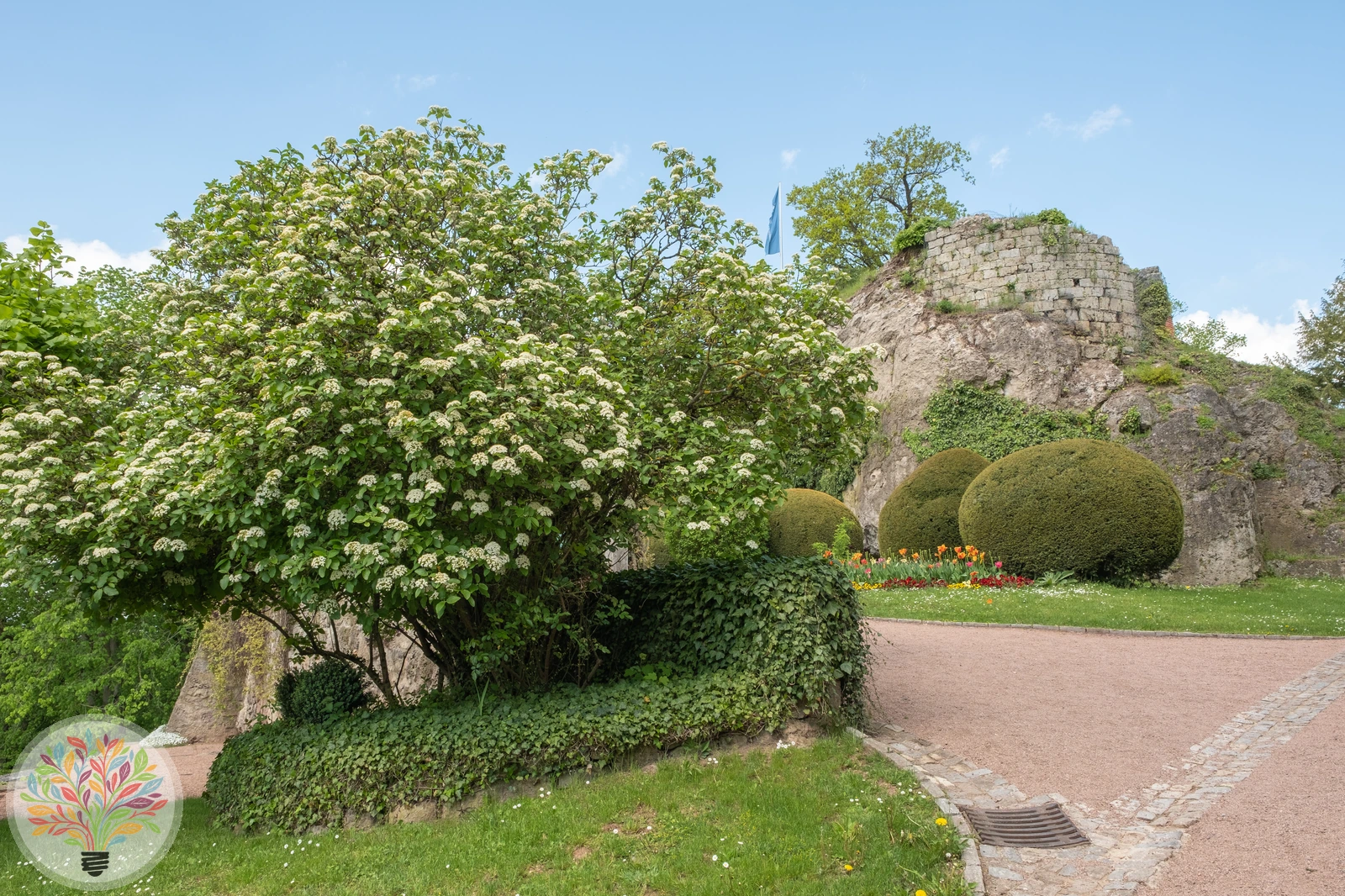
Viburnum lantana is a native deciduous shrub or small tree, typically reaching about 2.8 m in height with broad green leaves. It bears creamy-white flower clusters from April to June, providing nectar and pollen for insects. It grows well in partial shade on moist, lime-rich soils.
Ecological network
Click to highlight connections · Click again to open the species page
Loading network...
PollinationLarval hostFlower visit
Ecological significance
Native to Great Britain, this shrub supplies nectar and pollen to pollinating insects during its April-to-June flowering period.
Annual cycle
A deciduous shrubleaves are lost in autumn and fresh foliage appears in spring. Clusters of creamy-white flowers open from April through June.
Standort & Merkmale
Light
Halbschatten
Moisture
Frisch (Mäßig feucht)
Soil
Mittelzehrer (Normaler Boden)
Flowering period
Apr – Jun
Soil reaction
Basisch / Kalkhold
Bioregion
Continental
Nectar value
4
Pollen value
4
Growth form
Strauch/Baum
Woodiness
Verholzt
Leaf type
Breitblättrig
Leaf phenology
Laubabwerfend
Plant height
2.758 m
Morphological traits: TRY ID3 (CC BY 3.0) & TRY ID81 (CC BY)
Pflege & Anbau
### Light
Partial shade.
### Soil
Moist but well-drained, alkaline (lime-rich) soil with moderate fertility.
### Watering
Keep soil evenly moist, especially during establishment, but avoid waterlogging.
### Maintenance
Little pruning is needed. Plant in sheltered, low-disturbance spots, as it is adapted to stable conditions.
Scientific profile
A deciduous woody shrub or small tree in the Viburnaceae family, Viburnum lantana attains an average height of 2.76 m and bears broad, simple leaves. It is native in Great Britain. The plant flowers from April through June, producing inflorescences that offer a nectar value of 4 and a pollen value of 4. Ellenberg-type indicator values place it in sunny to semi-shaded positions (light 7), on fresh, moderately moist soils (moisture 4), with a strong preference for calcareous, basic substrates (reaction 8) and medium nutrient levels (nutrients 4). It tolerates low-disturbance sites (disturbance severity 0.68) and forms arbuscular mycorrhizal associations. The leaves are shed in autumn; woody tissues and a terrestrial habit are consistent throughout its range.
Pollinators & visitors
24 Arten interagieren mit dieser Pflanze
Turdus merulaSylvia currucaErithacus rubeculaSylvia borinPolygonia c-albumPieris rapaeVanessa atalantaMelecta albifronsLasioglossum calceatumCelastrina argiolusPararge aegeriaNomada flavoguttataAglais urticaeAndrena fulvaBombus hypnorumBombus pratorumAndrena nigroaeneaAndrena haemorrhoaApis melliferaAndrena nitidaAndrena cinerariaAndrena scoticaApis.melliferaNomada goodeniana
Host relationships
4 species use this plant as a host
Asteroscopus sphinxOpisthograptis luteolataSphinx ligustriZeuzera pyrina
Other flower visitors
50 other species visit the flowers
Turdus philomelosParus montanusMuscicapa striataGallinula chloropusCorvus coroneCyanistes caeruleusPicus viridisPasser domesticusColumba palumbusGarrulus glandariusTurdus pilarisPhoenicurus ochrurosTurdus viscivorusChloris chlorisLuscinia megarhynchosSturnus vulgarisPyrrhula pyrrhulaFicedula hypoleucaFringilla coelebsPica picaTurdus torquatusPhoenicurus phoenicurusSylvia cantillansSylvia undataOriolus oriolusErinaceus europaeusVulpes vulpesMeles melesSylvia atricapillaPyrrhalta viburniLasius alienusFormica fuscaPoecile palustrisCoccothraustes coccothraustesPasser montanusTurdus iliacusParus majorPoecile montanusPhylloscopus collybitaSylvia communisStreptopelia decaoctoDendrocopos majorMonticola solitariusSaxicola torquatusMartes foinaCetonia aurataAnaspis pulicariaIsomira murinaPollenia pediculataEmpis livida
Sources & data origin
•Interaktionsdaten via GloBI (CC-BY 4.0)
•Cook et al. (2025) UK Butterfly & Moth Traits (DOI: 10.5285/dbc7cc17-cbbd-49dd-bab4-8e8855768d66)
•pollinator_interactions
•FloraWeb / BfN
•EIVE 1.0 — Dengler et al. (2023), DOI: 10.3897/VCS.98324 (CC BY 4.0)
•EuPPollNet — Kuppler et al. (2025), DOI: 10.1111/geb.70000 (CC BY 4.0)
•Database of Pollinator Interactions (DoPI) — Pocock et al. (2022), DOI: 10.1002/ecy.3801 (CC BY)
•GBIF Backbone Taxonomy — GBIF Secretariat (2024), DOI: 10.15468/39omei (CC BY 4.0)
•TRY Categorical Traits (ID3) — Kattge et al. (2012), DOI: 10.17871/TRY.3 (CC BY 3.0)
•TRY Global Spectrum (ID81) — Díaz et al. (2016/2021), DOI: 10.17871/TRY.81 (CC BY)
•Govaerts R et al. (2025) — World Checklist of Vascular Plants (WCVP) v14. Royal Botanic Gardens, Kew. DOI: 10.34885/xs7h-ze42 (CC BY 4.0)
•Foto: © Adobe Stock / AdobeStock_229517204
All data is licensed under CC BY 4.0, CC0, or compatible terms. Attribution according to license conditions. Full source overview →