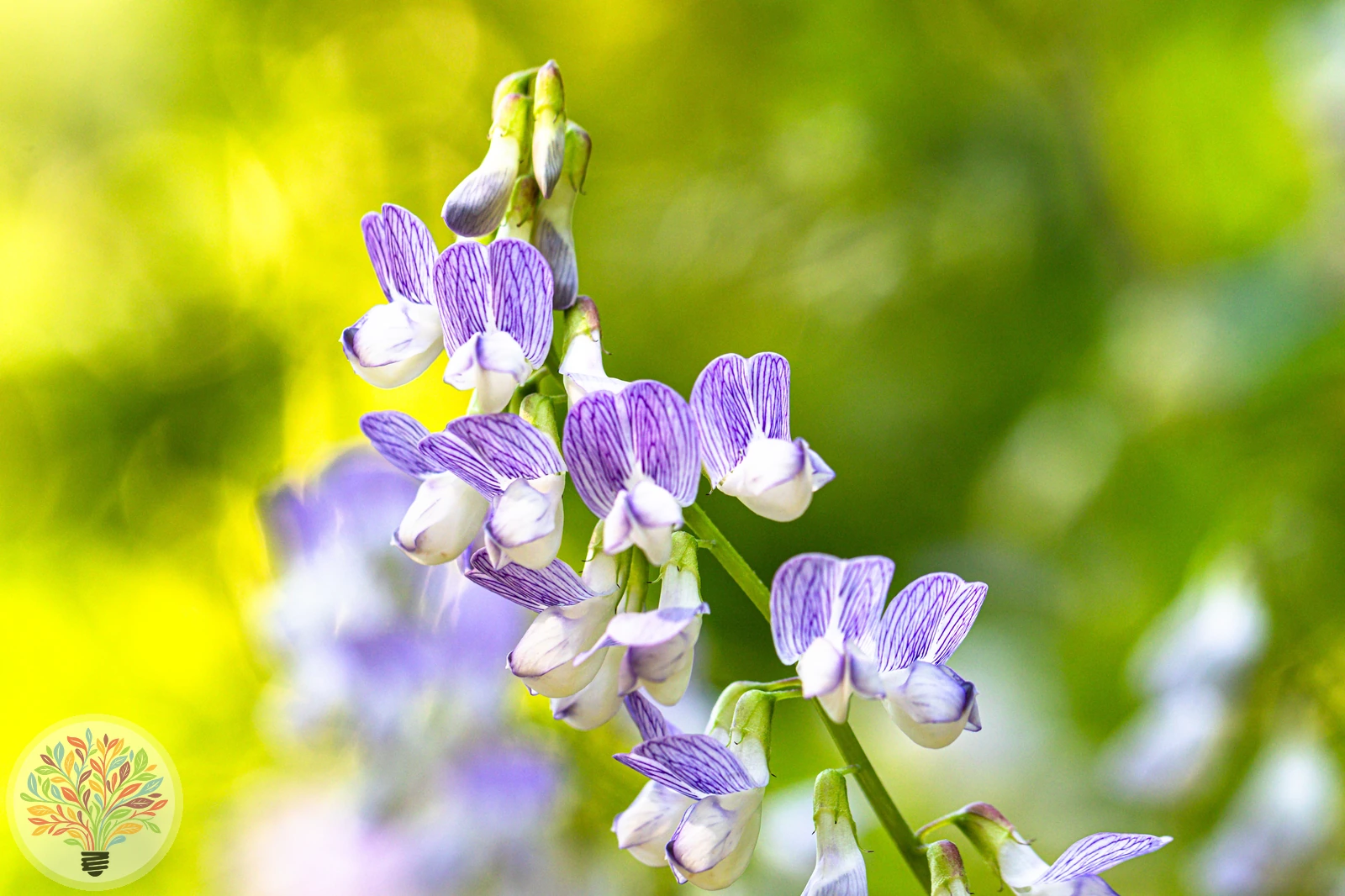
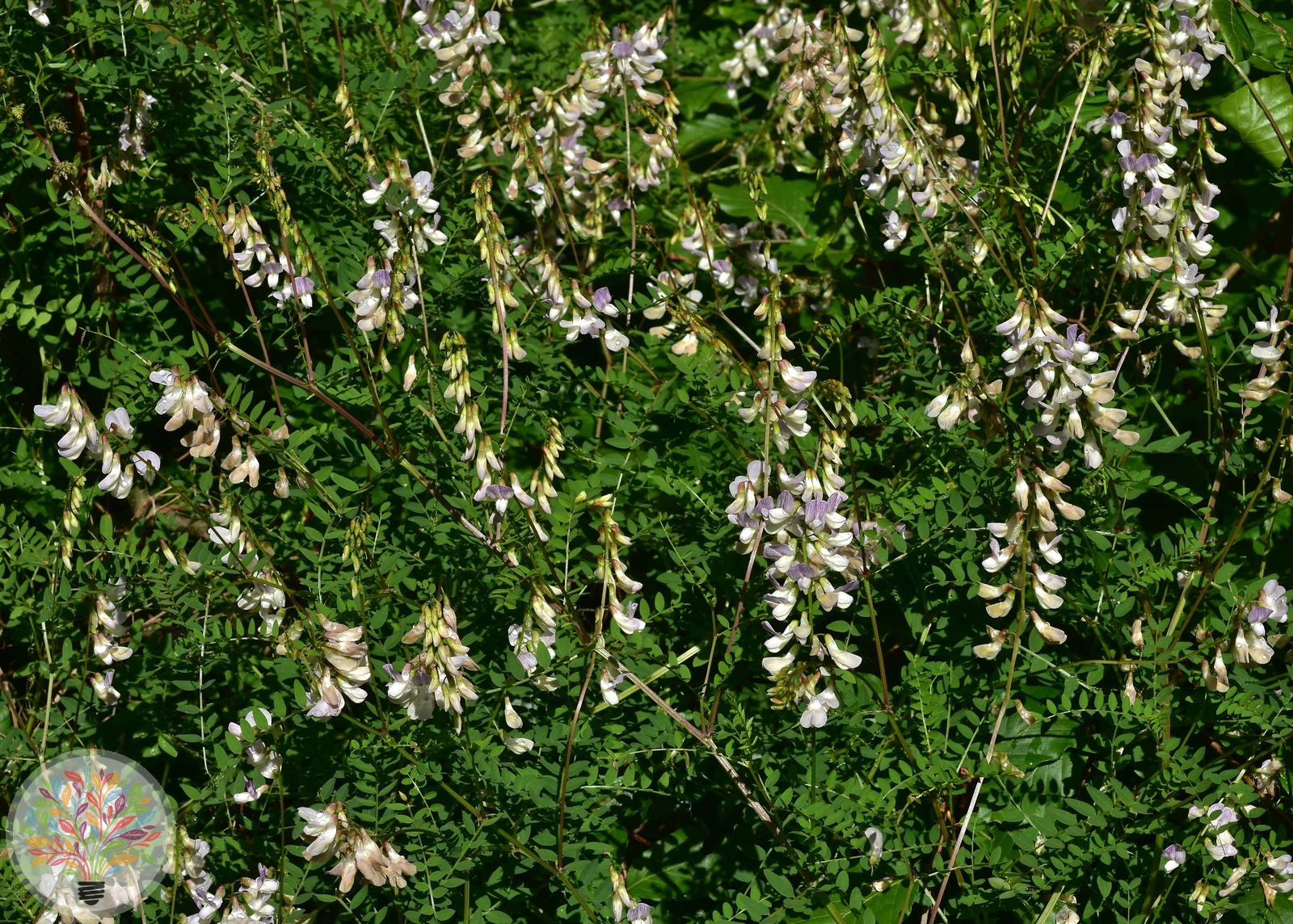
Vicia sylvatica
Vicia sylvatica
FamilyGenus: Vicianative in Germany
🌿
22
Species
interact
🔗
24
Interactions
documented
🐛
2
Host relationships
Species
About this species
A native climbing plant of semi-shaded, calcareous soils, flowering from June to August and reaching about 1.1 m in height.
Ecological network
Click to highlight connections · Click again to open the species page
Loading network...
PollinationLarval hostFlower visit
Ecological significance
As a native wild plant, Vicia sylvatica is a natural component of British woodland and scrub habitats, where it contributes to the structural and botanical diversity of these low-disturbance environments.
Annual cycle
Blooms from June to August. Seed pods mature later in summer and early autumn, dispersing seeds with an average mass of about 20 mg.
Standort & Merkmale
Light
Halbschatten
Moisture
Frisch (Mäßig feucht)
Soil
Mittelzehrer (Normaler Boden)
Flowering period
Jun – Aug
Soil reaction
Basisch / Kalkhold
Bioregion
Continental
Growth form
Kletterpflanze
Woodiness
Nicht verholzt
Leaf type
Breitblättrig
Plant height
1.099 m
Morphological traits: TRY ID3 (CC BY 3.0) & TRY ID81 (CC BY)
Pflege & Anbau
Position in semi-shade on a calcareous or alkaline soil that remains fresh but free-draining. The plant climbs naturally through surrounding vegetation, so provide low shrubs or trellis for support. It reaches about one metre high and does best in low-disturbance areas. Suitable for wildlife-friendly gardens and naturalistic planting schemes on chalk or limestone.
Scientific profile
Vicia sylvatica is a native wild climbing plant of the pea family (Fabaceae). Its slender, non-woody stems bear broad leaflets and can reach up to about 1.1 m in length, often scrambling through other vegetation. The typical pea-like flowers appear in summer, from June to August. It favours semi-shaded conditions on moderately moist, calcareous or basic soils, and is usually associated with low-disturbance habitats such as woodland edges and scrub. In Great Britain it is considered indigenous, and its indicator profile suggests a preference for moderately warm, fresh and nutrient-moderate situations.
Pollinators & visitors
17 Arten interagieren mit dieser Pflanze
Other flower visitors
3 other species visit the flowers
Dilophus femoratusMeligethes aeneusMeligethes viridescens
Sources & data origin
•Interaktionsdaten via GloBI (CC-BY 4.0)
•pollinator_interactions
•FloraWeb / BfN
•EIVE 1.0 — Dengler et al. (2023), DOI: 10.3897/VCS.98324 (CC BY 4.0)
•GBIF Backbone Taxonomy — GBIF Secretariat (2024), DOI: 10.15468/39omei (CC BY 4.0)
•TRY Categorical Traits (ID3) — Kattge et al. (2012), DOI: 10.17871/TRY.3 (CC BY 3.0)
•TRY Global Spectrum (ID81) — Díaz et al. (2016/2021), DOI: 10.17871/TRY.81 (CC BY)
•Checklist Alien Plants Belgium — Verloove F (2023), Botanic Garden Meise (CC BY 4.0)
•Govaerts R et al. (2025) — World Checklist of Vascular Plants (WCVP) v14. Royal Botanic Gardens, Kew. DOI: 10.34885/xs7h-ze42 (CC BY 4.0)
•Foto: © Adobe Stock / AdobeStock_867431178
All data is licensed under CC BY 4.0, CC0, or compatible terms. Attribution according to license conditions. Full source overview →