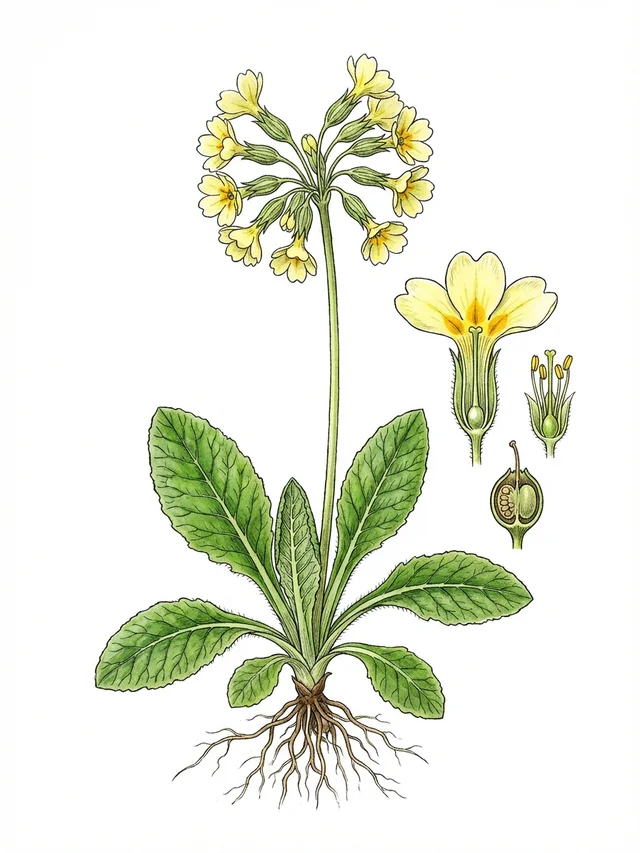
 Image to followAI-generated illustration
Nicotiana tabacum
Nicotiana tabacum
FamilyGenus: Tabaknative in Germany
🌿
9
Species
interact
🔗
14
Interactions
documented
🐛
3
Host relationships
Species
About this species
Nicotiana tabacum is an introduced, established herbaceous plant in Great Britain, reaching up to 1.7 m tall with broad leaves. It bears flowers from June to September and thrives in full sun on calcareous, nutrient-rich, moderately moist soils.
Ecological network
Click to highlight connections · Click again to open the species page
Loading network...
PollinationLarval hostFlower visit
Ecological significance
Flowering from June to September, this introduced species can provide nectar and pollen for some insects during the summer months. Detailed ecological impacts in Great Britain have not been documented.
Annual cycle
The main flowering period is from June to September. The plant produces numerous, extremely small seeds (diaspore mass approximately 0.043 mg) that can be shed and dispersed by wind or water.
Standort & Merkmale
Light
Sonne
Moisture
Frisch (Mäßig feucht)
Soil
—
Flowering period
Jun – Sep
Bioregion
Continental
Growth form
Krautige Pflanze
Woodiness
Nicht verholzt
Leaf type
Breitblättrig
Plant height
1.709 m
Morphological traits: TRY ID3 (CC BY 3.0) & TRY ID81 (CC BY)
Pflege & Anbau
This plant thrives in full sun and requires a moderately moist, fresh soil. It performs best on calcareous (alkaline) ground that is rich in nutrients, suiting its heavy feeding habit. Arbuscular mycorrhizal fungi naturally associate with the roots, so garden soils supporting this symbiosis are beneficial. Provide sufficient moisture during active growth, but avoid waterlogging. In British gardens, it reaches its full height of around 1.7 m by late summer.
Scientific profile
An introduced herbaceous plant now established in Great Britain, Nicotiana tabacum belongs to the nightshade family (Solanaceae). It originates from regions across Siberia, Northern America, Mexico, Southern America and Central America. The plant is non-woody and terrestrial, with broad leaves (average leaf area 9050 mm²) and a typical height reaching 1.71 m. It favours full sunlight and fresh, moderately moist soils, showing a preference for calcareous, base-rich substrates and nutrient-rich conditions – reflecting its status as a heavy feeder. Moderately warm temperatures suit it best. Arbuscular mycorrhizal (AM) associations are formed by its roots. The flowering period extends from June to September, and the diaspores (seeds) are extremely light, weighing around 0.043 mg.
Pollinators & visitors
5 Arten interagieren mit dieser Pflanze
Host relationships
3 species use this plant as a host
Sources & data origin
•Interaktionsdaten via GloBI (CC-BY 4.0)
•EIVE 1.0 — Dengler et al. (2023), DOI: 10.3897/VCS.98324 (CC BY 4.0)
•GBIF Backbone Taxonomy — GBIF Secretariat (2024), DOI: 10.15468/39omei (CC BY 4.0)
•TRY Categorical Traits (ID3) — Kattge et al. (2012), DOI: 10.17871/TRY.3 (CC BY 3.0)
•TRY Global Spectrum (ID81) — Díaz et al. (2016/2021), DOI: 10.17871/TRY.81 (CC BY)
•Checklist Alien Plants Belgium — Verloove F (2023), Botanic Garden Meise (CC BY 4.0)
•Govaerts R et al. (2025) — World Checklist of Vascular Plants (WCVP) v14. Royal Botanic Gardens, Kew. DOI: 10.34885/xs7h-ze42 (CC BY 4.0)
All data is licensed under CC BY 4.0, CC0, or compatible terms. Attribution according to license conditions. Full source overview →