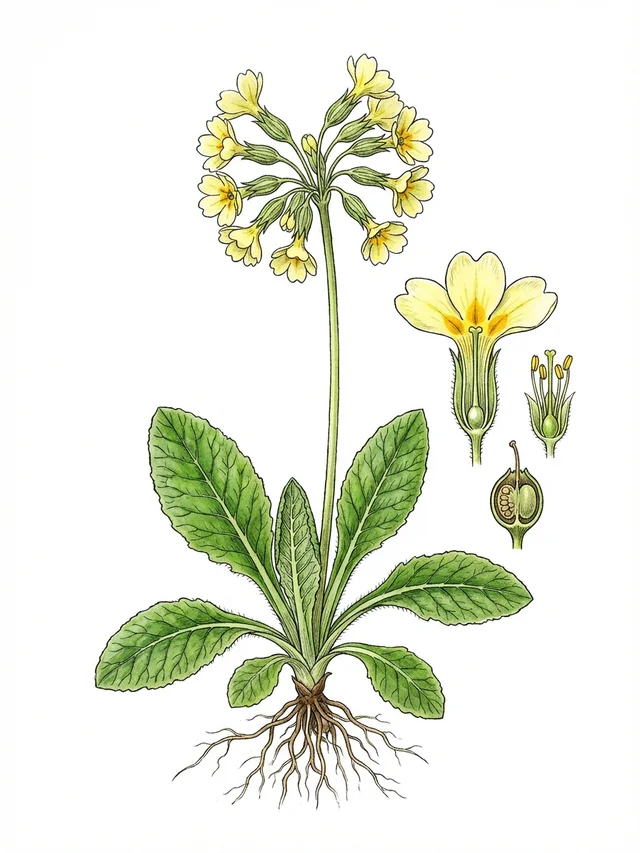
 Image to followAI-generated illustration
Sinapis alba
Sinapis alba
FamilyGenus: Senfenative in Germany
🌿
34
Species
interact
🔗
60
Interactions
documented
🐛
3
Host relationships
Species
About this species
An annual herb with broad leaves, bearing yellow flowers in early summer; an ancient introduction in Britain.
Ecological network
Click to highlight connections · Click again to open the species page
Loading network...
PollinationLarval hostFlower visit
Ecological significance
No significant ecological impacts are recorded for this archaeophyte in Great Britain.
Annual cycle
Flowers appear in June and July; as an annual, the whole life cycle is completed within one growing season, after which seed is set.
Standort & Merkmale
Light
Sonne
Moisture
Frisch (Mäßig feucht)
Soil
—
Flowering period
Jun – Jul
Bioregion
Continental
Nectar value
2
Pollen value
2
Growth form
Krautige Pflanze
Woodiness
Nicht verholzt
Leaf type
Breitblättrig
Plant height
0.403 m
Morphological traits: TRY ID3 (CC BY 3.0) & TRY ID81 (CC BY)
Nectar
0.3734 µl/Blüte
Pollen
0.9533 mg/Blüte
Pflege & Anbau
Grow in full sun, on moderately moist, well-drained soil that is neutral to alkaline. This annual is not especially nutrient-demanding and completes its life cycle within one season.
Scientific profile
Sinapis alba is an annual herbaceous plant that typically reaches about 40 centimetres in height. It has broad leaves and a non-woody, herbaceous growth form. The plant is an archaeophyte in Great Britain, having been introduced before 1500 and long established. Outside Britain, it is widely recorded across southern and south-eastern Europe, northern Africa and temperate Asia. Flowering occurs in June and July, and the blooms provide a moderate source of nectar and pollen for visiting insects. The root system does not form mycorrhizal associations. In the wild it favours full sun, moderately moist conditions and calcareous or basic soils of medium fertility.
Pollinators & visitors
29 Arten interagieren mit dieser Pflanze
Andrena fucataAndrena nigroaeneaBombus pascuorumAndrena haemorrhoaBombus pratorumAndrena pilipesBombus sylvestrisAndrena labialisAndrena chrysoscelesAndrena clarkellaAndrena nitidaAndrena cinerariaBombus jonellusAndrena dorsataAndrena flavipesApis melliferaAndrena barbilabrisAndrena labiataBombus lucorumBombus lapidariusPieris napiPieris rapaeLasioglossum marginatumAndrena bicolorBombus hortorumBombus terrestrisEucera oraniensisAndrena nigricepsAndrena lamiana
Sources & data origin
•Interaktionsdaten via GloBI (CC-BY 4.0)
•pollinator_interactions
•Baden-Böhm F, App M, Thiele J (2022) — The FloRes Database: A floral resources trait database for pollinator habitat-assessment generated by a multistep workflow. Johann Heinrich von Thünen-Institut, Dryad, DOI: 10.5061/dryad.djh9w0w29 (CC0)
•EIVE 1.0 — Dengler et al. (2023), DOI: 10.3897/VCS.98324 (CC BY 4.0)
•EuPPollNet — Kuppler et al. (2025), DOI: 10.1111/geb.70000 (CC BY 4.0)
•Database of Pollinator Interactions (DoPI) — Pocock et al. (2022), DOI: 10.1002/ecy.3801 (CC BY)
•GBIF Backbone Taxonomy — GBIF Secretariat (2024), DOI: 10.15468/39omei (CC BY 4.0)
•TRY Categorical Traits (ID3) — Kattge et al. (2012), DOI: 10.17871/TRY.3 (CC BY 3.0)
•TRY Global Spectrum (ID81) — Díaz et al. (2016/2021), DOI: 10.17871/TRY.81 (CC BY)
•Checklist Alien Plants Belgium — Verloove F (2023), Botanic Garden Meise (CC BY 4.0)
•Govaerts R et al. (2025) — World Checklist of Vascular Plants (WCVP) v14. Royal Botanic Gardens, Kew. DOI: 10.34885/xs7h-ze42 (CC BY 4.0)
All data is licensed under CC BY 4.0, CC0, or compatible terms. Attribution according to license conditions. Full source overview →